01 — At a Glance
The Logistics Giant That Finally Learned To Say No
- 52-Week High / Low₹325 / ₹226
- FY25 Revenue (Full Year)₹3,161 Cr
- FY25 PAT (Full Year)₹183 Cr
- Full-Year EPS (FY25)₹10.46
- Annualised EPS (Q3×4)₹14.80
- Book Value₹62.6
- Price to Book4.06x
- Dividend Yield2.94%
- Debt / Equity1.01x
- Interest Coverage4.26x
The Plot Twist: VRL made ₹827 crore in Q3 FY26 revenue (essentially flat YoY). But profit jumped 9% to ₹65 crore because they finally learned that unprofitable volume is not a feature — it’s a bug. Nine months of FY26? Revenue ₹2,386 crore, PAT ₹165 crore (+52% YoY). The stock returned -5.2% in three months, because apparently markets don’t care about fundamentals until they do. Plot twist: they will.
02 — Introduction
How India’s Biggest Truck Guy Learned To Fire Customers
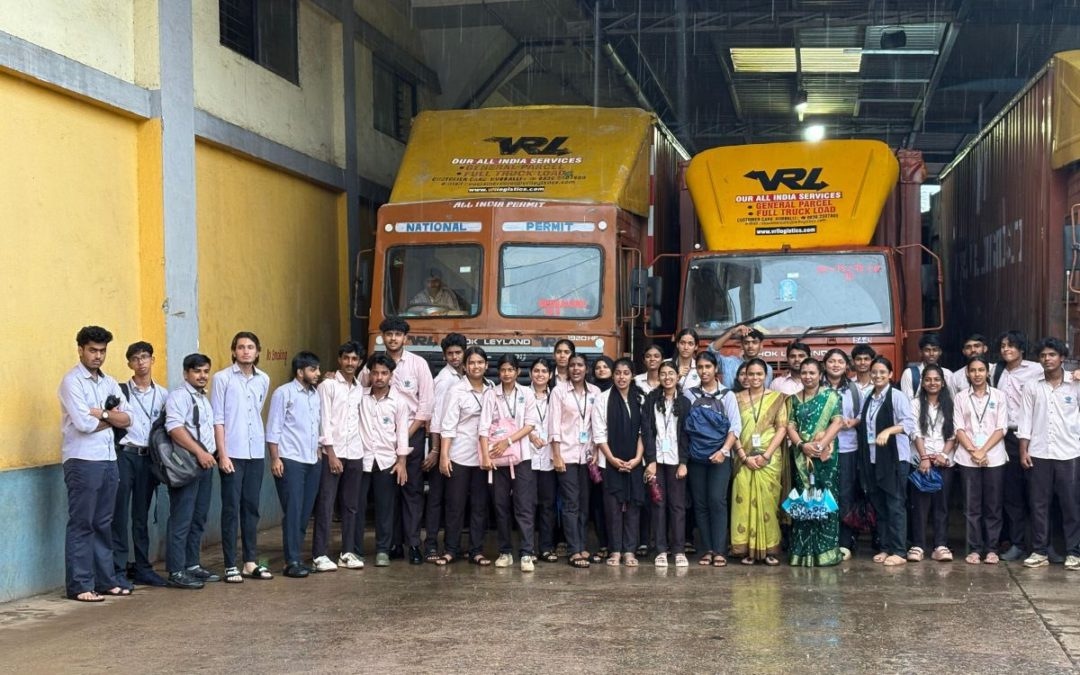
VRL Logistics is the Bollywood hero nobody expected. In a world of Delhivery and DTDC and Amazon logistics fighting like teenagers on TikTok, VRL is the old-school Maharashtrian transport company that owns 5,782 trucks, runs 1,243 branches across 24 states, and serves 9 lakh customers without a single Instagram post.
For 15 years, they chased volume like it was a Bollywood superstar. More trucks, more routes, more revenue. The problem: they were delivering ₹3,161 crore in revenue with skinny margins, high debt, and the fatigue of a logistics guy working 60-hour weeks.
Then, in FY25-26, something clicked. A new boss (Anand Vijay Sankeshwar is the chairman — and yes, a 30%+ promoter), looked at the client list, did the math, and said: “You know what? We’re firing everyone who doesn’t pay us properly.” And they did. They walked away from low-margin contracts, raised freight rates mid-Q2 FY25, and hired 500 new 20-tonne trucks specifically because bigger trucks are dumb physics.
Fast forward to Q3 FY26: Revenue flat, profit up, margins at 20.9%, daily tonnage crossed 10,900 tons, and the concall reveals a company that is finally, genuinely, strategically managing profitability instead of chasing numbers. This is not exciting. This is mature. This is exactly what your father’s stock portfolio needed.
Concall Insight (Feb 2026): “Daily tonnage crossed 10,900-plus tons” + “Yield improvement remains a key profitability driver… focus on sustainable margin-led growth rather than volume-led expansion.” Translation: We’re done being desperate. We’re selective now.
03 — Business Model: Why Trucks Matter More Than Crypto
VRL = India’s Goods Move. That’s It. That’s the Whole Business.
VRL operates in one segment that normal investors actually understand: Less-than-Truckload (LTL) logistics, which is 91% of revenue. Think of it as the Uber of trucking, except they own the trucks, the maintenance facilities, the fuel pumps, and the customer relationships. Clients send boxes. VRL consolidates them on trucks. Trucks move across India. Goods arrive. Everyone’s happy. Repeat 9 lakh times.
The competitive moat? Simple but unbreakable. VRL owns 5,782 vehicles with zero external debt on the fleet (essentially). They have 40–45 owned branch properties. They run 50 strategically placed transhipment hubs. They have a captive vehicle maintenance facility. They’ve built relationships with 9 lakh customers, many of whom are GST-registered businesses across pharma, FMCG, textiles, and engineering — meaning recurring, verifiable revenue streams.
No venture capital. No “software plays.” No pretence. Just capital-intensive asset ownership, disciplined operations, and margins that you can actually explain to your grandmother in 30 seconds. The stock trades at a 4x book value. They pay a 2.94% dividend. And now, thanks to the Q3 pivot, they’re finally making money like they should.
Vehicles Owned5,782Sep 2025
Branches1,243Active Network
Customer Base9 Lakh+GST Registered
LTL Revenue %91%FY24
The Concall Gem: “Textile is material: 16% to 17% tonnage is textile.” VRL’s largest sector exposure isn’t FMCG or pharma. It’s textile — which means if Indian textile exports wake up, VRL gets a direct tailwind. Nobody’s pricing that in.
💬 Here’s a question: If you run a ₹50 crore food business across India, would you use Delhivery (VC-funded, volume-obsessed) or VRL (owned assets, margin-conscious)? Why does that choice matter to the stock?
04 — Financials Overview
Q3 FY26: Where Volume Died But Profit Lived
Result type: Quarterly Results | Q3 FY26 EPS: ₹3.70 | Annualised EPS (Q3×4): ₹14.80 | Full-year FY25 EPS: ₹10.46
| Metric (₹ Cr) |
Q3 FY26
Dec 2025 |
Q3 FY25
Dec 2024 |
Q2 FY26
Sep 2025 |
YoY % |
QoQ % |
| Revenue | 827 | 825 | 797 | +0.2% | +3.8% |
| Operating Profit | 170 | 166 | 151 | +2.4% | +12.6% |
| OPM % | 20.6% | 20.1% | 19.0% | +50 bps | +160 bps |
| PAT | 65 | 60 | 50 | +8.3% | +30% |
| EPS (₹) | 3.70 | 3.39 | 2.85 | +9.1% | +29.8% |
The Magic Trick Explained: Revenue was nearly flat YoY (₹825 Cr → ₹827 Cr). But operating profit jumped from ₹166 Cr to ₹170 Cr because: (1) freight rates increased by ~10–11% (per management), (2) the exit from low-margin contracts added another 5–6% realization uplift, and (3) fuel costs fell from 26.4% of income to 24.8% due to bulk purchases and captive pumps. This is not luck. This is strategy that finally met execution.
05 — Valuation Discussion
What’s This Truck Company Actually Worth?