01 — At a Glance
The Pesticide Company That Grows Volumes, Not Profits
- 52-Week High / Low₹386 / ₹197
- FY25 Full-Year Revenue₹2,663 Cr
- FY25 Full-Year PAT₹125 Cr
- FY25 Full-Year EPS₹6.43
- Q3 FY26 Revenue₹623 Cr
- Book Value₹106
- Price to Book2.25x
- Dividend Yield1.07%
- Debt / Equity0.03x
- Q3 EPS (Jan 2026)₹0.10
The Auditor’s Lament: Rallis India’s Q3 FY26 saw the best operational performance in years—₹623 crore revenue (+19.4% YoY), ₹150 crore EBITDA (+29%), and volumes up 28%. Then the company booked a ₹40 crore exceptional gratuity provision for wage code compliance, reducing PAT to ₹2 crore (vs ₹11 crore last year). Strip out the gratuity, and PAT was actually up ~35%. The problem? Investors see ₹0.10 EPS, not the operating story. Welcome to the messy business of Indian compliance.
02 — Introduction
Tata’s Quiet Crop Protection Warrior Is Having an Identity Crisis
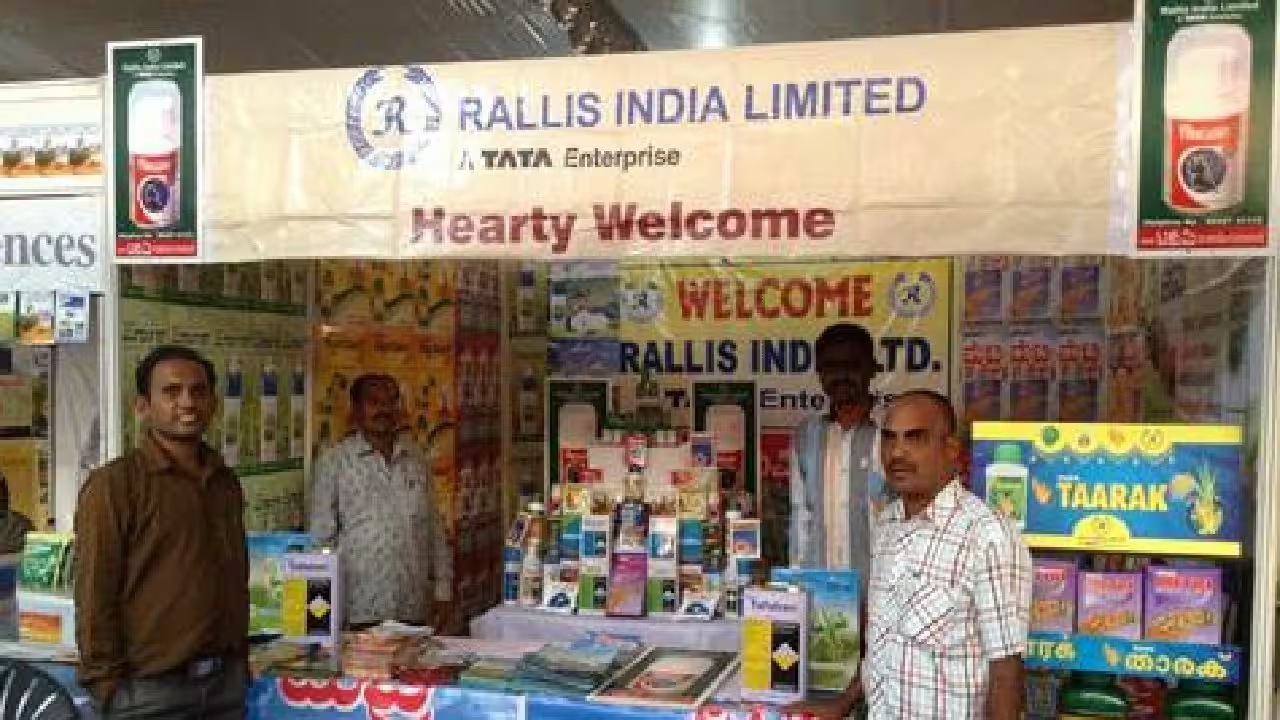
Rallis India is a 150+ year old Tata Group company that manufactures pesticides, insecticides, herbicides, and seeds. Think of it as the guy your grandfather used on his farm, still around, still relevant, still probably undervalued. The company is listed, majority-owned by Tata Chemicals (55.08%), and trades at a P/E of 25.3x despite generating a ROE of 6.65% and ROCE of 10.1%.
Yes, you read that right. The company is premium-valued in a sector where fundamentals are bleeding. Management talks about margin expansion, but the data says otherwise. Revenues are flat (3.4% CAGR over 5 years), profits are down 7% CAGR, yet the stock is priced like a growth story.
Q3 FY26 threw a curveball. Volumes surged 28%. Exports jumped 73%. Prices fell 8%. And then—just when everyone thought the quarter was decent—management dropped a ₹40 crore gratuity bomb tied to wage code implementation. The P&L took a hit. The balance sheet is fine. The narrative got confused. And investors are left asking: Is this a value play turning around, or a value trap getting expensive?
The concall in January 2026 revealed the real issue: Rallis operates in a highly commoditized space where China sets global prices, domestic demand is weather-dependent, and farmer purchasing power is under pressure. Yet management is betting on new products, margin expansion, and regulatory tailwinds. That’s the setup. This is the story.
Management’s Own Words (Jan 2026 Concall): “Domestic demand remains soft… all kharif crops barring paddy ruled 9-30% below MSPs.” Translation: farmers are poor, so they buy less pesticide, so Rallis pushes volumes and cuts prices. The geometry doesn’t work forever.
03 — Business Model: Pesticides, Pricing Power, and Pain
How to Make Poison That Costs Less Than Poisoning Your Portfolio
Rallis makes three types of products: Crop Care (82% of revenue), Seeds (16%), and Soil & Plant Health (2%). Crop Care is split into domestic branded formulations (~58% of total revenue), technical products (~5%), and Soil & Plant Health (~10%). The company exports to 41 countries and has 95,000 retailers reaching 80% of India’s districts.
The unit economics are simple: Buy technical pesticides (mostly from China, >40% of procurement), add some margin, distribute through 6,600 dealers and 95,000 retailers. Gross margins are 50-55%. Operating margins are 11-12%. It’s a volume business, not a pricing business. When India’s farmer income falls (which it has), demand falls. When China dumps cheap pesticides, price falls. Rallis gets caught in the middle, choosing between volumes and margins. They’ve been choosing volumes.
The problem: volumes can only grow so much. India’s total pesticide market is ~2.5–3 million metric tonnes growing 3.5-4% annually. Rallis’ 5-year sales CAGR is 3.4%. They’re matching the market growth, not beating it. And when pricing is under pressure from Chinese competition and farmer stress, the only way to grow PAT is via cost control or M&A. Management talks about both. Execution remains a question mark.
Domestic B2C Sales₹391 Cr+13% Q3 YoY
Export B2B Sales₹129 Cr+73% Q3 YoY
Seeds Revenue₹43 Cr+46% Q3 YoY
Soil & Plant Health₹73 Cr+16% Q3 YoY
The Pricing Power Question: In Q3, volumes were up 28%, but prices fell 8%. Net revenue growth: 19.4%. This is the essence of Rallis’ challenge—they have the distribution heft but lack the brand moat to maintain pricing in a commoditized space. Compare this to a FMCG hero, where pricing power often exceeds volume growth. Rallis is living in reverse.
💬 If a farmer can’t afford pesticide because crop prices are down 30%, does Rallis grow volume or protect margins? What’s your take?
04 — Financials Overview
Q3 FY26: The Quarter That Lied
Result type: Quarterly Results (Q3 Oct-Dec 2025) | Q3 EPS: ₹0.10 | Annualised EPS (Q3×4): ₹0.40 | FY25 Full-Year EPS: ₹6.43
| Metric (₹ Cr) |
Q3 FY26
Dec 2025 |
Q3 FY25
Dec 2024 |
Q2 FY26
Sep 2025 |
YoY % |
QoQ % |
| Revenue | 623 | 522 | 861 | +19.4% | -27.6% |
| EBITDA | 58 | 45 | 154 | +29.0% | -62.3% |
| EBITDA Margin % | 9.3% | 8.6% | 17.9% | +70 bps | -860 bps |
| PAT (Reported) | 2 | 11 | 102 | -81.8% | -98.0% |
| EPS (₹) | 0.10 | 0.57 | 5.25 | -82.5% | -98.1% |
The Gratuity Asterisk: The Q3 PAT of ₹2 crore includes a ₹40 crore exceptional gratuity provision for wage code compliance. Strip this out, and PAT is closer to ₹42 crore (~operating PAT). The QoQ collapse vs Q2 (₹102 crore) is partly due to the exceptional item and partly due to lower volumes in Dec (end of kharif season, start of rabi prep). The YoY comparison looks worse because Q3 FY25 didn’t have this provision. EBITDA growth of 29% YoY is the cleaner operational signal management wants you to focus on. Listen to management, not the PAT number.
05 — Valuation: Fair Value Range
What’s This Pesticide Maker Actually Worth?