01 — At a Glance
The Road Builder Who’s Planning to Light Up Solar Panels Too
- 52-Week High / Low₹308 / ₹223
- Q3 FY26 Revenue₹991 Cr
- 9M FY26 Revenue₹2,636 Cr
- Q3 EPS₹4.25
- Annualised EPS (Q3×4)₹17.00
- Book Value₹111
- Price to Book2.51x
- ROE (3-Year Avg)28.5%
- Debt / Equity0.69x
- Order Book / TTM Revenue3.6x
Site Inspector’s Note: Ceigall posted Q3 FY26 revenue of ₹991 crore (+19.3% YoY), with 9M consolidated revenue at ₹2,636 crore. But here’s the interesting part: despite a strong top line, Q3 profit barely budged (+1.24% YoY). Margin compression is real. The order book hit ₹13,295 crore in Dec-2025 — that’s 3.6x TTM revenue. But with an equity pipe of ₹9,480 crore still to be invested in HAM projects, the balance sheet is about to get a serious workout. Not a problem if execution sticks. A major headache if it doesn’t.
02 — Introduction
Build Roads. Build Metro Tunnels. Build Solar Farms. Repeat.
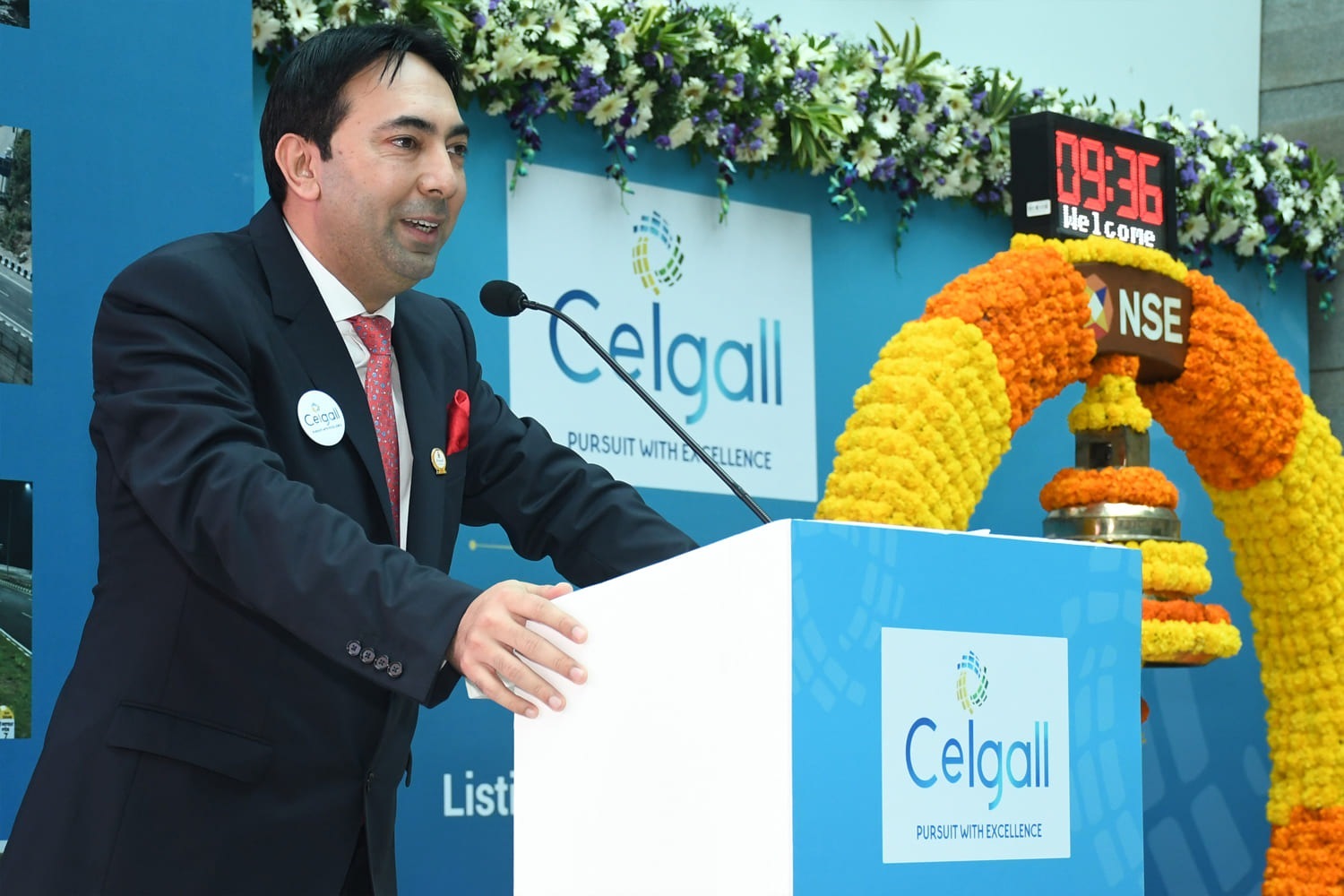
Ceigall India Limited sits at the intersection of India’s infrastructure frenzy and the awkward adolescence of diversification. Founded in 2002, they’ve spent two decades turning dirt into divided highways, which is genuinely a skill. They’ve built 35 projects to completion — including the Ramban tunnel in Jammu & Kashmir (the one tourists drove through thinking they were in a Bond film). They’ve got the Ayodhya bypass under their belt. The Kanpur Metro. They’re good at what they do.
What’s changed is what they do. Roads used to be the entire business. Now roads are 64% of the order book. Solar parks, transmission lines, renewable energy, metro rail, tunneling — Ceigall is showing up to tenders like a jobless engineering graduate: “Does the contract have a pulse? We’ll bid.” Management calls it “de-risking.” Wall Street calls it “losing focus.” Both might be right.
The Feb 2026 concall revealed the real drama: a new CEO (A. Saravanan, poached from another infra player), binding offers to sell HAM assets for capital recycling, international expansion being plotted like a bank heist, and working capital stretched so thin that you could read a newspaper through it. India Ratings just slapped a Negative Outlook on their AA- rated debt. Margin compression is visible. Execution risk on appointed dates (the government’s final clearance for projects) is climbing. But the order book? Robust. The ambition? Astronomical.
Concall Insight (Feb 2026): “We have built only 35 projects in 20 years,” management said. “Now we’re targeting 10-15% of order inflows from international markets.” Translation: Ludhiana to Singapore is a long bridge, but someone has to build it. CEO also confirmed: “Whatever money [from HAM asset sales]… primarily it will be used towards equity infusion.” That’s a polite way of saying the balance sheet is thirsty.
03 — Business Model: Multi-Vertical Roulette
EPC? HAM? Solar? Metro? Yes. And Yes Again.
Ceigall’s business model used to be simple: bid for highway contracts, build highways, collect payment, repeat. Boring, but profitable. Now it’s complicated: bid for EPC (Engineering, Procurement, Construction) contracts, HAM (Hybrid Annuity Model) contracts, BOT projects, and solar tenders. All requiring different risk profiles, different execution timelines, different margins, and (critically) different equity infusions.
EPC Projects (~14 ongoing): Build-to-spec contracts where you design, procure, construct, and hand over. You get paid in stages. Zero equity needed after mobilization. Margins: 12-14% EBITDA historically. Current order mix has lower-margin projects (no bonus, no royalty components), so management now guides 10.5-11.5% EBITDA margin for FY26-FY27. That’s the difference between “luxury margins” and “survival margins.”
HAM Projects (~8 under construction): Government funds 40%, you fund 60% upfront equity. You build. Government pays annuity for 15 years. You’re basically a quasi-banker masquerading as a contractor. As of Dec-2025, Ceigall had infused ₹605.6 crore into HAM projects, with ₹9,480 crore still to deploy. That’s 5 years of net profits needed just to fund the equity commitment. The company is betting on internal accruals + debt + asset divestment to bridge the gap.
Solar & Renewables (22% of order book): New entrant. Morena Solar Park (220 MW + BESS) was awarded in Feb 2026 for ₹1,700 crore. Management says only 20% upfront equity, rest deployed after PPA (Power Purchase Agreement) signing. Smart structuring. Still, the equity dependency is rising, not falling.
Asset-Light Doctrine: Ceigall owns 14% of its equipment. The other 86% is leased or returned post-project. Capex is ₹25-30 crore annually. This is disciplined. This is also why the order book doesn’t immediately translate into balance sheet stress — but the HAM equity commitments do.
EPC Orders₹7,500+ Cr64% of book
HAM Orders₹5,000+ Cr8 projects
Renewables₹3,168 Cr22% mix
T&D + Others₹1,400 CrBalance
💬 Question for you: Would you rather invest in a pure-play roads builder, or a diversified infrastructure firm taking on solar + metro? Trade-off is growth vs margin dilution. What’s your poison?
04 — Financials Overview
Q3 FY26: The Numbers Game
Result type: Quarterly Results | Q3 FY26 EPS: ₹4.25 | Annualised EPS (Q3×4): ₹17.00 | 9M FY26 EPS: ₹5.36 (implied from PAT)
| Metric (₹ Cr) |
Q3 FY26
Dec 2025 |
Q3 FY25
Dec 2024 |
Q2 FY26
Sep 2025 |
YoY % |
QoQ % |
| Revenue | 991 | 831 | 807 | +19.3% | +22.8% |
| Operating Profit | 139 | 123 | 114 | +13.0% | +21.9% |
| OPM % | 14% | 15% | 14% | -100 bps | +0 bps |
| PAT | 72 | 71 | 56 | +1.24% | +28.6% |
| EPS (₹) | 4.25 | 4.20 | 3.33 | +1.24% | +27.6% |
The Twist in the Tale: Revenue jumped 19.3% YoY. Operating profit climbed 13%. But PAT? Barely moved (+1.24%). Why? Interest costs exploded. Depreciation spiked. Tax rate holding steady at 25%. The interest expense in Q3 was ₹37 crore — up from ₹27 crore in Q3 FY25. That’s a 37% increase in finance cost eating into profit. Welcome to the HAM leverage game.
05 — Valuation: Fair Value Range
What’s This Infrastructure Play Actually Worth?