01 — At a Glance
The Unsung Hero of Two-Wheeler Breakdowns
- 52-Week High / Low₹2,097 / ₹1,080
- TTM Revenue₹2,930 Cr
- TTM PAT₹322 Cr
- Full-Year EPS (TTM)₹104
- Q3 FY26 EPS₹27.73
- Book Value₹626
- Price to Book2.75x
- Dividend Yield1.13%
- Debt / Equity0.09x
- Interest Coverage29.6x
The Auditor’s Stare: L.G. Balakrishnan closed Q3 FY26 with ₹817 crore revenue (+20.6% YoY), ₹88.45 crore PAT (+24.8% YoY), and 19.9% ROCE — basically printing money by selling chains, sprockets, and tensioners to OEMs who’d rather not talk about where they source from. 60% market share in domestic two-wheeler chains. P/E of 17.2x. Meanwhile, Bosch trades at 38.64x. This is not a comparison — this is a grocery store next to a five-star hotel selling the same onions.
02 — Introduction
Welcome to the Business of Keeping India’s Scooters From Falling Apart
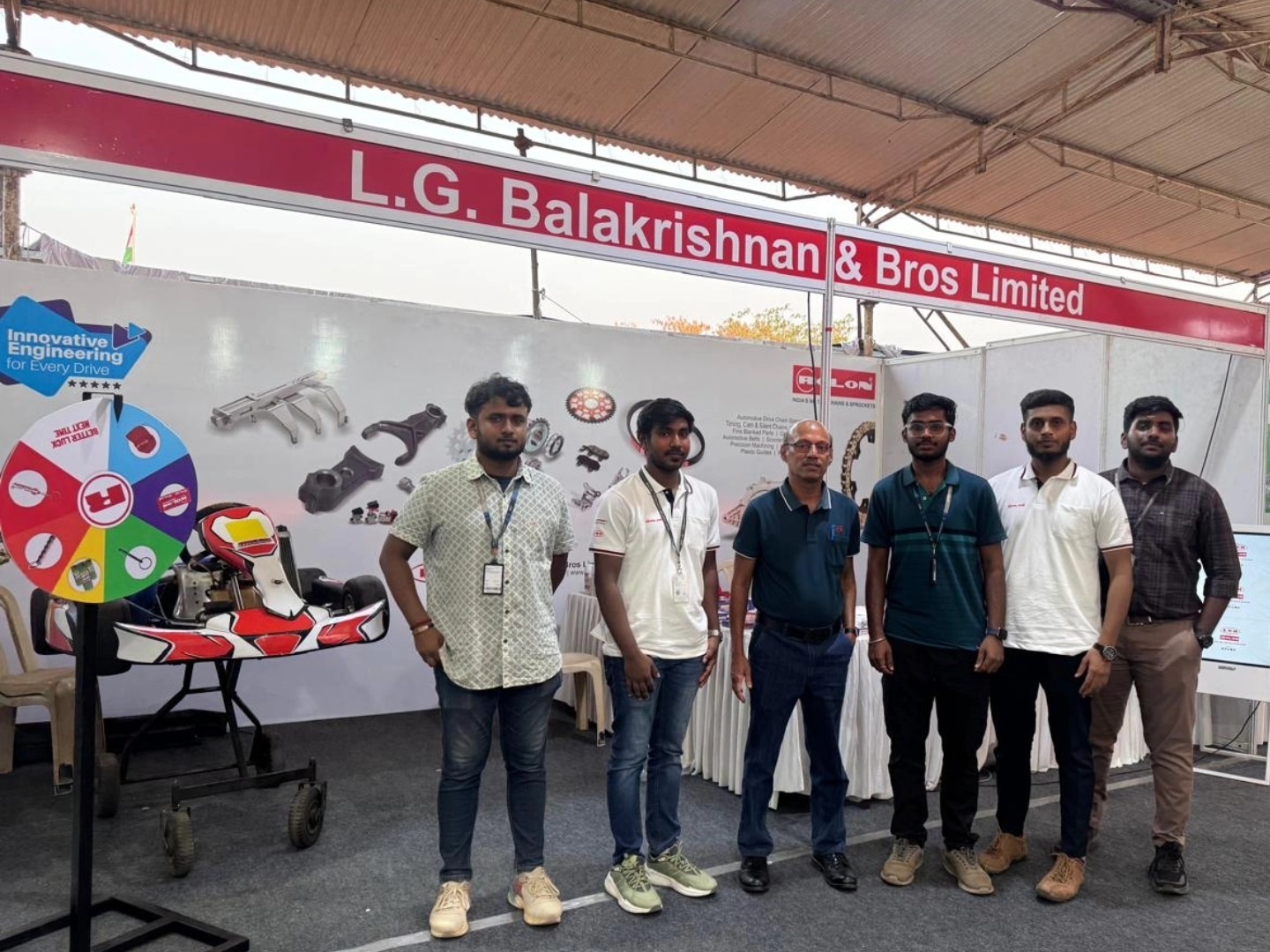
Let’s talk about LGB — no, not the acronym. L.G. Balakrishnan & Bros Ltd. A company founded in 1946, based in Coimbatore, Tamil Nadu, run by the Vijayakumar family, and making one of the most critical and simultaneously invisible products in automotive: chains and sprockets.
Think about it. Every time your two-wheeler engine turns, it’s the chain that transfers power to the wheel. Every time a truck delivers goods, every time a motorcycle taxi honks past you — all of it is powered by chains and sprockets made by Balakrishnan. And yet, ask a retail investor about LGB and you get blank stares. Ask them about MRF or Bosch and suddenly everyone’s an expert.
This is the definition of a non-glamorous business. No bling. No AI. No disruptive narrative. Just 36 manufacturing facilities spread across India, 863 dealers and distributors, and a brand called “Rolon” in the replacement market that’s so famous, people replace their chains before they ask for alternatives. 80% of revenues come from two-wheelers, where LGB enjoys a 60% market share — which is literally market domination disguised as a spreadsheet entry.
Q3 FY26 delivered 20.6% sales growth YoY, 24.8% profit growth YoY, and the company continues its quiet conquest of the aftermarket with 30% of revenues coming from replacement segments where margins are considerably fatter. International expansion underway. Mexico plant approved for $10 million capex. Plans to explore Vietnam and Thailand. This is not a story about engines or automobiles. This is a story about supply chains, mechanical leverage, and the fact that boring businesses are only boring until they make you rich.
Market Share Fun Fact: Over 60% of domestic two-wheeler chains are LGB Rolon. Over 80% of revenues from 2W. Over 30% from aftermarket. If you ride a Hero Honda, Honda CB, Bajaj, TVS, or Jawa — there’s a 60% chance you’re riding on LGB’s handiwork. This is what dominance looks like when no one’s watching.
03 — Business Model: WTF Do They Even Do?
They Make The Boring Parts That Drive Everything. Literally.
LGB operates two main business segments: Transmission (85% of revenue) and Metal Forming (15% of revenue). The transmission segment is chains, sprockets, tensioners, and brake shoes — basically everything that keeps your engine talking to your wheels. The metal forming segment is cold-rolled annealed steel, precision blanked parts, machined components, and wire drawing — stuff that feeds into chains, springs, and other metal products.
Here’s the genius: 60% market share in 2-wheeler chains is not achieved by accident. It’s achieved through three things: (1) scale — they’ve been making chains since 1946, so OEMs trust them blindly; (2) distribution — 30% of revenues from aftermarket means they own the replacement narrative; (3) zero-defect culture — when a chain breaks on the highway, people don’t blame chains. They blame the rider. When LGB chains don’t break, people don’t even know LGB exists. This is the ultimate form of invisible excellence.
Recent acquisition: In January 2024, they acquired RSAL Steel (now LGB Steel), adding CRCA strips, semi-processed electrical steel coils, and other flat steel products. Strategic? Yes. Game-changing? Not immediately. But it’s diversification away from pure transmission dependency — which matters when electric two-wheelers are coming to steal their 80% revenue dependency.
2W Chains60%Market Share
Aftermarket30%Of Revenue
International16%Of Revenue
2W Industry80%Revenue Exposure
Capex Reality: ₹240 crore capex in FY25, ₹200 crore in FY26, ₹200 crore planned for FY27. Mostly for capacity enhancement, debottlenecking, and product diversification. No debt-funded capex — they self-fund everything. That’s the confidence of a company printing cash and not needing bank loans.
💬 Have you heard of LGB Rolon before this article, or were chains just things that exist and break inconveniently?
04 — Financials Overview
Q3 FY26: The Numbers That Matter