01 — At a Glance
A Birthday Party Nobody Wanted: The Kwality Walls IPO
- 52-Week High / Low₹31.4 / ₹24.1
- Q3 FY26 Revenue₹222 Cr
- Q3 FY26 PAT-₹178 Cr
- Organic Sales Growth-6.5%
- Volume Growth1.2%
- EBITDA Loss (Q3)-₹64.2 Cr
- Gross Margin (Q3)41.5%
- Exceptional Charges₹94 Cr
- 9M Loss (Apr-Dec)-₹261 Cr
- Magnum/Cornetto GrowthStrong
🚨 The IPO Catastrophe Nobody Saw Coming: On February 16, 2026, Kwality Walls went live on NSE and BSE after being demerged from Hindustan Unilever Limited (HUL). Three weeks later, on March 6, 2026, Q3 FY26 results came out and revealed a nightmare: ₹222 Cr revenue, ₹178 Cr PAT loss, and an EBITDA loss of ₹64.2 Cr. The company shed 100 years of parental protection and immediately fell on its face. Current price ₹24.6. Market cap still ₹5,762 Cr — mostly held up by investors betting on “recovery.” The open offer by Magnum Ice Cream Company (Stonepeak affiliate) for 26% stake is awaiting regulatory approval. Expect more downside if this dragging on.
02 — Introduction
The Unilever Orphan: How a 100-Year Lovechild Became a Market Disaster in 21 Days
Kwality Wall’s has been making ice cream in India since 1926. Yes, 1926. Through the British Raj, through independence, through monsoons and recessions, through Amul’s rise as a cooperative behemoth, this company kept selling frozen desserts at a profit. Then, in December 2025, Unilever decided to spin it off. Not because it was thriving. Not because shareholders demanded it. But because Unilever wanted to streamline its portfolio and focus on “core” businesses like soaps and detergents. Ice cream, apparently, is no longer core.
The demerger completed on December 1, 2025. Kwality Walls became an independent listed company on February 16, 2026. Management took a bow. Chitrank Goel, the newly appointed Deputy Managing Director, promised “sustainable and profitable growth” and called it “the start of a new chapter.” That chapter opened with a three-week old company losing ₹178 crore in a quarter.
Let’s be brutally clear about what happened: Unilever built a company that could survive 100 years under corporate protection. But the moment that protection was removed, the company revealed what it always was — a low-margin, heavily-seasonal business bleeding money faster than it melts in the Mumbai summer. Management blamed “prolonged monsoon conditions” and “GST transition-related impacts” for Q3’s weakness. Monsoons come every year. GST has been here since 2017. This was not a weather report. This was a business model failure.
The nine-month loss (April–December FY26) stands at ₹261 crore. The exceptional charges of ₹94 crore included impairments (read: assets Unilever wrote down as unsaleable), redundancies (people Unilever hired and then had to fire), and listing costs (underwriters and lawyers getting paid for a transaction that crushed shareholder value). Even stripping out the exceptional charges, the company lost ~₹167 crore in 9 months on an underlying basis. The frozen desert business isn’t just melting. It’s evaporating.
Management’s Own Words (from Press Release): “The Company did not operate as a standalone entity prior to the demerger.” Translation: We don’t have a P&L history to show you before this disaster. Unilever carried the company, and we never had to prove ourselves. Now we have to, and the results are… well, you’re reading them.
03 — Business Model: Frozen Desserts, Frozen Cash Burn
Why Making Ice Cream is Capitalism’s Cruelest Business Model
Let me explain why ice cream is a business person’s nightmare disguised as a delicious idea. The product melts. Literally. At room temperature, in transport, in storage, in the consumer’s hands. You need continuous refrigeration from factory to retail to home. You need franchisees. You need brand spend. You need margin to cover all of this. And then, seasonally, demand crashes 60-70%. Winter quarters are financial charcoal.
Kwality Walls’ business model is simple in theory: make ice cream, distribute through franchisees and company-owned cabinets, sell to retailers and institutions, collect cash. In practice, it looks like this:
Revenue Streams (Estimated from Press Release):
• Retail Branded Ice Cream: ~60-65% (Kwality Walls, Cornetto, Magnum, Paddle Pop)
• Bulk/Institutional: ~15-20% (schools, corporates, events)
• Q-Commerce (Quick Commerce): Growing rapidly, mentioned as “double-digit growth” in the quarter
• Unpackaged/Loose Ice Cream: Legacy portfolio, being “relaunched” (management-speak for “being killed off”)
The seasonality is insane. Q3 (Dec-Feb) is winter — nobody buys ice cream in 12°C weather. Q1 and Q2 (Apr-Jun, Jul-Sep) are the money seasons. Q4 (Oct-Dec) starts picking up as summer approaches. Management admitted that Q3 was impacted by “prolonged monsoon conditions” — but this is India. Monsoons come every year. You budget for it. You prepare for it. Kwality Walls didn’t, apparently.
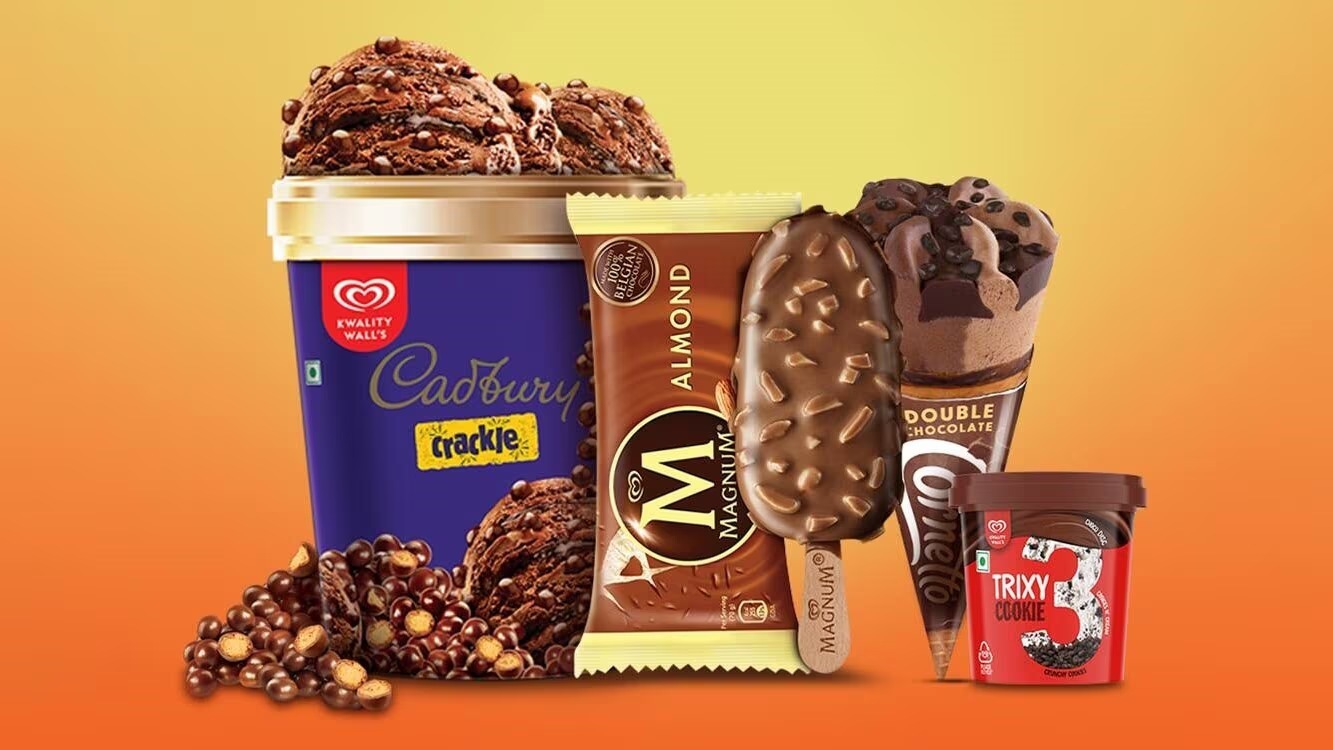
Then there’s the competitive environment. Amul commands 40%+ market share through its cooperative army — thousands of small franchisees who work on razor-thin margins because they’re co-op members reinvesting profits. Kwality Walls tries to compete through brand (Magnum, Cornetto) and premium positioning. But premium positioning doesn’t matter when the underlying business is melting.
Market Share~35%Down from 40% pre-demerger
SeasonalityBrutalQ3 is disaster quarter
Company CabinetsGrowingDistribution expansion
Q-Com GrowthDouble-digitOnly bright spot
Management’s Strategic Priorities (from concall): Expand company-owned cabinets (capex-heavy), grow Q-commerce (low-margin, high-volume), relaunch in-home portfolio (which flopped), and pray for a non-monsoon season. None of these address the fundamental problem: the business model is broken.
💬 Here’s a dark question for you: If you were an ice cream manufacturer in India, would you compete with Amul’s cooperative or Kwality Walls’ brands? Which one keeps you awake at night?
04 — Financials Overview: The Collapse in Numbers
Q3 FY26: When You Lose More Than You Make