01 — At a Glance
The Bus Company Nobody Asked For, But Here We Are
- 52-Week High / Low₹1,714 / ₹874
- Q3 FY26 Revenue₹663.6 Cr
- Q3 FY26 PAT₹46.7 Cr
- Q3 FY26 EPS₹5.65
- Annual Revenue (TTM)₹2,116 Cr
- Book Value₹137
- Price to Book6.44x
- Debt / Equity0.33x
- Order Book (E-buses)10,193 buses
- Market Share (E-buses)~29%
The Setup: Olectra is India’s #1 e-bus manufacturer. Q3 delivered 385 buses (+37% YoY), pushed revenue to ₹663.6 crore (+29%), but PAT stayed flat at ₹46.7 crore. Stock down 15% in a year. P/E trades at 50.5x—meaning the market is pricing in either a Tesla-grade growth miracle or that your Nifty index manager was feeling experimental. The order book: 10,193 buses worth ₹15,000–16,000 crore. Sounds great until you realize they shipped just 385 buses in Q3 at current capacity. That’s a 26-quarter backlog at current pace. Welcome to the future of Indian public transport. It’s… delayed.
02 — Introduction
The Last Mile (That Takes 18 Months)
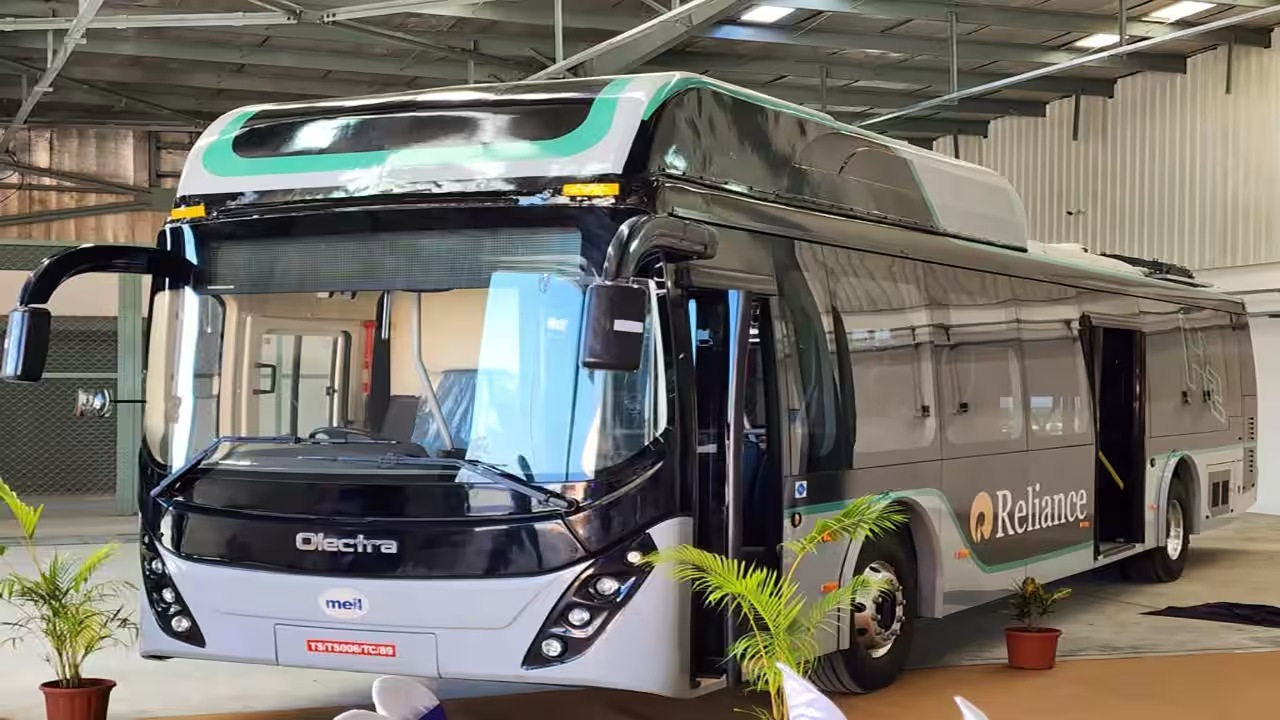
Olectra Greentech Limited. Say it fast, it sounds like a startup that sells probiotics to Silicon Valley tech bros. In reality, it’s a Hyderabad-based company that builds electric buses. Not flashy. Not a platform play. Just buses. Lots of them. To the government.
Here’s the thing: the Indian Government decided that public transport buses need to become electric. This was a correct decision—air quality in cities like Delhi is basically a valid medical condition. And Olectra said: “We’ll build them.” In 2016, they partnered with BYD, a Chinese e-bus and battery company, and started manufacturing. Since then, they’ve delivered 2,448 electric buses and 51 electric tippers, covering 30+ crore kilometers. That’s a lot of silent bus rides through Bangalore traffic.
But here’s the actual story: the company did 45% profit growth over 5 years (CAGR 123%), yet the stock is down 15% in the last year. Why? Because the Indian government ordered 10,193 buses, the company has a P/E of 50.5x, margins are compressing faster than a deflating tyre, and everyone is waiting to see if they can actually deliver without losing money on each bus.
February 2026 concall revealed the real picture: margins normalizing to 10–12%, product mix shifting away from high-margin 12m buses to lower-margin 9m and trucks, management talking about “working capital discipline” (aka not flooding depots with buses until they’re ready), and BEST Mumbai buses literally carrying twice as many passengers as designed. This is what happens when you build buses faster than the system can absorb them.
From the Concall (Feb 2026): “Some of the products are for the future. Margins will be less. When it is stabilised like a 12-meter bus product, then we will get a reasonable margin.” — MD, Olectra. Translation: new bus models have worse margins, and that’s the baseline going forward. Welcome to the low-margin e-bus future.
03 — Business Model: WTF Is An E-Bus Business?
Make Buses. Ship Buses. Collect Government Subsidies. Pray They Work.
Olectra’s actual business is 91% e-buses and 9% polymer insulators (legacy business, dying quietly). The e-bus model works like this: the government tenders for electric buses. Olectra bids at a per-vehicle price (₹1.6–1.8 crore per bus, roughly). They win. They build the bus using BYD battery packs and chassis, localize components, sell to either state road transport bodies (MSRTC, BEST, TSRTC) or to Evey Trans (a subsidiary of parent MEIL, which operates the buses).
The catch: they get 60% payment upfront, rest in 120–180 days from delivery. Meanwhile, they must maintain inventory for 60–90 days because bus deployment takes time. Depots need power infrastructure. Routes need finalization. Financing needs approval. In other words: the manufacturer is technically done, but the ecosystem is still figuring out where to park the bus. This is called “working capital intensity” in finance language and “logistics nightmare” in reality.
The government pays through subsidies (either direct ₹25–35 lakhs per bus via PM E-DRIVE, or operating support ₹24/km via PM eSEWA), which flow through the SPVs, then to Olectra. If the SPV doesn’t get financing, if the state doesn’t approve the route, if the depot isn’t ready—the bus sits. And so does the cash.
Q3 Deliveries385+37% YoY
Market Share~29%Down from 34%
9M Cumulative912buses delivered
Order Book10,193e-buses pending
From Management (Feb Concall): “We will not be able to do any order which is loss to the company.” They’re essentially saying: “We’d rather have fewer orders at good margins than push buses to unready depots and lose money.” This is… mature? Or terrified of BEST’s impending legal actions? Possibly both.
💬 If you take an e-bus in India, do you prefer one made by Olectra or a competitor? Have you ever wondered what margin your commute generates?
04 — Financials Overview
Q3 FY26: Revenue Up, Profit Flat. Growth Is Complicated.