01 — At a Glance
The Spice Cabinet That Went Public & Immediately Regretted It
- 52-Week High / Low₹760 / ₹533
- FY25 Revenue₹2,395 Cr
- FY25 PAT₹256 Cr
- Full-Year EPS (FY25)₹186.65
- Q3 FY26 EPS₹51.17*
- Book Value₹191
- Price to Book2.87x
- Dividend Yield0.00%
- Debt / Equity0.02x
- IPO Price (Nov 2025)₹730
Auditor’s Sarcastic Note: Orkla India made ₹2,395 crore revenue in FY25, pocketed ₹256 crore PAT, and made their stock market debut at ₹730/share in November 2025. Eight weeks later, the stock is at ₹549. That’s a -24.8% return for IPO subscribers. Your friendly neighborhood spice company just taught Mumbai millionaires a lesson about buying what their grandmother already has in the kitchen. Meanwhile, spice deflation hit so hard that they’re now debating whether “₹50 for a jar of chili” is a feature or a bug. *Annualized EPS = Q3 EPS ₹4.13 × 4 = ₹16.52. Listed EPS ₹187 is on FY25 full-year basis.
02 — Introduction
Welcome to Masala Land: Where Every Gram Matters and Every Rupee Evaporates
Orkla India is a 30-year-old food company that owns some of the most beloved Indian brands: MTR (the South Indian breakfast Bible since 1924), Eastern (the spice brand that grandmothers trust more than their WhatsApp group administrators), and Rasoi Magic (which is apparently a thing, though few of us remember the last time we bought it). It’s Norwegian-owned — yes, a company in Bangalore reporting to Stavanger — and it just went public in November 2025 by raising ₹16,673 crores.
The timing? Perfect. Right as spice prices collapsed 30–50% and the entire industry realized they’d be returning to poverty. Management’s official statement during the IPO prospectus? “We are growth-oriented and focused on shareholder returns.” What they meant was: “We have no idea what’s about to hit us.” The concall in February 2026 painted a picture of a company in active triage — high volume growth, crushed margins, inventory shifts, and the sort of operational adjustments that happen when commodity prices go vertical.
So let’s talk about the mathematics of masala, the economics of dilution, and what happens when your IPO subscription form promises growth but your supply chain delivers deflation at 50% YoY velocity.
Concall Insight (Feb 2026): “We are partly passing on the decline in raw material costs… resulting in lower price realization of approximately 7%.” Translation: they COULD charge more. They’re CHOOSING to charge less to keep customers and volumes. Your margins are not okay.
03 — Business Model: WTF Do They Even Do?
They Make Breakfast, Lunch, Dinner, and a Quarterly Migraine.
Orkla operates a simple food business split into two kingdoms: Spices (67% of revenue) and Convenience Foods (33% of revenue). The company buys chili, turmeric, coriander, and other commodity spices from farmers, blends them into masalas (or sells them pure), and distributes through 1,888 sub-distributors reaching 673,379 retail touchpoints. A network that feels large until you realize it’s mostly concentrated in Karnataka (31.2% market share) and Kerala (41.8% market share). Geographic concentration: not a feature.
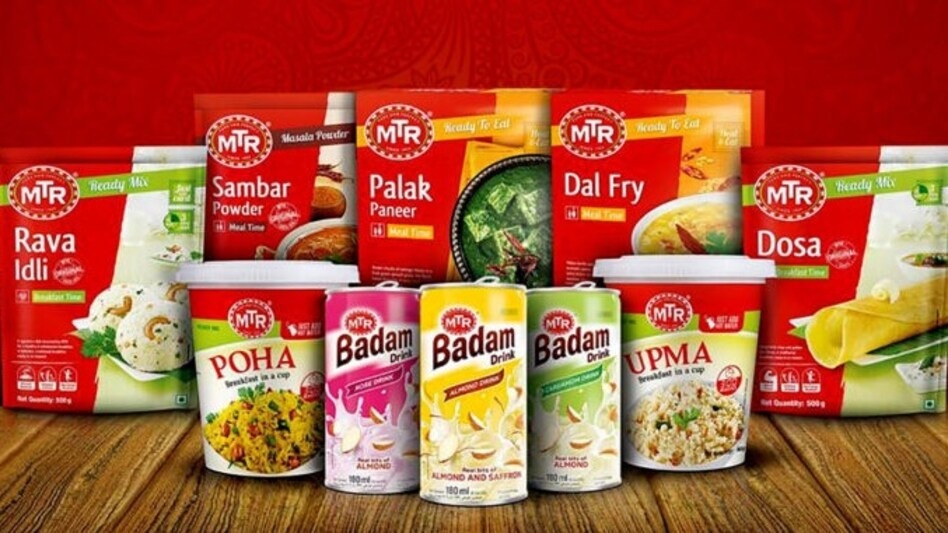
Convenience Foods are ready-to-cook and ready-to-eat products: Rava Idli Mix, Dosa Mix, Upma Mix (breakfast), and RTC/RTE meals under MTR Minute brand. The fresh batter business (Idli-Dosa batter) is at a “margin inflection” per management, which is consultant-speak for “finally, we made money on this.” International revenue sits at 21% of consolidated sales, primarily GCC (Gulf Cooperation Council — think UAE, Saudi, Qatar) and a bit of US/North America suffering from container shortages and tariff anxiety.
The strategy? Go deeper in South, go wider in convenience foods via digital commerce (now 9.5% of sales, +43.4% growth), and launch premium brands like “MTR Prakriti” for the Instagram generation seeking “single-origin, small-batch spices.” They also launched a D2C website for MTR Prakriti, which management is positioning as the beachhead for premiumization. Translation: they are hoping the affluent urban consumer will overpay for better-quality spices at 10x the traditional retail margin.
Spices (Pure/Blend)67%Revenue Mix
Convenience Foods33%Revenue Mix
Domestic Sales79.4%Revenue Split
Export/GCC/Other20.6%Revenue Split
Strategy Decoded: Orkla is caught between two worlds. It wants to be a premium brand (MTR Prakriti, fresh batter, D2C) but still operates like a commodity producer (67% spices, deflation-sensitive). When your supply chain is farmers and your customers are grocery stores, margins are set by mandi prices, not marketing. Management’s hope: volume growth + mix shift toward convenience/premium = saved profitability. Execution risk: very high.
💬 Quick question: How many jars of MTR Sambar Masala do you have in your kitchen right now? And did you even know it’s now a public company you can invest in?
04 — Financials Overview
Q3 FY26: The Numbers Lie. The Margins Scream.