01 — At a Glance
Defence Electronics: Where Profitability Doesn’t Require Hype
- 52-Week High / Low₹1,196 / ₹615
- Q3 FY26 Revenue₹258 Cr
- Q3 FY26 PAT₹46.8 Cr
- Q3 EBITDA Margin30.9%
- 9M FY26 PAT+6.3% YoY
- Book Value₹122
- Price to Book8.0x
- Dividend Yield0.22%
- Order Book (Dec’25)₹2,226 Cr
- FY26 Guidance (Revenue)₹1,150 Cr
Q3 FY26 Headline: Record quarter with ₹258 crore revenue, ₹80 crore EBITDA, and a margin of 30.9%—higher than the previous quarter’s 21.7% and miles above management’s long-term guidance of 24–25%. Order book hit ₹2,226 crore (crossed the psychological ₹2,000 crore barrier that no one asked for but management felt compelled to announce anyway). Full-year profit guidance intact. Stock trading at 57.9x P/E. This is what happens when you build things India’s defense establishment actually needs.
02 — Introduction
The Company That’s Quietly Eating Your Tax Money (Legally)
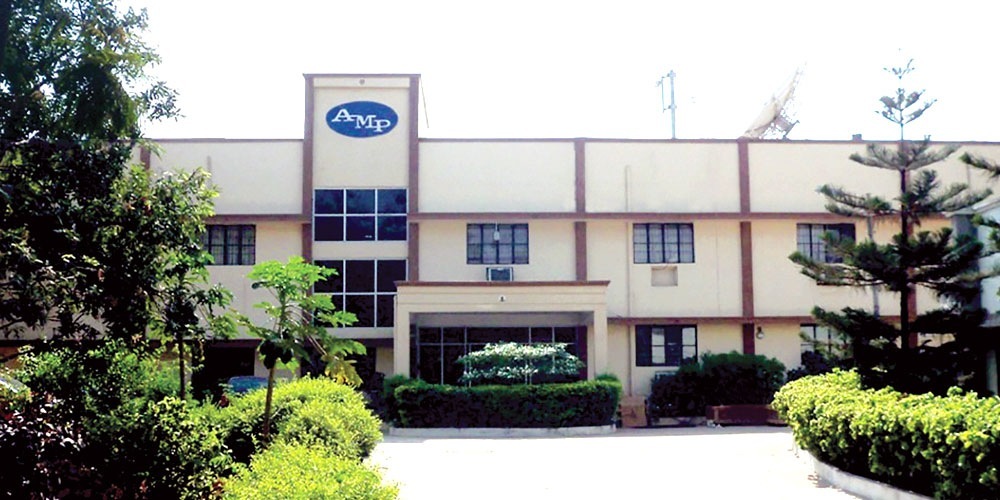
Astra Microwave Products Ltd is a company that manufactures radio frequency and microwave subsystems for India’s defence, space, and telecom sectors. No AI pivot. No blockchain. No metaverse dreams. Just engineers in Hyderabad, Bengaluru, and Paharpur quietly building stuff that DRDO, ISRO, and Bharat Electronics actually buy and put on fighter jets, radars, and satellites. The company’s P/E sits at 57.9x—wild for a defence contractor—but there’s a reason. Order book visibility is a decade long. Margins are expanding. And the government’s “Make in India” obsession with defence has created a moat thicker than a tank’s armour plate.
CEO calls management’s near-term growth rate “quite offensive” to harsh critics. Translation: “Our backlog is so big, execution is the constraint, not demand.” The company spent FY25 drowning in work, crossed ₹1,051 crore annual revenue, posted ₹154 crore net profit, and came back to Q3 FY26 with the best quarter in company history. Profit growth CAGR over 5 years sits at 28.6%. ROE hovers around 14%, ROCE at 18.7%. And they just got their credit rating outlook revised to Positive by CRISIL in December 2025—an exclamation point on a growth narrative that was, until recently, viewed as “stable.”
But here’s where it gets interesting: management announced plans to demerge the Space, Meteorology, and Hydrology business into a separate entity (Astra Space Technologies) and list it by Q1 FY28. That’s not a sign of weakness. That’s a founder saying, “This space unit is now big enough to be its own billion-rupee company. Time to let it breathe.”
The Concall Confession (Feb 2026): Management stated explicitly: “The moment when we get these orders, I think our execution will improve drastically.” Translation decoded: You’re looking at an execution-constrained growth story. The bottleneck is not winning orders. It’s building them fast enough. First-world problem in Indian defence tech.
03 — Business Model: WTF Do They Even Do?
They Build The Invisible Plumbing in India’s Defence Arsenal
Astra designs and manufactures RF (radio frequency) and microwave subsystems—essentially, the brains and nervous systems of radars, electronic warfare suites, satellite payloads, and communication systems. Think of it as: if defence equipment is a body, Astra builds the organs.
Revenue mix has shifted dramatically toward the domestic defence sector. In FY22, exports were 47% of revenue. By Q1 FY25, exports had plummeted to just 21%. Defence jumped from 45% to 65%. This is intentional. Domestic orders have higher margins (better pricing power + government orders = stable margins). Export orders are custom, complex, long-delivery, and lower-margin. Management is consciously shifting toward domestic defence and space, where the order book is thicker and the economics are cleaner.
The company has five manufacturing units in Hyderabad and a test range in Bengaluru. They design and build everything from GaN and GaAs MMIC chips to complete radar systems. They’re also a qualified vendor for DRDO, ISRO, and various PSU defence labs. Key customers: HAL, BEL, Bharat Dynamics, L&T. They even have a 50-50 JV with Israel’s Rafael Advanced Defence Systems (Astra Rafael Comsys) that’s now contributing ~10% of PBT—and growing at 10–15% annually.
Defence (Q3 FY26)80%Revenue Mix
Space~12%Growing Fast
Telecom/Met~8%Legacy Shrinking
Order Book Visibility18–24 Months
R&D Note: 37% of workforce is in R&D. They spent ₹38 crore on R&D in FY24 (~4% of revenues). Management calls R&D a “profit center”—meaning they bill the development work to customers (DRDO, ISRO). R&D spend isn’t dilutive to profitability because they monetize it directly.
💬 Here’s a question: If a company builds radars that India’s air force uses, and the government keeps increasing defence spend, why isn’t the stock up 10x already? Drop your theory.
04 — Financials Overview
Q3 FY26: The Numbers That Made Management Shout
Continue reading with a premium membership.