01 — At a Glance
The Tunneller That Lost Its Way (Temporarily)
- 52-Week High / Low₹499 / ₹272
- TTM Revenue₹12,543 Cr
- TTM PAT₹528 Cr
- TTM EPS₹14.37
- Q3 FY26 EPS₹2.86
- Book Value₹134
- Price to Book2.09x
- Dividend Yield0.91%
- Net Debt / Equity0.5x
- Order Book₹32,635 Cr
Context: Afcons was IPO’d in November 2024 at ₹460/share, raised ₹5,430 crore, and promptly crashed 39.1% in one year. The stock is now pricing at just 17.5x TTM earnings, trading below sector median of 15.1x. The order book stands at ₹32,635 crore (~2.6x annual revenue). So why is the stock getting murdered? Because execution turned into a soap opera. Labour Code provisions, TBM customs delays, government client liquidity issues, and missed revenue guidance will make anyone nervous. But the margin floor at 11%+, ROCE at 22.5%, and 2/3rds domestic order book offer some grounding.
02 — Introduction
From Darling IPO to Execution Pinata: The 3-Month Meltdown
In November 2024, the stock market had a moment of collective optimism about Afcons Infrastructure. A company that builds tunnels, bridges, ports, and metro lines across 30 countries got listed. The IPO was 2x oversubscribed. The opening trade was at ₹460. By March 2026, the stock was at ₹280. That’s a -39% haircut. In. Five. Months.
What happened? Two things. First, the market realized that infrastructure execution in India is not a theme — it’s a minefield. Second, Afcons delivered Q3 FY26 results with a revenue drop of 9% YoY, a PAT that fell 25% despite only a 0.17% profit variance (sarcasm alert), and a ₹76.5 crore Labour Code provision that nuked margins. The CFO literally said “we’re now aiming for 5% growth instead of 10% for FY26.” Guidance got cut in half. Stock got murdered.
But here’s the thing — beneath the execution chaos lies a company with 22.5% ROCE, a 2.6x order book multiplier, and a CFO who openly admits to 11%+ margin discipline. The Mumbai-Ahmedabad bullet train project alone is ₹5,322 crore. Greater Male Connectivity (Maldives) is ₹2,388 crore. A Uganda road project just got awarded. The order book isn’t the problem. Delivery is.
Let’s dissect the mess — data, sarcasm, and the uncomfortable truth about infrastructure businesses in India.
Management Reality Check (Feb 2026 Concall): MD admitted “rough one-third of the Q4 target is already done in 40 days.” Translation: they’re scrambling. If that pace holds, they might hit the low end of guidance. Might.
03 — Business Model: Building Things. Badly. (Sometimes)
They Dig, They Construct, They Pray. In That Order.
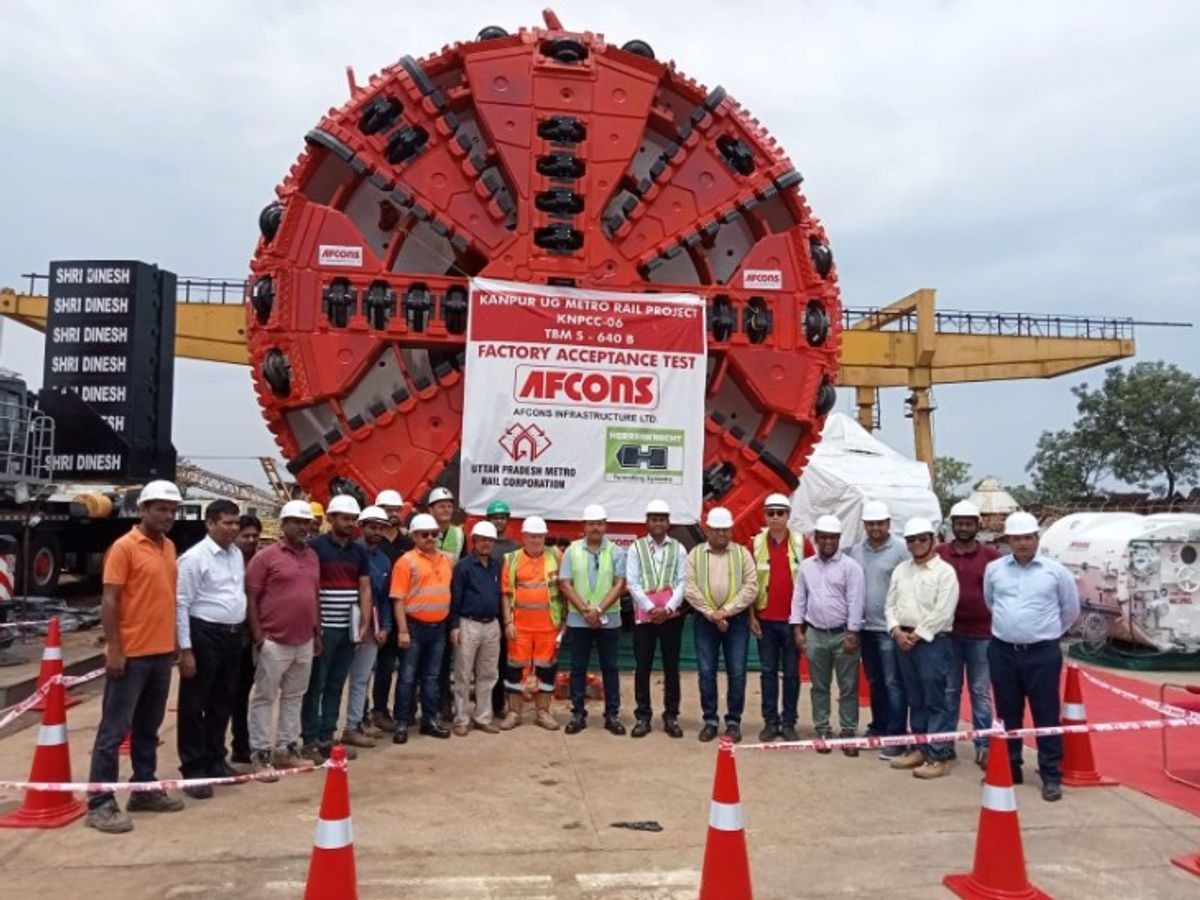
Afcons is an EPC (Engineering, Procurement, Construction) contractor. You give them a contract to build a metro tunnel, a bridge, a port facility, or a high-speed railway. They mobilize cranes, TBMs, equipment, manpower, and expertise across five verticals: Urban Infrastructure (48% of revenue), Hydro & Underground (27.75%), Surface Transport (9.75%), Marine and Industrial (8.5%), and Oil & Gas (6%).
The company is the flagship infrastructure business of the Shapoorji Pallonji Group — a 165-year-old conglomerate. Order book sits at ₹32,635 crore (2.6x annual sales). International presence in 30 countries. Ranked 8th globally in marine & port work, 12th in bridges, per ENR 2025. They’ve delivered 79 projects in 17 countries over 11 years. Sounds impressive. Except execution timing is all that matters in EPC, and Afcons just admitted theirs is slipping.
Revenue mix is 69.80% from government clients, 20.07% multilateral (World Bank, etc), 10.13% private. So they’re structurally dependent on payment cycles that move at glacial speed, approvals that take years, and scope changes that eat margins. The Jal Jeevan Mission (rural water) projects alone have ₹405 crore blocked in Uttar Pradesh receivables. Government liquidity stress is real.
Urban Infra48%Revenue Share
Hydro/UG27.75%Revenue Share
Surface Xport9.75%Revenue Share
Marine+Oil+Gas14.5%Combined
Infrastructure Tip: When a company says “government client stress,” they mean “we’re not getting paid on time and we can’t speed up approvals.” Afcons literally acknowledged ₹15 crore released in January from a stuck ₹405 crore UP receivable. That’s 3.7% quarterly trickle. At that rate, full recovery takes 6+ quarters. In the meantime, they carry debt to fund working capital.
💬 Have you ever waited for a government approval? Now imagine betting your earnings on 100 of them across 65 active projects. That’s Afcons’ life.
04 — Financials Overview
Q3 FY26: The Unravelling. Line by Line.
Continue reading with a premium membership.