01 — At a Glance
The Accidental Holding Company That Nobody Invited to the Party
- 52-Week High / Low₹2,156 / ₹1,511
- Q3 Revenue₹5,066 Cr
- Q3 PAT₹655 Cr
- Q3 EPS₹45.34
- Annualised EPS (Avg Q1-Q3 × 4)₹152.64
- Book Value₹897
- Price to Book1.72x
- Dividend Yield1.08%
- Debt / Equity0.39x
- Interest Coverage21.8x
The Auditor’s Sarcastic Opening: Bombay Burmah is what happens when a 163-year-old company from the Wadia Group decides to become a holding company for Britannia (the biscuit overlord) and then quietly prints money while everyone stares at unicorn startups. Q3 delivered ₹655 crore PAT on ₹5,066 crore revenue. P/E of 9.78x looks like a typo. An interim dividend of ₹17/share (850% payout ratio) was just declared. The stock has tanked 16% in six months. Yet here we are, writing about it like it’s a secret nobody knows.
02 — Introduction
The Company That’s Been Around Since Before Capitalism Had Opinions
Let’s talk about Bombay Burmah Trading Corporation. Founded in 1863 — yes, the 1800s. Before India had electricity. Before Mahatma Gandhi was born. Before the Jamshedpur steelworks. Before Taj Mahal had tourists. BBTCL was already a thing, trading teak and dealing in colonial commerce like it was their full-time job. (It was.)
Today, BBTCL is the unassuming patriarch of the Wadia Group — one of India’s oldest conglomerates. But here’s the thing: BBTCL itself doesn’t really “do” much anymore in the traditional sense. It’s become a holding company. A professional sit-and-collect-dividends operation. It owns roughly 51% of Britannia Industries (the company that makes Good Day cookies, Milk Bikis, and every other snack your mom insisted you finish before TV time). It also holds stakes in Bombay Dyeing, National Peroxide, and various other Wadia group subsidiaries.
Think of it as a financial Russian doll — open one layer and you find another layer of holding companies, which eventually lead to actual operating businesses that actually make things. Biscuits, textiles, chemicals, auto components, teeth implants (yes, really). The entire structure is a classic legacy play — profitable beyond measure, tax-optimised probably in ways the IT Act is still trying to understand, and invisible to retail investors who are too busy chasing the next tech IPO.
Q3 FY26 just reported the highest quarterly PAT in years. An interim dividend of ₹17/share (when the annual EPS might be around ₹160) was declared like spare change. Yet the stock trades at a P/E of 9.78x — cheaper than a value trap, faster than a market recovery. Let’s figure out what’s actually happening here.
Quick Context Note: BBTCL reports on a March-to-March fiscal year but also releases calendar quarter results. Q3 FY26 = December 2025 quarter. Annual FY25 results were already published with full-year EPS of ₹160.90. So we’re mid-fiscal, and the company is already on a ₹152.64 annualised pace. Do the math.
03 — Business Model: A Holding Company’s Holding Company’s Holding Company
They Own Things. Mostly Things That Own Other Things.
BBTCL’s business model is deceptively simple: it’s a holding company with strategic investments in listed and unlisted securities. On a consolidated basis, these investments are worth approximately ₹70,000 crore in market value (as of March 2026). Translation: the company is worth way more on paper than the stock price suggests, but most of that value is locked in subsidiary structures and inter-company layers that would make a tax auditor’s head spin.
Breakdown of the holding structure: BBTCL owns ~51% of Britannia Industries (the flagpole). Britannia does ₹18,865 crore in annual revenue and ₹2,415 crore in PAT, dominating the branded biscuits and snacks category across India with brands like Good Day, Tiger, NutriChoice, and Marie Gold. BBTCL also holds stakes in Bombay Dyeing and Manufacturing (textiles, chemical dyes, real estate), National Peroxide (chemicals), Naperol Investments, and assorted subsidiaries that run from Malaysia to Mauritius for reasons that are probably historical and mostly irreversible at this point.
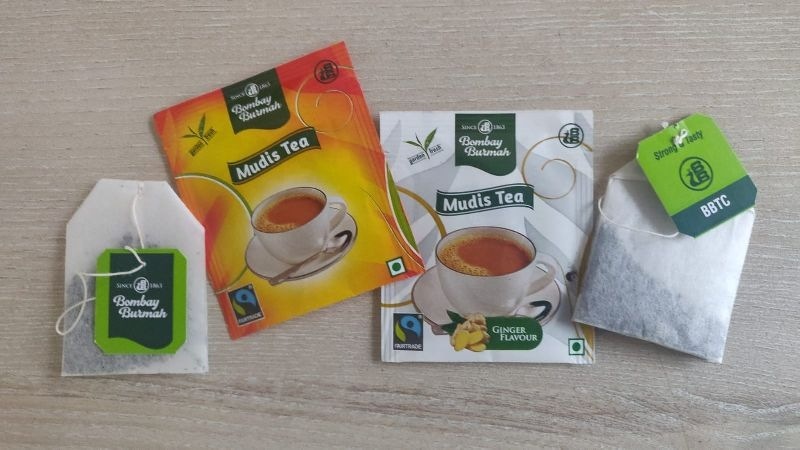
On the standalone side, BBTCL still operates a few actual businesses: tea plantations (24% of revenue), auto electrical components via Electromags (63% of revenue), and dental/healthcare products (13%). But let’s be honest — these are rounding errors compared to dividend income from Britannia. The real cash machine is sitting in a subsidiary’s bank account, waiting to be distributed up the chain to shareholders.
In FY25, BBTCL received ₹895 crore in dividend income from subsidiaries (mostly Britannia). That’s 82% of their entire PAT right there. Operating businesses contributed maybe ₹215 crore. The company doesn’t really “do” anything — it just collects cheques and passes them to shareholders. Which, honestly, is a perfectly valid business model if you’re okay with zero growth.
Britannia Stake~51%Market Cap ₹1.4L Cr
Tea Business24%Revenue Share
Auto Components63%Revenue Share
Overall ROCE35.5%On Consolidated
The Dividend Trap: BBTCL paid out ₹1,345 crore in dividends in FY25 on ₹1,083 crore of PAT. That’s a 124% payout ratio — they literally returned more cash than they earned as profit. Q3 FY26 just declared an interim dividend of ₹17/share (850% payout!). This is classic holding company behaviour — extract all the cash from investments, return it to shareholders, maintain the illusion of growth. Brilliant until it isn’t.
💬 Quick question: Are you comfortable with an investment model that returns 100%+ of earnings as dividends and promises zero capital appreciation? Or do you demand at least 5% growth in stock price?
04 — Financials Overview
Q3 FY26: The Numbers That Scream “Undervalued” (Or Maybe Just “Old”)
Continue reading with a premium membership.