01 — At a Glance
The Fertilizer Story That’s Actually Growing (For Real This Time)
- 52-Week High / Low₹234 / ₹89.7
- FY26 (9M) Revenue₹17,124 Cr
- FY26 (9M) PAT₹841 Cr
- Q3 FY26 EPS₹1.75
- Annualised EPS (Q3×4)₹7.00
- Book Value₹62.0
- Price to Book1.76x
- Debt / Equity0.87x
- Capacity (Post-MCFL)3.7 MMTPA
- Credit Rating (Jan 2026)AA- (Stable)
The Setup: Paradeep Phosphates just merged with Mangalore Chemicals. Capacity jumped from 3.0 to 3.7 MMTPA. Q3 revenue hit ₹5,749 crore — solid. 9M revenue ₹17,124 crore, up 34% YoY. PAT ₹841 crore, up 71% YoY. EBITDA per ton hitting ₹5,300–5,400. The company guided for ₹5,000 EBITDA/ton as the baseline. Sounds boring? Welcome to fertilizers. Where “35% margins on backward integration” is how the dreams are made.
02 — Introduction
Paradeep: The Unglamorous Accumulator of Boring Wealth
Let’s be honest. Nobody wakes up and says, “I want to own a phosphatic fertilizer company.” They wake up saying, “I want to own a company that owns a beach resort with crypto integration and an AI chip fabrication unit.” But fertilizers? Fertilizers are what happen when you’ve exhausted all other options and someone finally points out that 1.4 billion Indians still need to eat.
Paradeep Phosphates is India’s second-largest private-sector phosphatic fertilizer player. Sounds romantic, right? Translation: they make DAP (Di-ammonium Phosphate), NPK (the fancy nitrogen-phosphorus-potassium blend that farmers swear by), urea, and a bouquet of other compounds that cost ₹2,000 per bag and change lives. Two plants. One at Paradeep (Odisha), adjacent to Paradeep Port. One at Zuarinagar (Goa), next to Mormugao Port. A third one inherited from Mangalore Chemicals at Mangalore (Karnataka). Three ports. Three plants. Supply-chain porn for logistics nerds.
The February 2026 concall revealed something stunning: Q3 production hit 1.0 MT for the second consecutive quarter. Nine months’ production: 2.86 MT, up 15% YoY. The NPK category alone grew 30% year-to-date. Even the CFO sounded mildly excited, which for a fertilizer company is equivalent to throwing confetti. Meanwhile, raw material costs — sulphur specifically — hit ₹540–550 per unit (used to hover at ₹150–200). Geopolitical chaos. Capex onslaught. Product mix shifting to higher-margin NPK. This is the story nobody’s written yet. Let’s fix that.
Feb 2026 Concall (Actual Quote): “Shifting from low profitability product to the higher profitable product.” —Management. Translation: DAP is old and sad. NPK is the new favorite child. Buckle up.
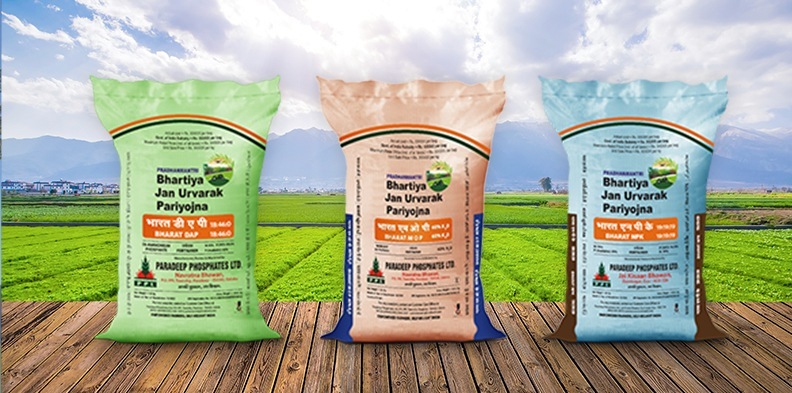
03 — Business Model: Why Farmers’ Dreams Come In Green Bags
They Make The Stuff That Keeps The Food Chain Alive. Literally.
Paradeep’s business is elegantly simple, just like fertilizer itself. Farmers plant crops. Crops need nutrients. Nitrogen, phosphorus, potassium — the holy trinity. PPL manufactures complex fertilizers by blending base ingredients. Rock phosphate comes from OCP (Morocco), the promoter group. Sulphuric acid is either sourced or made in-house. They blend it all, bag it, distribute it through 6,800 dealers and 1 lakh retailers across 18 states, serving over 12 million farmers. Rinse. Repeat. Profit.
The company is now split almost 45–50% NPK by volume, with DAP shrinking as the relative mix. Why? NPK margins are better. DAP prices are government-guided (NBS — Nutrient Based Subsidy). NPK is less subsidized, so pricing has more flexibility. Smart. The company also sells industrial phosphates, gypsum, and experimental nano products (nano DAP, nano urea — because apparently everything needs to be “nano” now).
Post-MCFL merger, capacity jumped. The urea plant at Mangalore (0.4 MMTPA) is now part of the fold. Paradeep and Goa together handle ~2.9 MMTPA of phosphatics + 0.8 MMTPA of urea. Third-largest player in India by manufacturing capacity. Behind Hindustan Fertilizers (government), Rashtriya Chemicals (government), but ahead of everyone else with a working balance sheet.
Q3 Production1.0 MT2 qtrs consecutive
9M YoY Growth+15%Volume expansion
NPK Growth (9M)+30%Fast moat building
Market Reach12+ MnFarmers across 18 states
⚠️ Subsidy Dependency Alert: The company receives government subsidy for DAP, urea, and other fertilizers. Q3 subsidy received: ₹2,500 crore. Subsidy receivable as of Dec-end: ₹3,780 crore. Any Government of India policy shift = instant earnings volatility. Management assures subsidy flows are “typically 2–3 weeks outstanding.” Pray they stay that way.
💬 Do you think fertilizers are the most boring investment story, or are you starting to see the cash machine underneath? Drop your take!
04 — Financials Overview
Q3 FY26: Numbers That Don’t Lie (Though They Do Confuse)
Continue reading with a premium membership.