01 — At a Glance
When Your Biggest Customer Says “We’ll Pay You… Eventually”
- 52-Week High / Low₹286 / ₹153
- TTM Sales₹18,308 Cr
- TTM PAT↓ -42.3% YoY
- EPS (TTM)₹17.6
- Book Value₹189
- Price to Book1.05x
- Dividend Yield1.01%
- Order Book (Dec’25)$1.48 Bn
- 1-Year Return-22.5%
- Net Debt₹3,154 Cr
The Plot Twist: Jindal Saw delivered ₹4,943 Cr in Q3 FY26 revenue (+2.2% QoQ, but -6.2% YoY). PAT tumbled 49.1% YoY to ₹258 Cr. The company’s excuse: Jal Jeevan Mission (JJM) water pipe orders are stuck because the government isn’t sending money to EPC contractors. Management’s hope: Feb 1, 2026 Union Budget might fix this. Translation: they’re holding their breath and hoping Modi ji remembers them.
02 — Introduction
Pipes That Rust, Payments That Stall
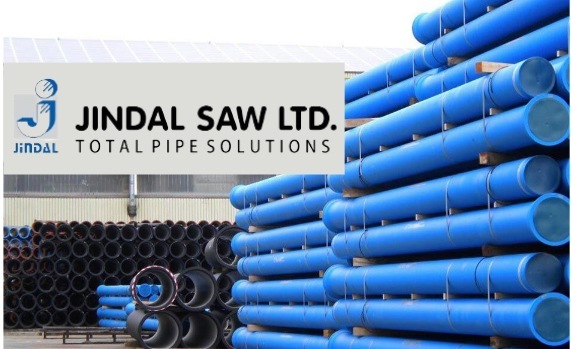
Jindal Saw Ltd is the world’s third-largest producer of ductile iron (DI) pipes, which basically means they make rust-proof tubes that governments buy to carry drinking water to villages. Romantic? Not really. Necessary? Absolutely. Profitable? That’s what they’re arguing about right now.
The company makes LSAW pipes (Large Submerged Arc Welded), HSAW pipes (Helical SAW), DI pipes, seamless pipes, and pellets. It’s got a 24.5 million MTPA capacity spread across seven Indian states, plus operations in the UAE and planned expansions in Saudi Arabia and Abu Dhabi. The Jindal family owns 63.25%. The business model is simple: build infrastructure pipes, sell them, get paid later (sometimes much later).
Q3 FY26 should have been decent—volume improved QoQ, international orders picked up, and the company has a fat $1.48 billion order book. But margins collapsed because utilization dropped. EBITDA margin went from 20% in Q3 FY25 to a tragic 12.7% in Q3 FY26. Management’s explanation: DI market became a “buyer’s market” because JJM delays clogged the supply chain. Translation: their factories are running at 60% capacity instead of 95%, and fixed costs haven’t moved.
Add in some API license drama (their seamless pipe monogram was suspended in February 2026 pending compliance), competition from Pakistani and Chinese players, plus a nasty NTPC arbitration where they’re fighting for ₹1,891 crore, and you’ve got yourself a company that’s wonderfully built but currently held hostage by government cash flow cycles.
CEO Concall Note (Jan 2026): “Q2 appears to have marked the bottom of the cycle.” Translation: things were really bad. They got slightly less bad. Party time!
03 — Business Model: We Sell Pipes, But Do We Get Paid?
The Art of Selling to Governments That Move Like Snails
Jindal Saw makes pipes. Different kinds. For different reasons. You need a pipe? They probably make it. Governments need 1 million tons of DI pipes for Jal Jeevan Mission (drinking water scheme)? Jindal Saw is there. ONGC needs seamless tubes for oil extraction? Jindal Saw. You’re building a city water network across five states? Guess who delivers?
The business is segmented: ~67% domestic, ~33% exports (MENA and Latin America mostly). DI pipes account for ~40% of their pipe order book. They’ve got captive iron ore mines in Rajasthan (180 MMT reserves), so pellet production is super cheap. Revenue mix looks like this: pipe sales drive topline, pellets provide margin stability, and international orders provide the FX hedge.
The cash conversion cycle is the problem. Debtor days: 62 days (reasonable). Inventory days: 152 days (because they hold steel for upcoming orders). Days Payable: 78 days. Net working capital cycle: 136 days. That’s five months of your own cash locked up just waiting to sell and receive money. When Jal Jeevan Mission delays happen, entire payment cycles slip backward, and companies like Jindal Saw have to fund the difference.
DI Pipes~40%Order Book
International~30%Revenue Mix
Capacity Util.~60%Current (Est.)
Pellet Margin~StableSafe Haven
The Core Issue: Their largest customer (JJM, via EPC contractors) is the Indian government. The government is lovely, but slow at sending money. Overdue receivables from JJM projects: ~₹350 Cr. Most is “backed by adequate security,” meaning bank guarantees. But those guarantees are useless if you’re burning cash waiting. This is why management keeps talking about export diversification.
💬 Do you think government infrastructure projects should have stricter payment timelines? Or is delayed payment just the cost of doing business in India?
04 — Financials Overview
Q3 FY26: The Numbers Don’t Lie (But They Do Disappoint)
Continue reading with a premium membership.

2 Responses
E
e
EeeeeElectrosteel castings is also a victim of delayed payments by Government
e