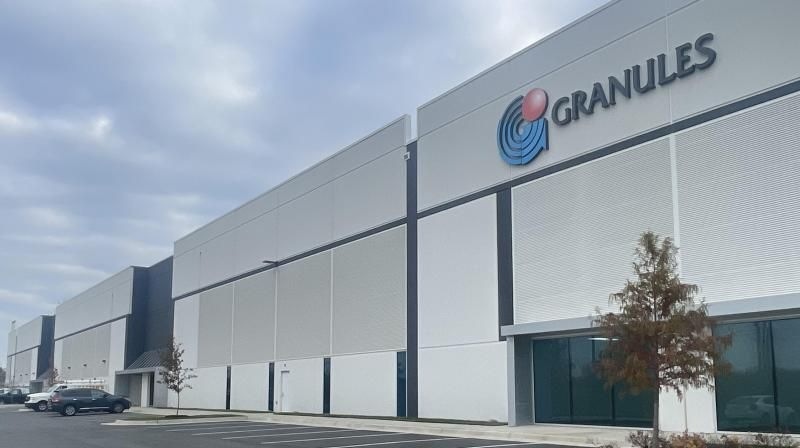
Granules India:
₹1,388 Cr Revenue. 22.2% Margin.
The Pharma Play That Quietly Crushed It
Complex generics are the new paracetamol. ADHD products are flying off shelves in America. An FDA warning letter is being fixed. And Granules just raised ₹1,763 crore. Welcome to the best-kept secret in Indian pharma.
When A Pharma Company Decides to Actually Execute
- 52-Week High / Low₹627 / ₹412
- TTM Revenue₹5,092 Cr
- TTM PAT₹543 Cr
- TTM EPS₹22.5
- Q3 FY26 EPS (Annualised)₹24.76
- Book Value₹164
- Price to Book3.58x
- Dividend Yield0.27%
- Debt / Equity0.45x
- Preferential Issue₹1,763 Cr (Approved)
The Boring Pharma Play That Makes Your Portfolio Jealous
Granules India doesn’t have a TikTok strategy. Doesn’t own Bitcoin. Isn’t pivoting to AI. What it does do is this: manufacture active pharmaceutical ingredients (APIs), pharmaceutical formulation intermediates (PFIs), and finished dosages (FDs) at scales that would make a Fortune 500 pharma company weep.
And it does this while serving 300+ customers across 80+ countries, holding leadership positions in paracetamol and metformin globally, and recently pivot ing hard into complex generics — the stuff that doesn’t get commoditised, the stuff that American insurance companies actually pay you for.
For years, Granules was synonymous with “legacy molecules” — the paracetamol play. But something shifted in FY25. New product launches started mattering. ADHD medications started flying. Complex generics went from 27% of revenue (Q3 FY25) to 49% (Q3 FY26). The company’s margin profile transformed. And the market kept it priced like a middle-order telecom stock.
Then came an FDA warning letter in February 2025 for the Gagillapur facility in India. Typical pharma drama. Except management has been remarkably transparent about remediation. A new Genome Valley facility in Hyderabad is coming online. US sites are hitting zero-observation inspections. And when the company decided it needed fresh capital, shareholders said “take ₹1,763 crores” without batting an eyelid.
This is the story of a mid-cap pharma that decided to become a growth pharma, one ADHD generic at a time.
APIs, PFIs, and Finished Dosages. Or: How Aspirin Got Cool Again.
Let’s make this simple. Granules buys raw materials (starting materials, chemical precursors). Blends and synthesises them into active pharmaceutical ingredients — the actual drug molecule. Sells these to other pharma companies (API business — 22% of revenue). Also sells intermediate formulations (PFI — 14% of revenue) and manufactures finished tablets, capsules, and blister packs (FD — 64% of revenue) for markets globally.
The economics are straightforward. APIs and PFIs are commodity-ish (low margins, high volume). Finished dosages, especially complex ones — extended-release capsules, controlled-substance tablets, ADHD medications — command better margins and loyalty. Granules has been shifting its mix aggressively toward FD. Revenue from FD went from 52% (FY22) to 64% (FY24). And within FD, complex generics went from 27% to 49% in a single year.
The company operates 7 manufacturing facilities (6 in India, 1 in the US) with production capacity of 40,000 TPA for APIs, 24,600 TPA for PFI, and 30 billion dosage units annually for finished goods. Three major plants: Gagillapur and Bonthapally in India (facing some FDA scrutiny and remediation), and GPI (Granules Pharmaceuticals Inc.) in Virginia, USA — which is a cash generator and regulatory darling. A new facility at Genome Valley, Telangana, is ramping up to add redundancy and India-based capacity for global markets.
Q3 FY26: The Numbers That Rewired The Entire Story
Result type: Quarterly Results | Q3 FY26 EPS: ₹6.19 | Annualised EPS: ₹24.76 | TTM EPS: ₹22.5
Source table
| Metric (₹ Cr) | Q3 FY26 Dec 2025 |
Q3 FY25 Dec 2024 |
Q2 FY26 Sep 2025 |
YoY % | QoQ % |
|---|---|---|---|---|---|
| Revenue | 1,388 | 1,138 | 1,297 | +22.0% | +7.0% |
| EBITDA | 308 | 230 | 278 | +34.0% | +11.0% |
| EBITDA Margin % | 22.2% | 20.2% | 21.4% | +196 bps | +75 bps |
| PAT | 150 | 118 | 131 | +27.7% | +14.5% |
| EPS (₹) | 6.19 | 4.85 | 5.38 | +27.7% | +15.1% |
What’s This Pharma Company Actually Worth? (Hint: Not 26.3x)
Method 1: P/E Based
TTM EPS = ₹22.5. Pharma peer median P/E = 27.9x. But Granules has regulatory headwinds (Gagillapur warning letter, though being remediated) and is investing heavily in capex (₹600 cr in FY25, more coming). Fair P/E band: 22x–28x (below sector median due to remediation, but justified by growth + margin expansion).
Range: ₹495 – ₹630
Method 2: EV/EBITDA Based
TTM EBITDA (approx) = ₹1,085 cr. Current EV = ₹15,427 cr → EV/EBITDA = 14.2x. Pharma comps trade at 12x–18x depending on growth and margin profile. Granules’ 34% EBITDA growth and margin expansion suggest justified mid-range multiple of 13x–16x.
EV range (13x–16x): ₹14,105 Cr – ₹17,360 Cr → Net debt ~₹1,015 cr, Per share:
Range: ₹534 – ₹670
Method 3: DCF Based
Operating CF: ₹867 cr (FY25). Expected growth: 12–14% for 5 years (supported by new product launches, complex generics mix). Terminal growth: 4%. WACC: 10.5% (lower Wacc due to capex momentum completed).
→ Terminal Value (4% growth / 6.5% cap rate): ~₹18,550 Cr
→ Total EV: ~₹23,150 Cr → Less net debt ₹1,015 cr = ₹22,135 Cr
Range: ₹580 – ₹695
FDA Warning Letters, ADHD Generics, And ₹1,763 Crore Raised. Welcome to Pharma Poker.
🔴 The Gagillapur Drama: FDA Warning Letter & Remediation Path
In September 2024, the Gagillapur facility received a Form 483 with six observations from USFDA. By February 2025, an official warning letter. In January 2026 (latest concall), management had held a post-warning FDA meeting in “early January” with the agency confirming “no concerns regarding adequacy or pace of remediation.” Remediation costs have “substantially come down” and are trending to “normal levels.” The company has de-risked by filing select products from the GPI (Virginia) and GLS (Genome Valley) sites. Timeline for reinspection? “We cannot put a timeline to that.” Typical FDA cryptic behaviour.
✅ New Facility Ramp & Approvals
- • GLS (Genome Valley): Received FDA EIR in Dec 2025; CBE-30 approval post-inspection
- • GPI (Virginia): Zero Form 483 on recent packaging facility inspection
- • GLS Phase 1 (2.5 bn capacity): Operational Q4 FY25; Phase 2 in 2026
- • Tentative approvals: Adzenys ($172M market) + Dyanavel ($41M market) for ADHD
⚠️ Capital Raise & Capex Plan
- • Feb 23, 2026: Allotted ₹1,462.5 cr warrants + ₹300 cr preferential shares
- • Total raise: ₹1,763 crores at ₹585/share for capex + debt reduction
- • Expected capex: ₹600+ cr in FY26 (Genome Valley, automation, quality systems)
- • Dilution to existing shareholders: ~8% (offset by capex-driven growth)
🎯 Complex Generics & ADHD Momentum
- • Complex generics: 27% → 49% of revenue in 12 months (Q3 FY25 to Q3 FY26)
- • Lisdexamfetamine (ADHD caps): 4 quarters of sales; “meaningful revenue addition”
- • Adzenys (amphetamine generic): Expected launch after IP/litigation resolution (~1 year)
- • Pipeline: 3–4 complex generics launches in next 1–1.5 years
✅ Peptide CDMO Inflection
- • Ascelis Peptides (Senn Chemicals acquisition): Q3 loss ₹24.8 cr (deliberate investment)
- • Q4 explicitly targeted to reach EBITDA breakeven / positive
- • Switzerland-India integration live; India CoE operational at IIT Hyderabad
- • Commercial traction: feasibility studies, sample seeding, RFQ responses
Is The Fort Still Standing? (Spoiler: Yes, And It Just Got Stronger)
Source table
| Item (₹ Cr) | Mar 2023 | Mar 2024 | Mar 2025 | Sep 2025 (Latest) |
|---|---|---|---|---|
| Total Assets | 4,903 | 5,498 | 6,221 | 6,944 |
| Net Worth (Equity + Reserves) | 2,811 | 3,201 | 3,691 | 3,983 |
| Borrowings | 1,136 | 1,315 | 1,455 | 1,807 |
| Other Liabilities | 932 | 957 | 1,051 | 1,154 |
| Total Liabilities | 4,903 | 5,498 | 6,221 | 6,944 |
Borrowings at ₹1,807 cr as of Sep 2025 (up from ₹1,455 in Mar 2025) reflects capex for Genome Valley. Total debt / equity = 0.45x. Manageable. Debt/EBITDA = ~1.7x (comfortable). Interest coverage = 9.9x (strong). Post-₹1,763 cr raise (pending allotment impact), net debt will ease further.
Total assets grew from ₹4.9 cr (Mar 2023) to ₹6.9 cr (Sep 2025). CWIP (capital work in progress) at ₹702 cr = Genome Valley construction. Once operational, asset turns improve. Working capital days at 207 days — slightly high due to inventory buildup, but manageable for a global pharma comps.
ROCE remains at 15.1% — not high, but steady. With Genome Valley online and complex generics scaling, expect ROCE to improve to 17–18% by FY27. ROE at 13.9% — conservative, reflecting the debt-funded capex cycle.
Who’s Printing Money? Everyone. But Granules Most Quietly.
Source table
| Cash Flow (₹ Cr) | FY23 | FY24 | FY25 |
|---|---|---|---|
| Operating CF | +739 | +439 | +867 |
| Investing CF | -192 | -358 | -689 |
| Financing CF | -440 | +8 | -93 |
| Free Cash Flow (OCF – Capex) | +547 | +81 | +178 |
The Scorecard Where Granules Is Honest, Not Perfect
Four-Year Trend: When Boring Becomes Brilliant
Source table
| Metric (₹ Cr) | FY22 | FY23 | FY24 | FY25 |
|---|---|---|---|---|
| Revenue | 3,765 | 4,512 | 4,506 | 4,482 |
| EBITDA | 727 | 915 | 858 | 948 |
| EBITDA Margin % | 19% | 20% | 19% | 21% |
| PAT | 413 | 517 | 405 | 502 |
| EPS (₹) | 16.64 | 21.34 | 16.72 | 20.68 |
The story: FY22–FY24 was a snoozefest (revenue flat, earnings volatile, IT security incident, legacy molecule price erosion). FY25 onwards is the inflection — new product launches, complex generics mix, Genome Valley capex cycle kicking in. TTM revenue at ₹5,092 cr is already 13% above FY25 level. If Q4 holds (and concall suggests it will), FY26 revenue could touch ₹5,500–5,600 cr.
Granules vs The Big Pharma Guys. (Spoiler: Granules Knows What It’s Doing.)
Source table
| Company | Revenue (₹ Cr) | Q3 PAT (₹ Cr) | P/E | ROCE % | OPM % |
|---|---|---|---|---|---|
| Granules India | 5,092 (TTM) | 150 | 26.3x | 15.1% | 21.3% |
| Dr Reddy’s Labs | 34,682 | 1,210 | 19.8x | 22.7% | 23.3% |
| Cipla | 28,351 | 884 | 22.5x | 22.7% | 22.8% |
| Lupin | 26,151 | 1,505 | 21.6x | 21.3% | 29.3% |
| Sun Pharma | 56,809 | 3,761 | 36.0x | 20.2% | 30.8% |
Context: Granules is a mid-cap API + specialty generics player. Dr Reddy’s and Cipla are large-cap formulation guys with scale. Lupin is executing (OPM 29%). Sun Pharma is overvalued at 36x despite higher ROCE. Granules, at 26.3x, trades in the middle range — fair valuation for a 12–14% growth compounder with regulatory headwinds being addressed. If you hate overpaying, Sun Pharma at 36x is your cautionary tale.
Who Owns Granules? (Spoiler: A Doctor Named Chigurupati)
- Promoters (Chigurupati Family)38.02%
- Public29.68%
- DIIs (incl. LIC 5.22%)18.51%
- FIIs13.79%
Pledge: 0.00%. Shareholders: 1.64 lakh. Down 0.8% YoY (pre-IPO dilution). Promotional holding steady despite no pledges — alignment intact.
Promoter: Krishna Prasad Chigurupati (31.65%)
Founder and CMD. Pharmacist by training. Built Granules from a small-scale API player in 2002 to a globally-present pharma compounder. Still deeply involved in operations despite the company being 38% promoter-owned. No pledges. No surprises. Classic promoter alignment.
Recent Dilution: ₹1,763 Cr Raise (Feb 2026)
Warrants + preferential shares approved by shareholders at ₹585/share. Allotment happened Feb 23, 2026. Promoter shareholding will dilute by ~3–4 percentage points, post-allotment. Offset by capex-driven growth. LIC (holding 5.22%) likely participated in the preferential issue as well.
Angels? Devils? FDA-Induced Purgatory?
✅ The Positive Signals
- ✓ Clean audit history — no material qualifications
- ✓ Transparent concalls — management addresses Gagillapur openly
- ✓ ICRA upgraded rating to AA (Stable) in Jan 2026 — affirmed management’s remediation credibility
- ✓ EGM approval for ₹1,763 cr raise achieved 99%+ shareholder support
- ✓ Zero Form 483 at GPI (Virginia) and GCH (packaging facility)
- ✓ Promoter pledge: 0.00% — no financial distress signals
⚠️ The Gagillapur Sword
- ⚠ FDA warning letter in Feb 2025 — still under remediation as of Jan 2026
- ⚠ No committed reinspection date — timeline opaque
- ⚠ Facility producing ~40% of company’s output — concentration risk
- ⚠ Remediation costs ongoing — impact on near-term profitability
- ⚠ De-risking via GLS and GPI doesn’t eliminate uncertainty
Pharma: Where Paracetamol Is King And ADHD Is The New Gold Rush
India’s pharmaceutical market runs at ~₹2.5–3 lakh crore annually, growing at ~8–10% (much faster than GDP). Global pharma spends ~₹25 lakh crore. The US alone accounts for ~45% of global pharma spend and remains the most profitable market for generic drug makers. Why? Patent cliffs. American consumers demand cheap versions of Pfizer’s expensive drugs. Enter Granules and 500 other Indian pharma companies, all fighting for that US market share.
🧠 ADHD & Controlled Substances: The New Paracetamol
Twenty years ago, paracetamol and metformin were the cash cows. Low competition. Stable pricing. Massive volumes. Today, price erosion is real (paracetamol margins are half of what they were in 2010). But ADHD medications — lisdexamfetamine, amphetamine salts, methylphenidate — are still high-margin, limited-competition molecules. Granules bet on this shift by hiring ADHD-focused talent, filing for approvals, and building capacity. Lisdexamfetamine launched 4 quarters ago; Adzenys (amphetamine) tentative approval in Dec 2025. This mix shift from commodity to speciality is THE differentiator.
📊 Complex Generics: The Margin Story
Extended-release capsules, bilayered tablets, controlled-release formulations — these require technical expertise that not every pharma company has. Granules’ shift from 27% to 49% complex generics mix in 12 months is the real upside. Complex generics carry 2–3x better margins than commodity generics. Once product approvals scale (management expects 3–4 launches in 1–1.5 years), revenue CAGR should accelerate from 6% to 12–14%.
🔬 Peptide CDMO: The Optionality Play
Granules acquired Senn Chemicals (Switzerland-based peptide CDMO) and established a Peptide Center of Excellence at IIT Hyderabad. Q3 loss of ₹24.8 cr is temporary — management explicitly targets Q4 breakeven. If peptide CDMO scales, it opens a new revenue stream (currently <1% of revenue, but significant upside by FY28). High-margin, high-touch business. FDA-approved sites in Switzerland + India. Long-term commercial runway.
⚠️ The US Regulatory Hangover
Every Indian pharma selling to the US lives under the USFDA sword. Warning letters happen. Data integrity issues happen. Granules is not unique. But the Gagillapur letter is eating 10–15% of the stock’s potential valuation. Competitors like Dr Reddy’s and Cipla have also faced FDA issues but have recovered. If Granules’ remediation succeeds (which management signals credibly), the stock re-rates 20–30% upward within 18 months.
Macro tailwinds: US healthcare spending growing at 4–5% annually. GLP-1 obesity drugs driving demand for fill-finish capacity (Granules has this). EV transition reducing auto sector demand but irrelevant for pharma. Geopolitical tension towards China pharma pushing volumes toward Indian suppliers. Capex cycle in India (PLI scheme) favoring companies that invest like Granules is doing.
The Pharma Inflection Nobody Noticed
Granules India is a mid-cap pharma company in the middle of a strategic inflection. Complex generics accelerating (27% → 49%). ADHD/controlled-substance launches underway. Margin profile expanding (20% → 22%). Genome Valley coming online. A warning letter being remediated credibly. It’s not exciting. It’s not a 5x story overnight. But it’s precisely the kind of boring excellence that compounds.
The Q3 FY26 Execution: Revenue +22% YoY. EBITDA +34% YoY. Margin +196 bps. EPS +27.7%. These are the growth rates of a company that’s solving real problems (product diversification, regulatory remediation, capex ramp) in real time. Management raised ₹1,763 crore not out of panic, but out of opportunity — to accelerate Genome Valley, modernise quality systems, and reduce debt burden.
The Gagillapur Wildcard: Yes, the FDA warning letter is a real issue. Yes, it’s worth 10–15% haircut. But the remediation trajectory is credible, alternative manufacturing (GLS, GPI) is live, and management has explicitly de-risked via product filing transfers. This is not a Sun Pharma “years of limbo” situation. It’s a 2–3 quarter solvable problem. When it resolves, the stock re-rates.
Historical context: Granules’ stock price CAGR over 10 years is 17%. Over 3 years, 27%. Over 1 year, 23%. Boring? No. Volatile? Yes, because FDA headlines create noise. But the underlying business is consistently executing. The dividend yield of 0.27% is a rounding error — management’s capital allocation is growth-first, not income-first.
Valuation thesis: At CMP ₹587, Granules trades at 26.3x TTM P/E and 14.2x EV/EBITDA. For a pharma with 12–14% CAGR visibility, 22% EBITDA margins, and a credible complex-generics mix shift, this is fair-to-slightly-premium valuation. Not cheap. Not overpriced. The ₹495–695 range is your fair value zone. Anything below ₹550 is a buying opportunity. Anything above ₹650 is expensive (unless new ADHD approvals surprise upward).
✓ Strengths
- Global leadership in paracetamol, metformin, guaifenesin
- Complex generics mix scaling (27% → 49% in 12 months)
- ADHD/CNS products — high-margin, limited-competition molecules
- Two new FDA-approved manufacturing sites (GLS, GPI)
- Margin profile expanding (20% → 22% EBITDA) despite capex cycle
- Peptide CDMO optionality (Q4 FY26 targeted breakeven)
✗ Weaknesses
- FDA warning letter at Gagillapur (still under remediation)
- ROCE at 15.1% — below pharma peer average of 20%
- ROE at 13.9% — diluted by debt-funded capex cycle
- Concentrated revenue base in North America (66%)
- Legacy molecule price erosion ongoing (though being offset by mix)
- High working capital days (207 days) due to inventory buildup
→ Opportunities
- Complex generics pipeline: 3–4 launches in 1–1.5 years
- GLS facility (Genome Valley) EU approval pending
- Peptide CDMO monetization (currently <1% of revenue)
- US healthcare spending growing at 4–5% annually
- PLI scheme capex tailwinds for pharma investors
- Chinese pharma regulatory scrutiny benefiting Indian suppliers
⚡ Threats
- Gagillapur reinspection delay could push remediation beyond 2H FY26
- Intense US generic competition (margins under constant pressure)
- Raw material price volatility (though managed via backward integration)
- ADHD product launches cannibalising existing formulations
- PE investors acquiring larger pharma companies (consolidation pressure)
- Macro slowdown impacting US healthcare capex budgets
Granules India is not the headline-grabbing story pharma investors crave.
It’s the boring compounder that turns into an excellent long-term holding. Q3 FY26 proved the inflection is real — revenue growth, margin expansion, pipeline visibility, capital raising without distress. The FDA warning letter is a real speedbump, but the remediation trajectory is credible. ADHD generics are scaling. Genome Valley is online. Complex generics mix is a 20%+ margin tailwind. In 18–24 months, when Gagillapur is resolved and ADHD/complex-generics revenue has scaled, this stock could easily re-rate 25–30% from current levels. For patient investors, that’s the compounding story worth watching. For traders, the next FDA headline will create volatility. Which one are you?