01 — At a Glance
The Paint Giant Hiding Behind a Margin Squeeze
- 52-Week High / Low₹275 / ₹180
- TTM Revenue₹7,915 Cr
- TTM PAT₹618 Cr
- TTM EPS₹7.24
- P/E (CMP ₹188)26x
- Book Value₹80.1
- Price to Book2.35x
- Dividend Yield1.33%
- Debt / Equity0.10x
- Market Share (Auto)50%+
At a glance: Kansai Nerolac is the most dominant force in automotive coatings India has ever seen — 50%+ market share, eight manufacturing plants, 29,500 dealers. Yet in Q3 FY26, quarterly profit tanked 17.8% YoY while the stock lost 16.3% in three months. This isn’t incompetence. It’s the price of dominance when everyone else decides to wage a margin war.
02 — Introduction
The World’s Most Boring War: Paint vs. Paint
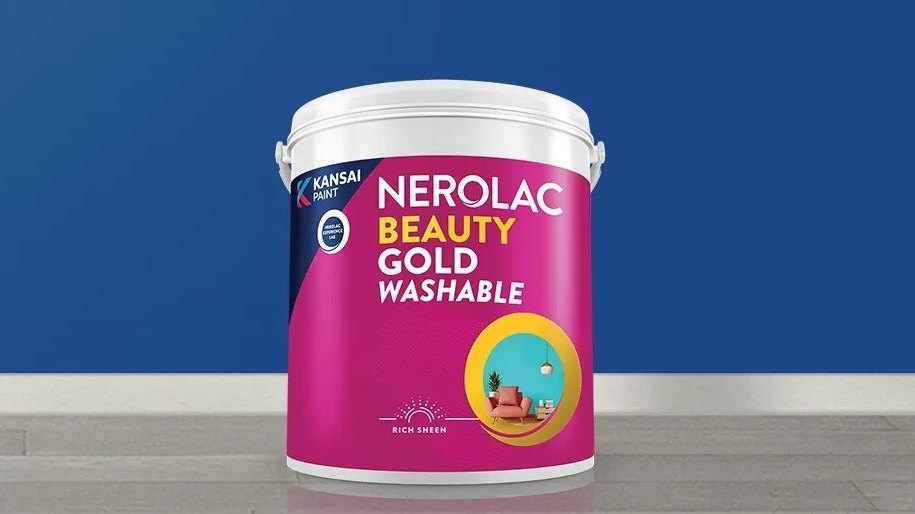
Kansai Nerolac Paints has been around since 1920, when they were called Gahagan Paints & Varnish and everybody wore hats that cost more than their house. In 1983, a Japanese company called Kansai Paint waltzed in, took over 75% of the business, and basically said: “We know paint. Trust us.” They weren’t wrong. Today, Nerolac is the third-largest player in decorative paints (45–50% of the business) and the undisputed emperor of automotive coatings (50%+ share). Revenue is ₹7,915 crore annually. The company is profitable, has nearly zero debt, and pays dividends like clockwork.
Problem: everyone else saw those financials and thought, “Let’s copy that.” Asian Paints dominates decorative (because they’re Asian Paints). Berger Paints is aggressively attacking share with lower prices. New regional players are emerging. Akzo Nobel got sold and freed up to fight harder. And the result, according to management, is that “competitive intensity will remain strong.”
In Q3 FY26, the intensity manifested as: decorative demand flat to slightly negative, industrial doing okay, automotive strong thanks to GST changes in October, but margins getting compressed like a tube of old paint left in a hot garage. PAT fell 17.8% YoY. The company still says this is “early recovery” and things will “stabilize.” We are here to translate what’s really happening.
Quick Math Check: Kansai Paints Japan (promoter with 74.98% stake) just hosted an investor call Feb 2026. They’re bullish. They’re also, predictably, extremely measured in their optimism. Translation: they’re nervous.
03 — Business Model: They Sell Paint. Stop Laughing.
The Unglamorous Art of Coloring Buildings, Cars, and Factory Floors
Kansai Nerolac operates three distinct business lines: (1) Decorative paints (45–50% of revenue) — your walls, your ceiling, your mother-in-law’s guest bedroom. (2) Industrial coatings (more than 50% of revenue) — automotive, performance coatings for machinery, powder coatings for furniture, auto refinishes. (3) Adjacencies — construction chemicals, waterproofing, wood finishes, adhesives.
The decorative business is crowded, commoditized, and margin-killing. The company has 29,500 dealers nationwide, 20,000 color-tinting machines, and 114 depots (sales locations). They launched new products like Excel Everlast 20 (20-year warranty) and Excel Total Floor Coat (hot tire mark resistance). They’re also running influencer campaigns and specialty store formats (600+ NXTGEN Shoppes and Paint+ corners). Sounds aggressive. The margins say: not aggressive enough.
The industrial business — automotive, performance coatings, powder — is where the moat supposedly lives. 50%+ automotive market share. Technical service teams deployed on customer production lines. OEM approvals for Maruti, Hyundai, Tata, Mahindra. Long switching costs. High-performance requirement. Unfortunately for Nerolac, new entrants see this and think: “Let’s enter anyway.” JSW acquired Akzo’s assets. New competitors are being backed by serious capital. Powder coatings have “more than two decades of leadership,” but leadership doesn’t always equal profitability when price wars erupt.
Fun Fact: Kansai Nerolac is trying to enter construction chemicals aggressively. They acquired two companies: Nerofix (doing “pretty well,” growing high double-digits) and Perma. Management says only 3 out of 10 homes use construction chemicals, implying 3x growth potential. Meanwhile, the core business is fighting for single-digit growth.
💬 Question: If the auto coatings market is truly 50%+ dominated by Nerolac, how is quarterly profit down 18%? Are we seeing the birth of a mature market, or just a price war? Drop your theory.
04 — Financials Overview
Q3 FY26: The Numbers That Should Worry Everyone
Result type: Quarterly Results | Q3 FY26 EPS: ₹1.50 | Annualised EPS (Q3×4): ₹6.00 | TTM EPS: ₹7.24
| Metric (₹ Cr) |
Q3 FY26
Dec 2025 |
Q3 FY25
Dec 2024 |
Q2 FY26
Sep 2025 |
YoY % |
QoQ % |
| Revenue | 1,982 | 1,922 | 1,954 | +3.1% | +1.4% |
| EBITDA | 240 | 235 | 215 | +2.1% | +11.6% |
| EBITDA Margin % | 12.1% | 12.2% | 11.0% | -10 bps | +110 bps |
| PAT | 117 | 142 | 133 | -17.8% | -12.0% |
| EPS (₹) | 1.50 | 1.82 | 1.67 | -17.6% | -10.2% |
The Problem in Plain English: Revenue up 3.1% YoY is respectable, but PAT down 17.8% is a red alarm. EBITDA barely grew (+2.1%). This means profit is being killed by three things: (1) Gross margin compression (mix of lower-margin industrial/auto strength). (2) SG&A expense elevation (salesforce expansion, influencer campaigns, manpower deployment). (3) Tax rate variability. The company claims this is temporary. The data suggests this is structural.
05 — Valuation Discussion
Is 24.6x P/E Really Justified For A Margin-Compressed Leader?
Join 10,000+ investors who read this every week.