01 — At a Glance
A Commodity Company Pretending to be a Specialty Play
Tata Chemicals just reported Q3 FY26 consolidated revenue of ₹3,550 crore — down 1.1% QoQ and down 1% YoY. EBITDA collapsed to ₹345 crore, down 20.5% YoY from ₹434 crore. Profit after tax (PAT) turned negative. Return on Capital Employed (ROCE)? A pitiful 3.96%. Stock P/E? A delusional 65.2x. Meanwhile, soda ash — their bread and butter — is pricing at levels not seen in a decade, company management admits demand is “fairly tepid and flat,” and Chinese competitors are dumping like it’s 2008. But hey, they’re investing ₹515 crore in iodized salt, acquiring Novabay Singapore for EUR 25 million, and building a 50 KTPA silica plant. Specialization or desperation? Market can’t decide — hence the 65x multiple on a 1.2% ROE.
Reality Check: This is not a stock. This is a leveraged bet on soda ash prices recovering. When commodity prices eventually stabilize (and they always do), this becomes interesting. Until then, you’re paying bluechip multiples for cyclical pain.
02 — Introduction
Welcome to the Soda Ash Slaughterhouse
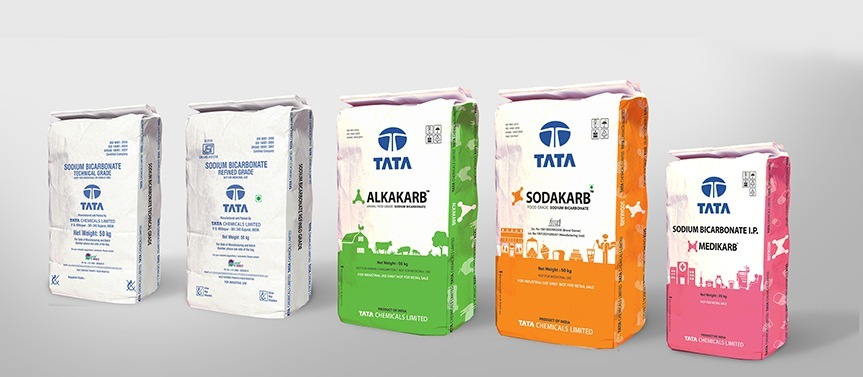
Tata Chemicals is one of the Tata Group’s oldest industrial assets. Incorporated in 1939, listed in 1945, and hasn’t had a truly bad decade until now — well, until the past three years, to be precise. The company is India’s largest soda ash producer, the third-largest globally, and derives roughly 52% of revenue from soda ash alone. Second largest is salt (12%), followed by bicarbonate (4%), crop protection (17%), and seeds (3%).
Here’s the problem: soda ash is a commodity. Global commodity. China produces 30+ million tonnes annually and has zero interest in respecting pricing discipline. Turkish manufacturers are dumping. American producers have structural cost advantages from natural soda ash reserves. And Indian customers import aggressively whenever global prices dip below $160 per tonne.
So Tata Chemicals is doing what every cornered commodity player does: diversification theatre. Specialty products. Premium segments. Silica, iodized salt, crop protection (through Rallis subsidiary), nutritional products. The problem? These are still 25% of the business. Soda ash momentum is sideways-to-negative. Management says demand is “fairly tepid and flat” — in February 2026, not March 2024. This is real-time admissions of despair.
Q3 results came in Jan-Feb 2026. The concall was full of cost-cutting announcements, capacity mothballing in the UK, pivot-to-premium rhetoric, and repeated “we’re preserving cash” messaging. When a 85-year-old industrial conglomerate’s subsidiary starts talking about cash preservation in a results concall, the market reads: “we have no organic growth lever, and we’re buying time.”
Concall Reality: “We are stopping to take orders which are below our expected number” (U.S. export soda ash). Translation: we’re sacrificing volume for margin. That’s code for: this is a down-cycle, and we can’t compete on price.
03 — Business Model: Commodity Pricing with Boutique Pretensions
Why Tata Chemicals Can’t Escape the Cycle
Soda ash is used in glass (flat glass, container glass, fiberglass), detergents, chemicals, pharma, and food. It’s as commoditized as it gets. Producers compete on: (1) cost of production, (2) logistics to market, and (3) ability to swing fixed cost quickly. TCL’s advantage: natural soda ash from two large reserves (Inner Mongolia expansion pending, Kenya operations live, U.S. TCNA subsidiary has trona reserves). Natural soda ash = 70% of global capacity at TCL.
Problem: everyone with natural soda ash is expanding. Inner Mongolia new units are ramping. Kenya added a 50 KT electric calciner plant. And prices have collapsed 54% from Q3 FY23 to Q3 FY26. Chinese soda ash selling at CNY 1,200 (~$165). Indian imports from the U.S. and Turkey are undercutting domestic producers. Domestic realization in India is weak.
Specialty products: Rallis (crop protection, subsidiary) grew 19% revenue in Q3. Industrial lubricants, nutritional sciences (prebiotic FOS), precipitated silica — these are growing mid-to-high teens but are too small to offset soda ash gravity. Rallis is 20% of consolidated revenue. Specialty chemicals are maybe 10-12%. That leaves 68% from basic chemistry, of which 52% is soda ash.
The ₹515 crore iodized salt greenfield bet (210 KTPA) won’t solve this. Neither will the Novabay acquisition. These are rounding errors. Tata Chemicals is tethered to commodity soda ash pricing for the next 2-3 years. Full stop.
Soda Ash Rev %~52%Commodity Exposed
Global Capacity Util.75–92%Range (Weak)
Domestic Price PressureIntenseImports Relentless
04 — Financials Overview
Q3 FY26: The Quarterly Breakdown
Result type: Quarterly Results (Oct-Dec FY26) | Q3 FY26 EPS (Quarterly): ₹-3.65 | Annualised EPS (Q3×4): ₹-14.60 | Full-year EPS guidance: Not provided
| Metric (₹ Cr) |
Q3 FY26
Dec 2025 |
Q3 FY25
Dec 2024 |
Q2 FY26
Sep 2025 |
YoY % |
QoQ % |
| Revenue | 3,550 | 3,590 | 3,877 | -1.1% | -8.4% |
| EBITDA | 345 | 434 | 537 | -20.5% | -35.8% |
| EBITDA Margin % | 9.7% | 12.1% | 13.9% | -240 bps | -420 bps |
| PAT (Pre-Exceptional) | -15 | 49 | 154 | -∞ | -110% |
| Exceptional Charge | -54 | -22 | 0 | +145% | — |
| PAT (Reported) | -69 | 27 | 154 | -353% | -145% |
The Exceptional Pain: Labour Code new wage benefit provisions hit the company for ₹54 crore in Q3 (₹14 crore standalone). This is a one-time. But even pre-exceptional PAT is negative at -₹15 crore consolidated. That’s not a one-off. That’s structural squeeze. Operating profit (EBITDA) collapsed 20.5% YoY. EBITDA margin dropped 240 bps YoY to just 9.7%. The company is losing pricing power, and all the cost-cutting in the world can’t offset commodity deflation.
05 — Valuation: The 65x Multiple Explained (Or Not)
Why Is the Market Paying Bluechip Multiples for Cyclical Pain?
Join 10,000+ investors who read this every week.