01 — At a Glance
From Growth Poster Child to Margin Disaster in One Quarter
- 52-Week High / Low₹695 / ₹256
- FY25 Revenue (Full Year)₹966 Cr
- FY25 PAT (Full Year)₹184 Cr
- Full-Year EPS (FY25)₹33.05
- Q3 EPS (Sep 2025)₹5.09
- Book Value₹187
- Price to Book1.66x
- Dividend Yield0.50%
- Debt / Equity0.16x
- Promoter Pledge26.4% (₹140 Cr)
Auditor’s Scream: EMS closed FY25 with ₹966 crore revenue (+22% YoY), ₹184 crore PAT, 26.9% ROCE, and 24% OPM. Stock up +185% in FY25. Then Q3 FY26 delivered ₹200 crore revenue (down 18.3% YoY) and ₹19 crore PAT (down 62.7% YoY). Margins compressed from 29% to 15%. The concall revealed weather, monsoons, design delays, cost incurred without billing, and a half-executed order book. Meanwhile, the promoter just pledged 20% of his holdings in March 2026. Timing is everything. Everything.
02 — Introduction
The Water Company That Drowned in Its Own Pipeline Project
EMS Limited was India’s sewage-and-water EPC hero. The kind of company that made conservative investors happy — steady 25% margins, ₹1,800 crore order book, 70% of work from government utilities, zero speculation. In FY25, they grew revenue 22% and profit 20%. The stock responded by going up 185%. Analysts filed reports. PE conferences had Q&A sessions. All was well in the land of sewage treatment.
Then came Q3 FY26. September 2025. Suddenly, quarterly profit was down 62.7%. Operating margin went from 29% to 15%. The order book mix had shifted so aggressively toward design-phase, non-billable work that the company was literally burning cash without recognizing revenue. Uttarakhand had a monsoon. Nepal probably had a monsoon too. The CEO conceded that competitive intensity had risen and margins would normalize “lower than historical.”
Within weeks of the concall, on March 10, 2026, the founder Ramveer Singh pledged 20% of his holdings to Tata Capital and SG Finserve, accumulating ₹140 crore in loans against shares. Board approved a ₹300 crore QIP. Company secretary resigned. The CEO who was hired in November 2025 to “fix” things is presumably still trying.
This is the story of a company where everything that could go sideways — weather, project mix, execution timing, working capital, promoter leverage — all happened in the same quarter. And the market responded by erasing 58.5% of value in 12 months.
Concall Highlights (Feb 2026): “Q3 was much lower-than-expected.” —CEO. “Margins will be lower than historical.” —CFO. “Design phase projects pulled forward costs without billing.” —Management explanation. The term “financial distress” did not appear, but the subtext was deafening.
03 — Business Model: Pipes, Plants & Government Tenders
They Build Sewage Treatment Plants for ₹₹₹. But Timing Is Everything.
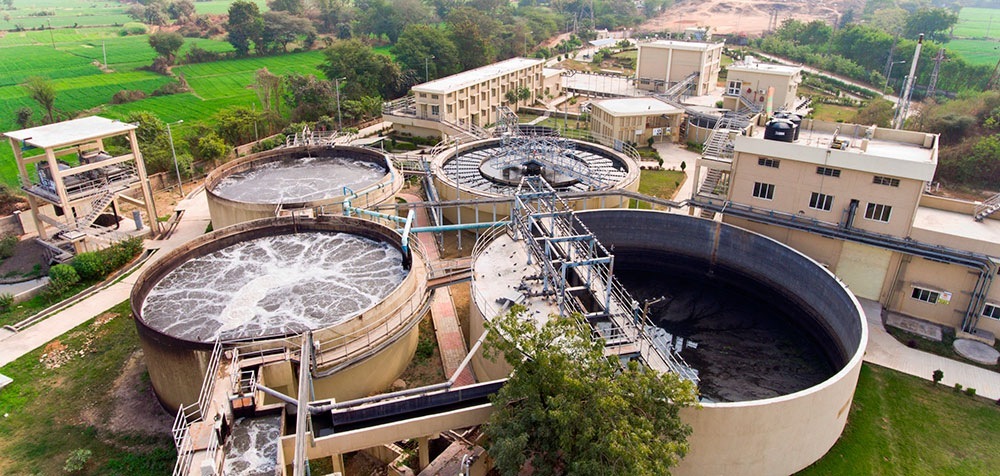
EMS runs a textbook EPC business: bid on government water and sewerage tenders, win contracts, engineer and construct treatment plants and pipeline networks, operate for 10–30 years under concession agreements (primarily AMRUT, NMCG, and state government funding), and collect government payments in milestones. Seventy percent of FY25 revenue came from Water & Sewerage projects. The other 30% is roads, buildings, and electrical transmission work.
They’ve completed 70+ projects, treated 500 billion litres of sewage, and laid 1,400 km of sewerage pipeline. The order book is ₹2,200 crore (unexecuted). The bidding pipeline is ₹4,000 crore. Execution happens across India — Uttar Pradesh (47%), Bihar (19%), Rajasthan (12%), and scattered across other states.
The business model is straightforward until it isn’t. Government tenders are won on price. Execution is milestone-based. If a large order arrives mid-quarter and management starts design work, site surveys, and procurement without hitting a billable milestone, the costs get expensed but revenue doesn’t arrive. In Q3, roughly ₹1,100 crore of their order book was in early mobilization. The two biggest were Kolkata (₹700 crore) and Fatehpur/Agra/Ayodhya combined (₹400 crore). No revenue hit. Costs incurred. Margins vaporized.
Water/Sewage70%FY25 Revenue Mix
Civil & Electrical30%FY25 Revenue Mix
Order Book₹2,200 CrUnexecuted
Completed Projects70+All-Time
Execution Reality Check: Water utility projects require land acquisition, ROW (Right of Way) clearances from state authorities, environmental approvals, and monsoon-adjusted schedules. Unlike building a mall (which stays in one spot), sewage networks span multiple villages and towns. A 15-day monsoon extension becomes a 15-day revenue delay. When the entire quarterly expectation is concentrated in Uttarakhand, and Uttarakhand gets destroyed by rainfall, you get Q3 FY26.
💬 If you live in a city with an STP overflowing in monsoon season, you’ve experienced EMS’s margins in real-time. Have you?
04 — Financials Overview
Q3 FY26: The Earnings Collapse
Result Type: Quarterly Results | Q3 FY26 EPS: ₹5.09 | Annualised EPS (Q3×4): ₹20.36 | FY25 Full-Year EPS: ₹33.05
| Metric (₹ Cr) |
Q3 FY26
Sep 2025 |
Q3 FY25
Sep 2024 |
Q2 FY26
Jun 2025 |
YoY % |
QoQ % |
| Revenue | 200 | 245 | 239 | -18.3% | -16.3% |
| Operating Profit | 31 | 71 | 54 | -56.3% | -42.6% |
| OPM % | 15% | 29% | 23% | -1,400 bps | -800 bps |
| PAT | 19 | 51 | 38 | -62.7% | -50.0% |
| EPS (₹) | 3.39 | 9.09 | 6.82 | -62.7% | -50.3% |
Recalculation Check: Q3 FY26 EPS stated as ₹3.39 in the quarterly results. Annualised (Q3×4) = ₹13.56. But wait — FY25 full-year EPS was ₹33.05. That’s because FY25 ran 4 quarters of normal execution. Q3 FY26 is a disaster quarter. The 9-month (April–Dec) PAT for FY26 was ₹115 crore (disclosed in Feb concall), putting 9M PAT at 15.86% margin. So management is claiming FY26 full-year will be “above 15% PAT margin” if Q4 recovers. We’ll see. For now, the stock is trading at 13.1x FY25 EPS, but forward earnings are a question mark.
05 — Valuation: Fair Value Range
Is It Cheap, Or Is It a Value Trap?
Join 10,000+ investors who read this every week.