01 — At a Glance
The EPC Player That Actually Executes
- 52-Week High / Low₹1,336 / ₹770
- Q3 FY26 Revenue₹6,665 Cr
- Q3 FY26 PAT₹149 Cr
- Q3 FY26 EPS₹8.91
- Annualised EPS (Q3×4)₹35.64
- Book Value₹408
- Price to Book2.75x
- Debt / Equity0.69x
- 9M Revenue Growth+27% YoY
- 9M PBT Margin4.6%
The Setup: Kalpataru closed 9 months of FY26 with consolidated revenue ₹19,365 crore (+27% YoY), already beating the full-year ~25% guidance. Q3 consolidated revenue jumped ₹6,665 crore (+16% YoY). Order book sitting at a record ₹63,287 crore — that’s 3.5x annual revenues, providing “visibility of orders in excess of 2.5 years.” Management says “exceptionally strong year operationally, financially and strategically.” They’ve sold a road asset, improved working capital beyond targets, and are on track for FY26 EPS exceeding ₹50. The stock is down 4% in 3 months. Because infrastructure stories are boring.
02 — Introduction
Welcome to the Infrastructure Machinery That Never Stops
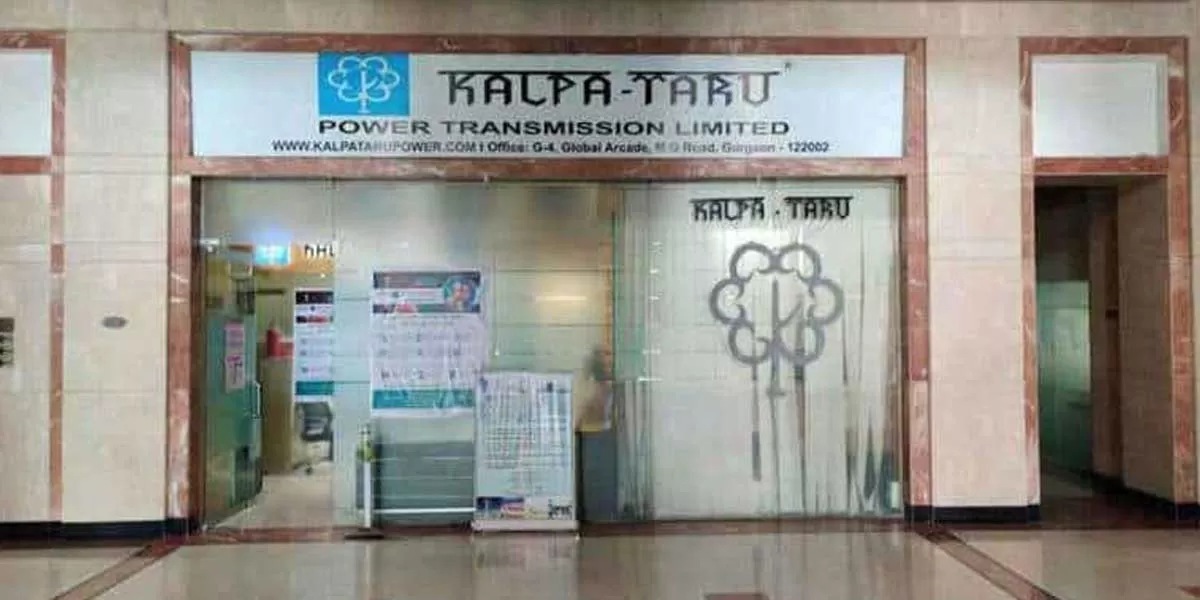
Let’s talk about Kalpataru Projects International Ltd — a name that sounds like a real estate developer but behaves like an operating machinery. Established in 1981 by Mofatraj P Munot, KPIL has executed 250+ projects across 5 continents, operates in 75 countries, maintains live projects in 30+ countries, and employs 10,700 people of 40+ nationalities. That’s not a company. That’s an army wearing hard hats.
The business model is elegantly simple: KPIL takes on engineering, procurement, and construction (EPC) contracts for major infrastructure — power transmission lines, buildings, factories, water systems, oil & gas pipelines, railways, and urban infrastructure. They’ve laid 37,000+ km of transmission lines, delivered 2.6+ million tons of transmission towers globally, commissioned 11,500+ km of oil & gas pipelines, and electrified 8,900+ track km of Indian railways. Not quietly, either. They’re the leading player in T&D (Transmission & Distribution) in India and have diversified into construction, industrial projects, and cross-border pipelines.
In FY25, they executed ₹22,316 crore in revenues with ₹567 crore net profit. FY26 is tracking to be much stronger. The order book has grown from ₹58,415 crore (Mar FY25) to ₹63,287 crore (Dec FY25). Every quarter brings new order wins. Credit rating is CRISIL AA/Stable. Management guidance is being beaten consistently. And the stock price is somehow down 4% in three months. Classic infrastructure disconnect: when the business does well, nobody cares. When it falters, everyone panics.
This article dives into Q3 FY26 results, the concall clarity, the order book momentum, the Brazil situation (yes, there’s a mess), the working capital inflection, and whether ₹1,120 is reasonable for a company firing on all cylinders. Spoiler: it probably isn’t. But then again, who listens to infrastructure stories anymore anyway?
Feb 2026 Concall Flavor: Management characterized FY26 as “exceptionally strong year operationally, financially and strategically.” They’re not wrong. 9M revenue +27% YoY, net working capital 79 days (well ahead of 100-day target), net debt down 29% QoQ, and ₹775 crore asset divestment already closed. The tone is confident but grounded — no hype, just data.
03 — Business Model: Building Everything Except Houses
EPC Machinery With Diversified Revenue Streams
Kalpataru is an EPC player — they design, procure, and construct major infrastructure projects. In FY25, EPC was 97% of revenues. The remaining 3% comes from subsidiaries (Shree Shubham Logistics for agricultural warehousing and agri-logistics, and Energy Link for real estate in Indore). Nobody cares about the subsidiaries. The EPC is where the money is.
Within EPC, the breakdown (H1 FY26) was: Transmission & Distribution 46%, Buildings & Factories 24%, Water 9%, Oil & Gas 9%, Railways 4%, Urban Infrastructure 4%. T&D is the breadwinner. They’ve built 37,000+ km of transmission lines and deliver 2.6+ million tons of towers annually. Capacity is 240,000 MTPA (metric tons per annum), with 90%+ booked for next year. B&F is scaling fast — they crossed ₹10,000 crore in 9M FY26 order inflows. Water is a working capital nightmare (we’ll get to that). Oil & Gas is finally profitable after Saudi Aramco project execution. Railways and Urban Infra are smaller but growing steadily.
The business model requires: (1) Bidding for tenders nationally and internationally, (2) Securing advance mobilization payments and progressively billing as work progresses, (3) Managing supply chains for materials like steel, aluminum, cables, and software. KPIL’s competitive edge is scale, execution track record, and CRISIL AA rating. They can bid on massive projects without banks getting jittery. Their order book is 40% international and 60% domestic — this diversification matters when domestic policy shifts.
T&D Revenue46%Order Mix (H1 FY26)
B&F Revenue24%Order Mix (H1 FY26)
Tower Capacity240KMTPA (90%+ Booked)
Order Book₹63,287Cr (3.5x Revenue)
Commodity Hedging: KPIL hedges 80–95% of aluminum, zinc, and copper exposure. Steel has no effective hedge market, so they maintain 50k tons of inventory (raw materials, finished goods, work-in-progress) and build tender contingencies. Management admits even a ₹5,000–₹7,000 further rise in steel shouldn’t materially dent margins because most tenders are fixed-price with bid-stage commodity pricing built in.
💬 Comment: Does the idea of a ₹63k crore order book make you feel secure, or does it just add execution risk?
04 — Financials Overview
Q3 FY26: Execution That Beat Guidance
Result type: Quarterly Results | Q3 FY26 EPS: ₹8.91 | Annualised EPS (Q3×4): ₹35.64 | FY26 EPS Target (Mgmt): >₹50
| Metric (₹ Cr) |
Q3 FY26
Dec 2025 |
Q3 FY25
Dec 2024 |
Q2 FY26
Sep 2025 |
YoY % |
QoQ % |
| Revenue (Consol) | 6,665 | 5,732 | 6,529 | +16.3% | +2.1% |
| Operating Profit | 513 | 479 | 561 | +7.1% | -8.5% |
| OPM % | 8% | 8% | 9% | Flat | -100 bps |
| PAT (Consol) | 149 | 140 | 237 | +6.4% | -37.1% |
| EPS (₹) | 8.91 | 8.31 | 14.06 | +7.2% | -36.7% |
What’s Going On Here? Revenue growth is solid (+16% YoY). But PAT is down 37% QoQ because Q2 benefited from working capital improvements and lower provisions. Management flagged three specific drags on consolidated EBITDA: (1) Water business collections delays hitting margins with interest cost (~100–200 bps EBITDA dent). (2) Brazil (Fasttel) losses while closing legacy projects. (3) Reduced road asset contributions (down to one asset from two in prior year comparison). Strip out these, and underlying execution is clean. 9M consolidated PAT margin stands at 4.6% — ahead of the full-year +100 bps margin improvement guidance.
05 — Valuation: Fair Value Range
Is ₹1,120 a Fair Deal?
Join 10,000+ investors who read this every week.