01 — At a Glance
The Semiconductor Bet That Crashed From ₹7,705 to ₹3,768 in 12 Months
- 52-Week High / Low₹7,705 / ₹3,295
- 9M FY26 Revenue₹2,384 Million
- 9M FY26 PAT₹273 Million
- Q3 FY26 Revenue₹804 Million
- Q3 FY26 EPS₹11.43
- Book Value₹698
- Price to Book5.39x
- Dividend Yield0.00%
- Debt / Equity0.19x
- Order Book₹9,072 Cr (Q3)
The Reality Check: Kaynes Technology trades at 64.6x P/E — a P/E so absurd that even growth-stage tech companies look cheap by comparison. The stock started FY26 at ₹7,705. By March 10, 2026, it’s ₹3,768. That’s a -51% haircut in 12 months. Why? An order book paradox: ₹9,072 crores of unfillable orders. CEO resigned. Governance red flags from Kotak Institutional Equities. And management conceded they’re 20% short of revenue guidance due to customer project rescheduling — which they called “not too much of control.”
02 — Introduction
The Semiconductor Dream That Turned Into a Working Capital Nightmare
Kaynes Technology is a classic contract manufacturer. Founded in 2008, incorporated, grown through acquisitions, and now attempting to vertically integrate backward into semiconductors. The pitch is irresistible: India doesn’t make semiconductors at scale, government subsidies are flowing, and Kaynes is building OSAT (outsourced semiconductor assembly and testing) and HDI PCB (high-density interconnect printed circuit boards) plants with ₹4,700 crore capex commitments.
Sounds great. Reality is messier. Their core EMS (electronics manufacturing services) business is now 73% of revenue mix (down from higher percentage in prior years). Industrial/EV grew to 54% of revenue. But execution is a bloodbath. The company sits on ₹9,072 crore of order book — roughly 1.5 years of historical revenue — yet Q3 FY26 came in at ₹804 million when management had expected more. Why? Customer project delays. External approvals not granted. Railways orders (Kavach) deferred. Working capital ballooned to ₹1,226 crore in inventory and ₹1,249 crore in receivables (of which ₹250 crore is classified as non-current because the company is struggling to convert them to cash).
The stock has crashed 51% from its 52-week high. CEO Rajesh Sharma resigned in September 2025. Dr. M. Muthukumar took the MD chair in Sep 2025. Kotak Institutional Equities published a scathing December 2025 report flagging goodwill accounting, contingent liabilities of ₹520 crore, related-party transaction omissions, and ₹1.8 billion of capitalized technical know-how. Management issued clarifications but the trust damage is done.
Yet here’s the twist: the company’s ambition is real. ₹1,600 crore QIP in June 2025. FSA approval from Government of India for semiconductor subsidies. OSAT facility operational in Sanand. HDI PCB plant ramping in Chennai. The long-term story of India making semiconductors could be authentic. But the near-term is a management credibility crisis wrapped in an execution wall wrapped in a working capital squeeze. Let’s strip the marketing and look at the numbers.
Feb 2026 Concall Reality: Management called Q3 “a phase of consolidation” focused on execution strengthening. Translated: we’re drowning and need to paddle harder. They explicitly stated order book deferral rate at 20% below plan and blamed customers for not accepting shipments unless their end-projects were ready — a red flag for lumpy, project-dependent revenue that’s nearly impossible to forecast.
03 — Business Model: Contract Slaves with Semiconductor Delusions
They Assemble Circuit Boards. Now They Want To Make Semiconductors.
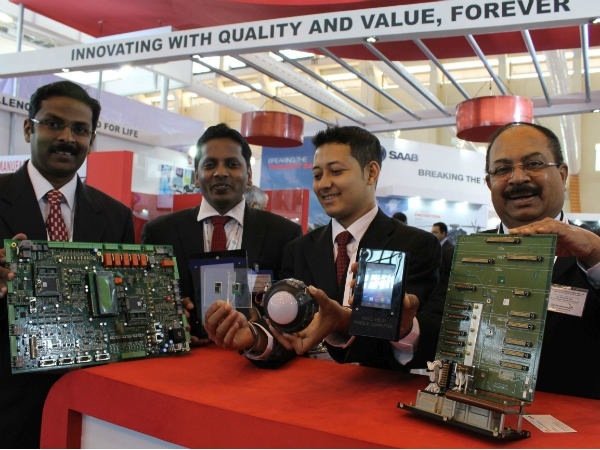
Kaynes’ core business is electronics manufacturing services. They take your design (or build to your spec), source components, assemble circuit boards, test them, and ship. Revenue mix: 51% OEM turnkey PCB assembly (down from 63% in FY22), 22% OEM box build (down from 28%), and 27% ODM and product engineering (up from 9%). Think of it like this: they’re the hired hands in a supply chain where margins are razor-thin and customers hold all the negotiating power.
Vertically, they serve industrial (54% in 9M FY26), automotive (27%), railways (6%), medical (2%), and IoT/IT/others (11%). The industrial/EV segment has exploded (was 30% in FY22, now 54%) — classic India story of capex-driven infrastructure and EV electrification. Automotive is softening (was 34% in FY22, now 27%) — ICE to EV transition anxiety baked in.
The backward integration bet: ₹3,200 crore OSAT (outsourced semiconductor assembly) and ₹1,400 crore HDI multilayer PCB manufacturing. Why? Because EMS margins are structurally low (operating margins at 16.3% TTM), and semiconductors/PCBs are the higher-value-add part of the chain. Management’s framing: “We will be away from the AMISP business [smart metering AMISP model], but meter as a product… we are continuing.” Translation: they’re exiting low-margin, high-receivables businesses and doubling down on complex, strategic electronics.
OEM PCBA51%9M FY26 Revenue
OEM Box Build22%9M FY26 Revenue
ODM / Prod Eng27%9M FY26 Revenue
Order Book1.5 YrsExecution Lag
The brutal truth: Kaynes is caught in the middle. They’re too capital-intensive to stay pure EMS (margins <17%). Too indebted and dependent on subsidies to smoothly build OSAT/PCB. And their customer base (top 10 = 67% revenue, top 1 = 16% revenue as of FY25) gives massive negotiating leverage to buyers. One of their largest customers is in smart metering — a segment they're trying to exit. Classic concentration trap.
💬 If a government subsidy dries up mid-capex, or if a major EMS customer cancels orders, where’s the downside protection? Drop your take!
04 — Financials Overview: Q3 FY26
Revenue That Grew. Profits That Didn’t.
Result type: Quarterly Results (Q3 FY26) | Q3 FY26 EPS: ₹11.43 | Annualised EPS (Q3×4): ₹45.72 | Full-year FY25 EPS: ₹45.84
| Metric (₹ Mn) |
Q3 FY26
Dec 2025 |
Q3 FY25
Dec 2024 |
Q2 FY26
Sep 2025 |
YoY % |
QoQ % |
| Revenue | 804 | 661 | 906 | +21.6% | -11.3% |
| Operating Profit | 119 | 94 | 148 | +26.6% | -19.6% |
| OPM % | 15% | 14% | 16% | +100 bps | -100 bps |
| PAT | 77 | 66 | 121 | +17.7% | -36.4% |
| EPS (₹) | 11.43 | 10.38 | 18.11 | +10.1% | -36.9% |
The Deception: Q3 revenue up 21.6% YoY sounds great until you realize Q2 FY26 (Sep 2025) was ₹906 million. That means Q3 *declined* sequentially from Q2 by 11.3%. The order book is stuck. Execution is stalled. Management admitted 20% shortfall vs plan due to customer rescheduling. PAT is down 36.4% QoQ despite revenue being higher YoY — compression of profit on every sale. The stock’s -51% haircut in 12 months makes sense now.
05 — Valuation: The Case for Humility
What Fair Value Range Even Means Here Is Debatable
Join 10,000+ investors who read this every week.