01 — At a Glance
The Hospital Chain That Bit Off More Than It Can Chew (For Now)
- 52-Week High / Low₹798 / ₹508
- Q3 FY26 Revenue₹1,003 Cr
- Q3 FY26 PAT₹52 Cr
- Q3 FY26 EPS₹1.30
- Annualised EPS (Q3×4)₹5.20
- Book Value₹56.7
- Price to Book12.2x
- Dividend Yield0.00%
- Debt / Equity1.40x
- Current Ratio0.72x
Auditor’s Opening Note: KIMS closed Q3 FY26 with ₹1,003 crore revenue (highest-ever, +29% YoY on consolidated basis), but profit crashed 40% to ₹52 crore. New hospitals in Bangalore, Thane, and Nashik are operational ramp-ups—they’re cash-burning machines right now. ARPOB (revenue per bed) surged 20.5% YoY—the good news. Margins are at 20.4%—the less good news. A P/E of 93.8x is pricing in either a turnaround within months or pure hope. Market cap ₹27,525 crore. Current price ₹693. Some assembly required.
02 — Introduction
Welcome to the India Healthcare Land Grab—Where Everyone Wins (Except Profits)
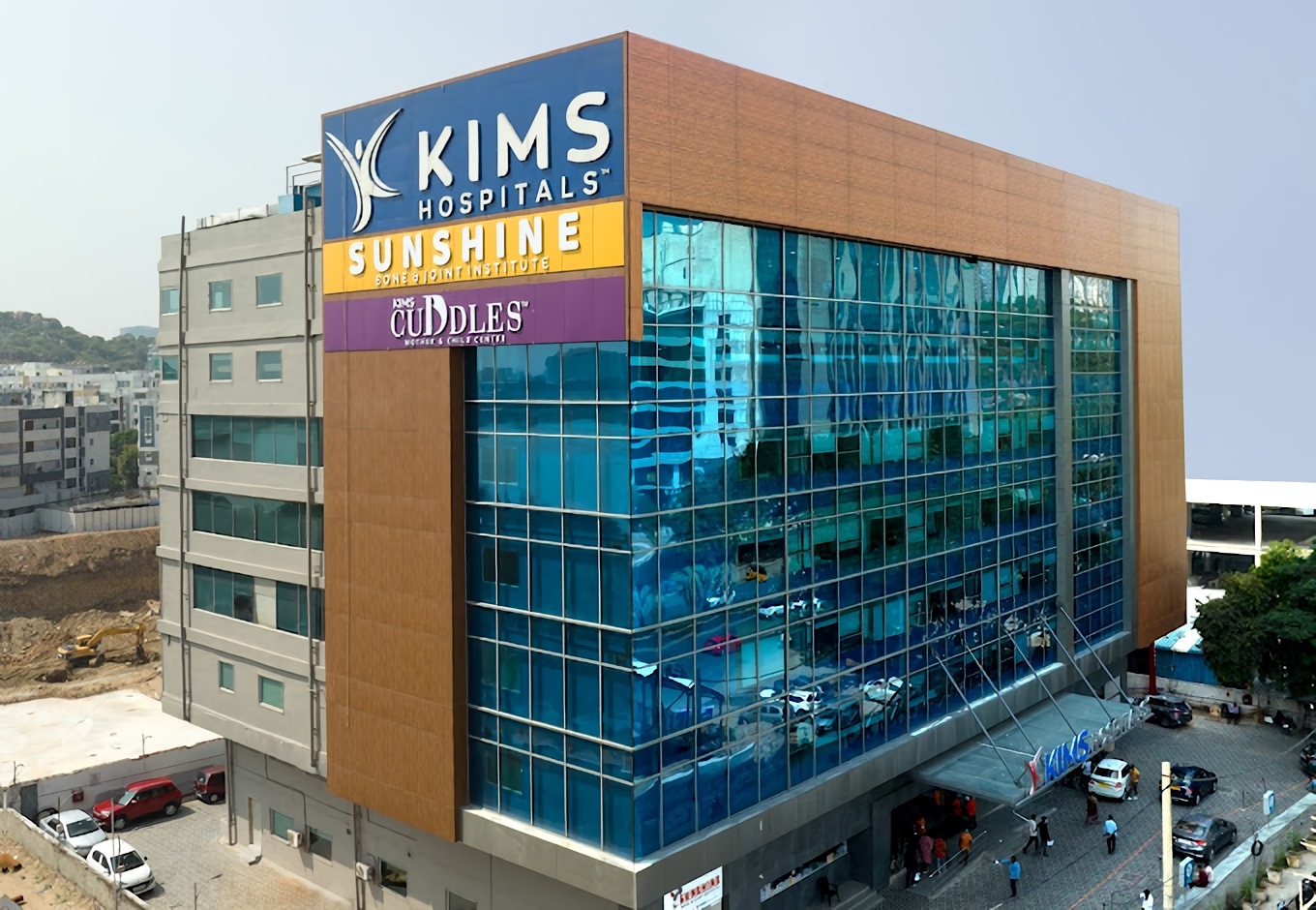
KIMS, founded in 2004 by Dr. Bhaskara Rao Bollineni, a cardiothoracic surgeon with 30 years of experience, has grown from a single hospital in Secunderabad to 25 hospitals across five states. It’s a solid regional story with a strong footprint in the South. But KIMS is also mid-expansion fever—the kind where you commit ₹2,500 crore capex over three years to add 2,500+ beds, and suddenly your balance sheet starts showing why hospitals aren’t supposed to be in growth-startup mode.
Q3 FY26 numbers reveal the tension perfectly: revenue hit a 20-year high at ₹1,003 crore. Consolidated basis, that’s +29% YoY. Meanwhile, profit tanked -40% to ₹52 crore. Why? Two new Bangalore hospitals went live (September and December 2025). Thane went live (April 2025). Nashik went live (October 2024). None are profitable yet. All are required to be by Q1, Q3 FY27 respectively.
This is the hospital sector’s favorite paradox: you grow revenues 29%, and the market punishes your stock for it because the new beds don’t make money for 12–18 months. Management calls it ramp-up drag. Investors call it nightmare execution. The truth is somewhere in between.
On February 9, 2026, the management held a concall laying out the roadmap. New units will hit breakeven in Q1 and Q3 FY27. The mature cluster in Telangana will drive 20–25% growth once Kondapur’s new 550-bed facility opens (April 2026). Debt has peaked at ₹2,850 crore. The state government owes them ₹600 crore in Aarogyasri dues—a working capital time bomb waiting to go off. Let’s cut through the noise.
Concall Key (Feb 9, 2026): “New units have started stabilizing.” — Management. Translation: They’re still unprofitable but might not hemorrhage as much going forward.
03 — Business Model: WTF Do They Even Do?
Multi-Specialty Hospitals. Lots of Them. In Different Cities. With Different Challenges.
KIMS operates 25 hospitals across Telangana, Andhra Pradesh, Maharashtra, Karnataka, and Kerala. Bed capacity: 7,024 (including O&M contracts). They do tertiary and quaternary care—which means everything from cardiothoracic surgery to organ transplants to oncology. Revenue mix is diversified: cardiac sciences (17%), orthopedics (14%), neurosciences (11%), mother & child (10%), gastric sciences (10%), and so on.
Payer mix is critical: Cash (52%), Insurance (30%), Corporate (13%), and Government (Aarogyasri) (5%). The cash and insurance payers are profit-generators. The government scheme is bread-and-butter in Andhra Pradesh but notorious for slow payment. Hence the ₹600 crore dues sitting on the balance sheet.
Operationally, the model is bed-to-revenue. They charge per occupied bed (ARPOB—average revenue per occupied bed), and the magic metric is occupancy %. In mature clusters (Telangana), occupancy is running 80–85% on available beds. In ramp-up cities (Bangalore), it’s still climbing. The Secunderabad flagship (1,000 beds) is fully occupied and rejecting patients due to space constraints. That’s the leverage play. Once new capacity comes online and fills, the revenue compound is exponential.
ARPOB (YoY)+20.5%Revenue per bed
IP Volumes (YoY)+13.2%Inpatient surge
OP Volumes (YoY)+24.5%Outpatient boom
Occupancy %52.7%Reported; 80%+ real
Geography Trap: 85% of revenue still comes from Telangana & Andhra Pradesh. Management expansion into Maharashtra (Thane, Nashik), Karnataka (Bangalore), and Kerala (Kannur, Kollam) is intentional—to reduce dependence on home states where regulation, pricing, and government payment can kill margins in a day.
💬 Should a hospital chain be in growth-mode capex while debt is already 1.4x equity? Or is this the right time to consolidate turf before competitors do? Drop your thought.
04 — Financials Overview
Q3 FY26: The Numbers That Explain the Pain
Result type: Quarterly Results | Q3 FY26 EPS: ₹1.30 | Annualised EPS (Q3×4): ₹5.20 | FY25 Full-year EPS: ₹9.61
| Metric (₹ Cr) |
Q3 FY26
Dec 2025 |
Q3 FY25
Dec 2024 |
Q2 FY26
Sep 2025 |
YoY % |
QoQ % |
| Revenue (Cons.) | 998 | 772 | 961 | +29.2% | +3.9% |
| EBITDA (Cons.) | 193 | 197 | 186 | -2.2% | +3.7% |
| EBITDA Margin % | 19.3% | 25.5% | 19.4% | -620 bps | -10 bps |
| PAT (Cons.) | 52 | 92 | 72 | -39.8% | -27.8% |
| EPS (₹) | 1.30 | 2.22 | 1.67 | -41.4% | -22.2% |
Margin Crunch Explained: Standalone Q3 shows EBITDA margin at 20.4% (down from 25.9% YoY). The gap is entirely new unit ramp-up. Bangalore’s two hospitals (Mahadevapura + PES) are burning cash. Thane is break-even adjacent. Nashik finally turned EBITDA-positive in January 2026 at ₹8.5 crore revenue—took 13 months. Management guided Thane + Mahadevapura to EBITDA neutral/positive by Q1 FY27. PES Bangalore to break-even by Q3 FY27. If executed, the margin recovery to 23–25% range is real. If delayed, the stock could see downside re-rating.
05 — Valuation: The Premium Puzzle
How Much Is a Hospital Worth When It’s Betting the Farm?
Join 10,000+ investors who read this every week.