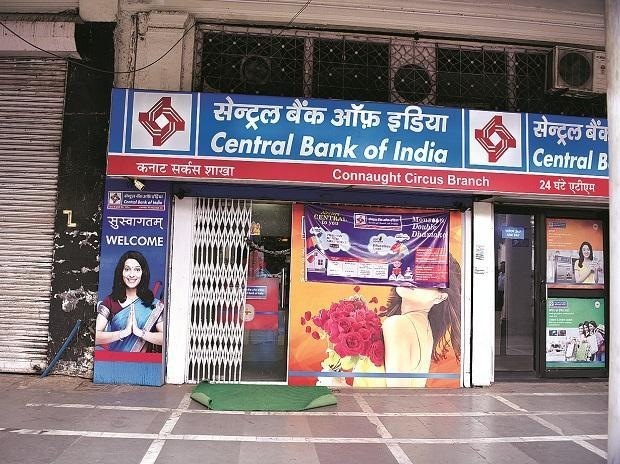
01 — At a Glance
The Government’s Forgotten Bank Just Delivered Its Best Quarter Ever
- 52-Week High / Low₹47.3 / ₹32.8
- Q3 FY26 PAT (All-Time High)₹1,263 Cr
- Q3 FY26 Revenue₹10,968 Cr
- Full-Year FY25 PAT₹3,785 Cr
- Annualised Q3 PAT (×4)₹5,052 Cr
- Book Value per Share₹43.6
- Price to Book0.82x
- Dividend Yield1.67%
- Debt / Equity12.3x
- Government Holding89.27%
Breaking: Banking Redemption Arc Intensifies. Central Bank of India just posted its best-ever quarterly profit at ₹1,263 crore — a 31.7% jump YoY. All the GNPA worries from 2022–2023? Ancient history. Now sitting at 2.70% and falling. Credit growth at 19.48% YoY. ROA crossing above 1% (was 0.8% last year). CASA deposits stable. Management guided on 11 out of 14 parameters. Stock P/E at 6.71x. Price-to-Book at 0.82x. And the Government of India, which owns 89.27%, is either being patient or forgetting it owns a bank. Your call which is stranger.
02 — Introduction
From Punchbag to Punchline: A Central Bank’s Redemption Story
Let’s start with context. Central Bank of India was not a lovable bank. Between 2017–2023, it was a walking cautionary tale. Gross NPAs hit 21.48% in FY18. Net NPAs floated around 10–11%. The bank was the poster child for “why PSU banks struggle.” PCA (Prompt Corrective Action) was imposed in June 2017 — basically, the RBI put it on a financial watchlist and told it to shape up or get merged out of existence.
Fast forward to Q3 FY26. All-time high quarterly profit. GNPA at 2.70%. Net NPA at 0.45%. Slippage ratio down to 0.25%. The Provision Coverage Ratio at 96.69% (including technical write-offs). ROA trending above 1%. Management is now guiding so many numbers that analysts are taking notes. New MD (Kalyan Kumar, 30 Sep 2025). New ED (Ratan Kumar, 24 Nov 2025). New strategy. Same 4,567 branches. Different outcome.
The script reads like a Bollywood redemption arc: misery phase, crisis phase, whisper of hope, and now the “wow, they actually pulled it off” phase. Except the investor reward hasn’t shown up in the stock price yet. Which means opportunity often looks like patience to those willing to wait.
Concall Highlight (Jan 2026): Management said “we are going to maintain 3% guidance” on NIMs even amid rate cuts. Also: “in the last nine months, we sanctioned ₹1,17,000+ crore,” with undisbursed pipeline supporting Q4 momentum. Translation: they didn’t just deliver Q3. They’re loading Q4 too.
03 — Business Model: How a Public Sector Bank Actually Makes Money
Deposits. Lending. Spreads. Rinse. Repeat. Boring? Yes. Profitable? Finally.
Central Bank is a commercial bank operating 4,567 branches across 28 states and 7 UTs, with 65% in rural and semi-urban areas. That geographic footprint is both blessing and burden: steady deposit base, lower competition, but also higher NPA risk if rural credit cycles turn bad. The loan book is split: Corporate (34%), Retail (28%), Agriculture (20%), MSME (18%). Treasury operations and other income round it out.
The bank funds itself through deposits (₹4.50 lakh cr as of Dec 2025, growing 13.24% YoY) and borrowings. As of Q3, CASA deposits were at 47.13% of total deposits — meaning ~47% of the deposit base comes from no-cost or low-cost current/savings accounts. Rest is term deposits repricing at higher rates. The yield on advances is 8.15%; cost of deposits is 4.75%. Net Interest Margin is 2.96% (below the 3% guided, but management is confident on defending through mix shift). Operating expenses are a drag — cost-to-income ratio at 57.84% (vs. 56% guided), but management says 50–100 bps improvement per year is realistic, with sub-50% taking “minimum three years.”
In plain English: the bank lends at high rates to small towns and farms, funds itself cheaply through captive deposits, and hopes credit losses don’t blow up the earnings. For a decade, they got the last bit wrong. Now they’re getting it right. That’s the entire story.
Loan Book₹3,23,531 Cr+19.48% YoY
Deposit Base₹4,50,575 Cr+13.24% YoY
CASA Ratio47.13%Up 24 bps QoQ
Total Assets₹5,31,893 CrDec 2025
04 — Financials Overview
Q3 FY26: All-Time High Profit, But Margins Squeezing
Result type: Quarterly Results | Q3 FY26 PAT: ₹1,263 Cr (All-Time High) | EPS: ₹1.40 | ROE: 14.47% | ROA: 1.01%
| Metric (₹ Cr) |
Q3 FY26
Dec 2025 |
Q3 FY25
Dec 2024 |
Q2 FY26
Sep 2025 |
YoY % |
QoQ % |
| Total Income | 10,968 | 9,738 | 10,520 | +12.6% | +4.3% |
| Interest Income | 9,033 | 8,505 | 8,777 | +6.2% | +2.9% |
| Operating Profit | 3,105 | 3,047 | 2,927 | +1.9% | +6.1% |
| Cost-to-Income % | 57.84% | 58.66% | 57.33% | +118 bps | -52 bps |
| PAT | 1,263 | 958 | 1,234 | +31.8% | +2.4% |
| EPS (₹) | 1.40 | 1.11 | 1.36 | +26.1% | +2.9% |
The Profit Explosion Has a Catch: PAT jumped 31.8% YoY, but NIM guidance is under pressure. Interest income grew only 6.2% YoY (much slower than the 12.6% total income growth because other income spiked — mostly other income at ₹1,937 cr). Cost-to-income has widened from 58.66% to 57.84% YoY (better but still above 56% guidance). Operating expense absorption, ECL provisioning buffers (₹375 cr in Q3, ₹1,525 cr cumulative), and employee terminal dues provisioning (₹150 cr) all muted incremental profit. Management explicitly said “proactive” buffering is happening pre-ECL implementation deadline (Apr 1, 2027). Translation: near-term profit growth is being sacrificed for balance sheet peace-of-mind. Long-term, it’s prudent. Near-term, it masks real earnings leverage.
05 — Valuation Discussion
Is Central Bank Cheap, or Just Forgotten?
Join 10,000+ investors who read this every week.