01 — At a Glance
The Government Train That Keeps Printing Money
- 52-Week High / Low₹820 / ₹535
- TTM Revenue₹5,024 Cr
- TTM PAT₹1,383 Cr
- TTM EPS₹17.80
- Q3 EPS (Q3 Dec 2025)₹4.93
- Book Value₹53.2
- Price to Book10.4x
- Dividend Yield1.54%
- Debt / Equity0.02x
- 6-Month Return-22.5%
Management Sarcasm Meter: IRCTC called Q3 FY26 the “highest ever revenue and profitability in the company’s history.” Meanwhile, the stock is down 22.5% over six months. Welcome to the paradox of a PSU with record earnings but a valuation that has investors as confused as a tourist trying to book a ticket on the old website. P/E at 32x. You’re essentially paying ₹32 for every rupee of TTM earnings. For a company with 62.4% government ownership and no exit strategy.
02 — Introduction
IRCTC: India’s Government-Owned Train Vending Machine
Let’s talk about IRCTC. The only company in India officially authorized to sell rail tickets online. The only company allowed to run catering on trains. The only company allowed to peddle water in little plastic bottles to desperate train passengers. Basically, IRCTC is the definition of a monopoly with government backing and zero competition anxiety.
Incorporated in 1999, now a Navratna Category-1 CPSE, IRCTC operates four business lines: Internet Ticketing (the cash cow earning 85% EBITDA margins), Catering (the rising star growing at 19%), Tourism (the dark horse jumping 29%), and Rail Neer (the vending machine earning cash while running at 50% capacity). In FY25, it hit ₹4,675 crore revenue and ₹1,315 crore PAT with a 46.4% dividend payout. Then Q3 FY26 came in with record-breaking numbers, and everyone’s still sitting there wondering why the stock is tanking.
The company has never posted a loss. Never failed to pay dividends. Is almost debt-free. Returned 37.2% ROE last year. And the stock is trading at 10.4 times book value — which is expensive for a PSU, even a good one. This is the story of a company that prints money but whose shareholders are slowly coming to terms with the fact that money printing ≠ stock appreciation.
Q3 FY26 was spectacular. Catering margins got squeezed. Tourism shined. And the management’s concall transcripts revealed something that made auditors everywhere smile: the company understands its own business economics better than most private enterprises. Let’s dig in.
Q3 Management Note: “Highest ever revenue and profitability in the company’s history.” Also, “margins moderated slightly due to changes in revenue mix, particularly higher contribution from catering.” Translation: we’re growing fast in low-margin segments. You’re welcome.
03 — Business Model: WTF Do They Even Do?
Four Monopolies Wrapped in One PSU. Lovely.
IRCTC is essentially four businesses glued together by government policy and shareholder apathy:
1) Internet Ticketing (30% revenue, 85% EBITDA margin): They own the exclusive license to sell rail tickets online. Period. No competition. Not allowed. They operate servers capable of processing 28,000 tickets per minute and manage 1.6 million ticket bookings daily. Online penetration: 89% of all reserved tickets. Their only job is to keep the site running, collect convenience fees, and reinvest in monetization layers like loyalty programs and merchant partnerships. Margins are stupid-high because there’s literally no variable cost once the infrastructure is built.
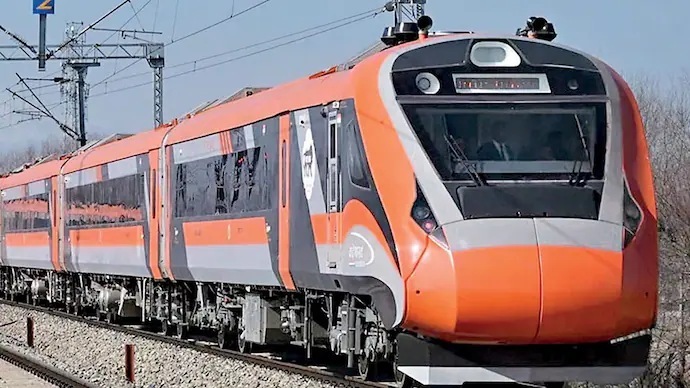
2) Catering (47% revenue, single-digit EBITDA margin): They run food services across trains, stations, and restaurants. 1,265 trains with onboard catering. 40 Jan Ahaars (budget meal outlets). 141 refreshment rooms. 305 food plazas. The Vande Bharat trains are premium, prepaid services where the company knows meal volumes in advance. Regular trains are postpaid (passengers order as needed), which creates demand volatility. Vande Bharat is expanding rapidly — 260 train sets in the pipeline — but the economics are mixed because they’re sharing revenue with Railway and dealing with 5% GST outflows.
3) Tourism (16% revenue, 19% EBITDA margin): Package tours, charter trains, Maharaja Express, pilgrim trips. They organized 337 Aastha (religious) trains in FY25, carrying 5.48 lakh passengers. Growing at 29% YoY. This is the company’s high-growth, high-margin segment. Limited by train availability, not demand.
4) Rail Neer (7% revenue, solid margins): Bottled water sold at railway stations and on trains. 19 manufacturing plants. 17.68 lakh liters daily installed capacity. Currently serving only 50–60% of demand. This is basically printing money once capacity is expanded. They’re building new plants at Mysore, Prayagraj, Bhagalpur, and Ranchi. Will add 25–30% capacity in 1.5 years.
Internet Ticketing89%Online Penetration
Catering Growth19%Q3 YoY
Tourism Growth29%Q3 YoY
Rail Neer Capacity50–60%Utilization
⚠️ The Margin Squeeze Trap: Ticketing margins are falling because non-convenience fees are growing. Catering margins are being squeezed by Vande Bharat (structural GST + licensing fee leakage). The company is literally growing in all the lower-margin segments. Revenue up, margins down. This is the next two years in a nutshell. Management knows this. They’re betting tourism, Rail Neer expansion, and data monetization will offset the margin compression.
💬 Hot take: Is IRCTC a high-growth company with a margin compression problem, or a margin-compression company getting increasingly excited about growth? Drop your view in the comments.
04 — Financials Overview
Q3 FY26: The Numbers That Made Everyone Uncomfortable
Result type: Quarterly Results | Q3 EPS: ₹4.93 | Annualised EPS (Q3×4): ₹19.72 | TTM EPS: ₹17.80
| Metric (₹ Cr) |
Q3 FY26
Dec 2025 |
Q3 FY25
Dec 2024 |
Q2 FY26
Sep 2025 |
YoY % |
QoQ % |
| Revenue | 1,449 | 1,225 | 1,146 | +18.2% | +26.4% |
| Operating Profit | 465 | 417 | 404 | +11.5% | +15.1% |
| OPM % | 32.1% | 34.0% | 35.3% | -190 bps | -320 bps |
| PAT | 394 | 341 | 342 | +15.5% | +15.2% |
| EPS (₹) | 4.93 | 4.27 | 4.27 | +15.5% | +15.5% |
The Margin Moderation Confession: IRCTC management was refreshingly honest on the concall: “margins moderated slightly due to changes in revenue mix, particularly higher contribution from catering and provisions.” Translation: catering (low-margin, 19% EBITDA) is outgrowing ticketing (ultra-high-margin, 85% EBITDA). This will continue. By FY27, catering will be 50%+ of revenue. The company is trading volume growth for margin compression. Revenue up 18.2%, PAT up 15.5%, but OPM down 190 bps YoY. This is the core tension.
05 — Valuation: Fair Value Range
Expensive for a PSU, Even If the Numbers Are Godly
Join 10,000+ investors who read this every week.