01 — At a Glance
The Real Estate Circus: Malls, Hotels, Offices, and Pipe Dreams
- 52-Week High / Low₹1,993 / ₹1,402
- Q3 FY26 Revenue₹1,121 Cr
- Q3 FY26 PAT₹276 Cr
- Q3 FY26 EPS₹7.71
- Annualised EPS (Q3×4)₹30.84
- Book Value₹302
- Price to Book5.31x
- Dividend Yield0.16%
- Debt / Equity0.46x
- Net Debt / EBITDA1.3x
The Bottom Line: Phoenix Mills is India’s largest retail mall operator. Q3 FY26 revenue hit ₹1,121 crore, +15% YoY. Consumption at malls surged 25%. PAT grew 4%, though EBITDA jumped 19%. The company is buying out CPP’s 49% stake in its mall subsidiary ISML for ₹5,449 crore to own 100%. Net debt sits at ₹3,344 crore. The stock trades at a P/E of 51.9x — the highest in the realty sector. Historical returns: +32% over 5 years, +35.3% over 3 years, but only +2.8% over 1 year. The valuation conversation is… complicated.
02 — Introduction
Your Weekend Mall Stroll Just Became a Financial Instrument
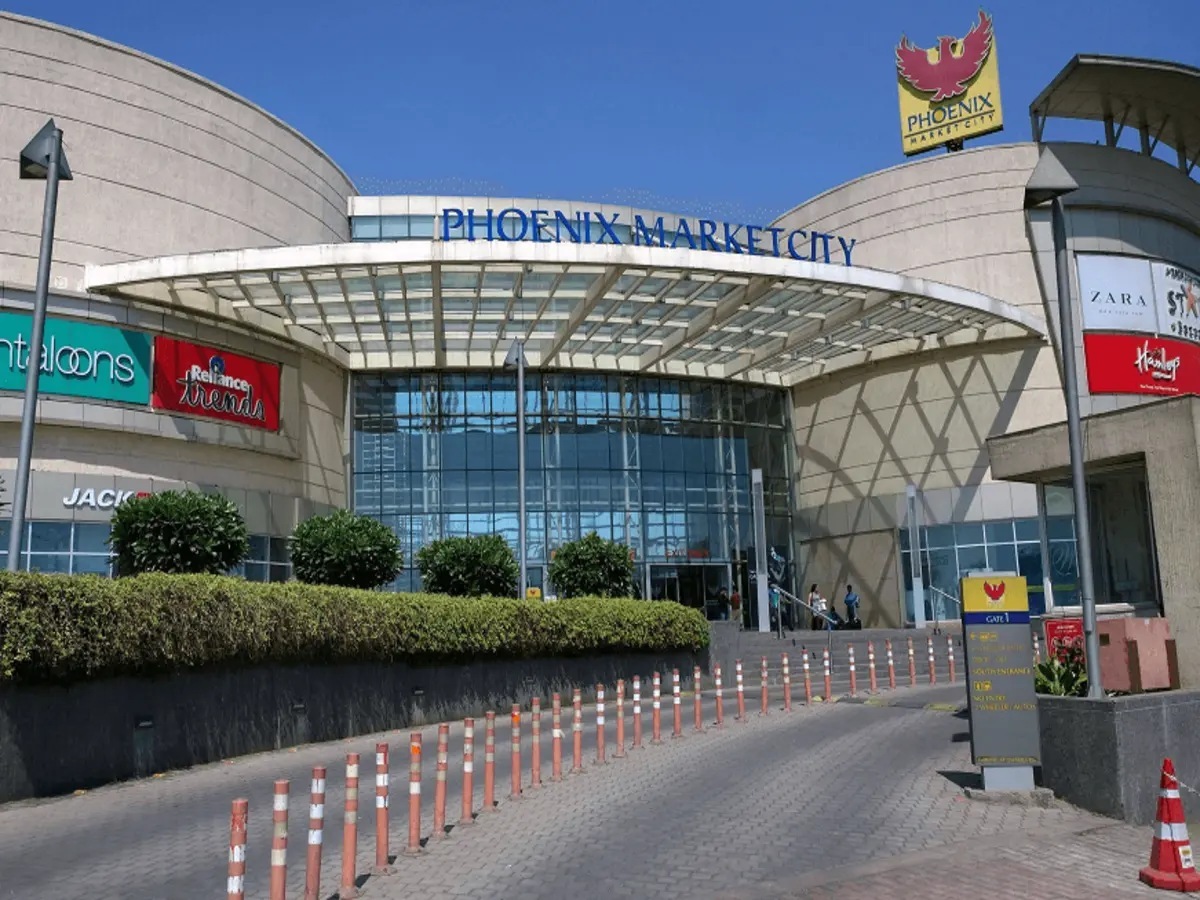
Phoenix Mills is India’s largest shopping mall operator. That’s not a boast; that’s a fact printed on every quarterly earnings call. The company operates 12 retail properties spanning 11 million square feet across 8 major Indian cities. It also runs three office towers, two hotels, and a residential business that’s essentially window dressing at this point.
The story is seductive: discretionary spending in India is booming. Urban India is mall-hungry. Phoenix’s malls are filled with designer brands, premium food courts, and experiential zones that keep families returning. Consumption at their malls jumped 25% in the festival quarter (Q3) — and that’s not just seasonal sugar, management insists. It’s structural. Footfalls are up. Dwell time is up. Repeat visits are climbing. The data points to a real business.
Then comes the twist. The stock trades at 51.9x earnings — nearly double the sector median of 26.3x. The return on equity is 9.36%, below a fixed deposit. The return on capital employed is 10.8%, which is pedestrian. And the company just announced it’s spending ₹5,449 crore in cash to buy out a private equity partner’s stake in its mall subsidiary, reducing financial flexibility. For a company that’s supposed to be a compounding machine, Phoenix is behaving like a mall owner desperate to prove it owns the mall. Which, soon, it will.
Let’s untangle the spreadsheets, decode the real-estate jargon, and figure out if paying 51.9x for a 10.8% ROCE business is genius or delusion.
Concall Flavor (Feb 2026): Management called consumption growth “consumption-led growth” (yes, they said that). They also stressed “operating leverage in our platform” — which is just a fancy way of saying the malls are getting more profitable. And they want to own 100% of their largest wealth-creation engine by paying ₹5,449 crore. Bold or desperate? Both probably.
03 — Business Model: Rent Extraction From Retail Brands
They Build Malls. Brands Pay Rent. You Go Shopping. Everyone’s Happy (Except Investors).
Phoenix owns and operates shopping malls in tier-1 and tier-2 cities. The model is straightforward: acquire land, develop a mall (takes years, costs hundreds of crores), then lease space to retail brands. Revenue comes from two sources: fixed rent and revenue share (typically 11–15% of brand sales). The margin magic happens when occupancy stabilizes and revenue shares kick in. A mall that’s 50% occupied at opening becomes 90%+ occupied within 3–5 years, with brands pulling in strong sales. Phoenix captures that growth without incremental capital. Classic real estate leverage.
The company has three divisions: Retail (79% of revenue in 9M FY25), Commercial Offices (17% — though this is a growth story management is betting on), and Hospitality (4%). Residential is essentially a fading sideshow. The real wealth engine is Retail. Phoenix Retail controls 12 operational malls, soon to be 16 when new openings come online (Thane, Kolkata, Coimbatore). The company wants 14+ million square feet of retail by 2027.
But here’s the friction: new malls take 3–5 years to mature. Capex is enormous (~₹700–800 crore annually). And the company is now spending an extra ₹5,449 crore to buy out CPP and own 100% of ISML (the Island Star Mall subsidiary). That’s a lot of cash leaving the balance sheet for what is essentially a control transaction — not a growth investment.
Retail GLA11 MSFOperational
Office GLA5 MSFTarget by 2027
Hotel Keys588Current; 988 by 2027
Residential4.5 MSFTarget by 2027
The ISML Buyout: Phoenix is buying out CPP Investments’ 49% stake in Island Star Mall Development for ₹5,449 crore over three years. The move takes the stake from 51% → 100%. Why? Management says “full control and flexibility.” Reality: the mall subsidiary is their best cash generator, and CPP is exiting. Phoenix is spending hard cash (₹1,257 crore already paid in Nov’25, with more due) to own it entirely. Smart strategically? Possibly. Smart financially at a 51.9x P/E? That’s the billion-rupee question.
💬 Quick question: If a mall company keeps raising capital and spending billions to own more assets that generate low ROE, where’s the actual wealth creation? Drop your thoughts!
04 — Financials Overview
Q3 FY26: The Numbers That Made Management Smile
Result type: Quarterly Results | Q3 FY26 EPS: ₹7.71 | Annualised EPS (Q3×4): ₹30.84 | Full-year FY25 EPS: ₹30.76 (very close to annualised Q3, suggesting stability)
| Metric (₹ Cr) |
Q3 FY26 Dec 2025 |
Q3 FY25 Dec 2024 |
Q2 FY26 Sep 2025 |
YoY % |
QoQ % |
| Revenue | 1,121 | 975 | 1,115 | +15.0% | +0.5% |
| EBITDA | 656 | 553 | 667 | +18.6% | -1.6% |
| EBITDA Margin % | 59% | 57% | 60% | +200 bps | -100 bps |
| PAT | 276 | 266 | 304 | +4.0% | -9.2% |
| EPS (₹) | 7.71 | 6.97 | 8.50 | +10.6% | -9.3% |
The Earnings Dance: Q3 FY26 PAT grew only 4% YoY, but EBITDA leapt 19%. What happened? Depreciation, interest, and tax rates moved. Full-year FY25 EPS was ₹30.76; annualised Q3 EPS (Q3 × 4 = ₹30.84) is nearly identical, which signals steady-state earnings. But don’t celebrate yet — the quarterly sequencing is messy. Q3 often includes festival-driven consumption spikes. Q4 typically normalizes. And the company is paying out almost zero in dividends (0.16% yield) despite massive cash generation, because management wants to deploy it into capex and the ISML buyout.
05 — Valuation Discussion — Fair Value Range
Is a Shopping Mall Worth 51.9x Earnings?
Join 10,000+ investors who read this every week.