Search for stocks /

Jindal Stainless:₹828 Cr PAT. 18.2% ROCE. Domestic Steel is Finally Bleeding Capacity.

Jindal Stainless Q3 FY26 | EduInvesting
Q3 FY26 Results · Oct 2025 – Dec 2025

Jindal Stainless:
₹828 Cr PAT. 18.2% ROCE.
Domestic Steel is Finally Bleeding Capacity.

₹10,518 crore quarterly revenue. PAT up 27% YoY. Eight straight quarters of volume-led growth. But here’s the kicker: India’s stainless import protection is about to expire, and JSL is betting its expanded capacity will matter more than tariffs.

Market Cap₹62,017 Cr
CMP₹752
P/E Ratio21.0x
Div Yield0.40%
ROCE18.2%

The Stainless Gamble: Growth or Trouble?

Jindal Stainless just reported its Q3 FY26 numbers, and on the surface, it looks like steel-sector champagne: revenue up 6.16%, PAT up 30%. But this is where reading between the lines isn’t a cute phrase—it’s survival intelligence. The company is in the midst of the most ambitious capacity expansion in its history, flooding the market just as import protection begins to crumble. India Ratings gave them a Positive outlook on Jan 6, 2026. Their leverage is tightening. Domestic demand is holding. But the next 18 months will reveal whether JSL’s bet on value-added products and downstream capacity can offset what everyone’s calling “the import tsunami.” Welcome to the playground where commodity margins meet industrial grandeur.

  • 52-Week High / Low₹884 / ₹497
  • Q3 FY26 Revenue₹10,518 Cr
  • Q3 FY26 PAT₹828 Cr
  • Q3 FY26 EPS₹10.05
  • Annualised EPS (Q3×4)₹40.20
  • Book Value₹219
  • Price to Book3.43x
  • Debt / Equity0.38x
  • Net Debt (Dec 2025)₹3,451 Cr
  • Net Debt / EBITDA0.67x
The Setup: JSL has 2.2–2.9 MTPA (million tonnes per annum) capacity post-acquisitions, all running hot. They just filed FY25 with ₹40,182 crore revenue and 22.3% profit growth. But here’s where the plot thickens: the government’s Quality Control Order (QCO), which blocks low-grade imports, expires in March 2026. Management admits exports “turned around” because of anti-dumping investigations and CBAM chaos in Europe. And yet, domestic demand is holding because of railways, metro projects, auto EV components, and white goods. Confidence? Maybe. Over-leverage into capacity? Also possible.

The Steel Unicorn That Learnt to Make Money

Fifty-four years old. ₹62 thousand crore market cap. Promoter holding of 61.2%. A 50-year legacy of stainless-steel leadership in India, and now? They’re attempting what every Indian industrial player dreams about—expanding downstream, hedging commodity risk, and making money in a freakishly commoditized business.

Jindal Stainless didn’t become India’s largest stainless manufacturer by accident. The company quietly built a 1.5-lakh-tonne-per-month distribution footprint while competitors fought over price. They acquired Jindal United Steel (JUSL, 3.2 MTPA capacity), Rathi Super Steel (now JSL Super Steel, 0.16 MTPA), and Chromeni Steels (0.6 MTPA) in the last three years—transforming a flat-products specialist into an integrated player with long products, coin blanks, and precision strips. The strategy? Don’t compete on commodity flat coils. Compete on application-specific stainless solutions. Make white goods, railways, and ornamental fittings your bread. Keep commodity as your safety net.

But in December 2025, India’s government extended the QCO (a tariff-like trade remedy) till March 2026—basically saying, “one more quarter of protection, then figure it out.” Globally, CBAM (Carbon Border Adjustment Mechanism) kicked in, terrifying European customers into silence. US tariffs are anybody’s guess (literally—the CFO made a joke about Trump waking up daily with new rules). And yet JSL just posted ₹828 crore quarterly PAT. The contradiction deserves attention.

Concall Insight (Jan 2026): Management stated volume growth of 11% YoY (+11% quarterly deliveries), EBITDA/tonne sustained at ₹21,300 (within their ₹19,000–₹21,000 band), and a deliberate pivot to “maximize EBITDA, not volumes.” Translation: they don’t care if exports collapse, as long as domestic margin stays thick. That’s confidence bordering on bravado.
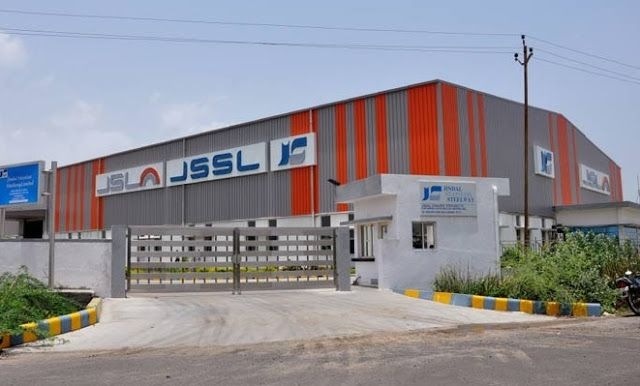

Austenitic, Ferritic, Martensitic, Duplex—And How JSL Plays Them All

Stainless steel is not regular steel. It doesn’t rust. That simple fact—combined with nickel price volatility, import tariffs, and OEM approvals—makes stainless a fascinating closed ecosystem. JSL’s model: buy raw materials (nickel, ferrochrome, stainless scrap), melt them in massive furnaces, roll into coils and plates, then distribute through 15 countries and a 1.5-lakh-outlet Indian network.

Revenue split: 86% domestic, 14% exports. Product split: 55% CRAP (Cold Rolled And Processed products—downstream), 45% HRAP (Hot Rolled And flat). Three years ago, it was 50:50. The shift tells you everything about JSL’s thesis: margins are in application-specificity, not commodity tons.

Key applications: automotive exhaust systems (especially EVs, which still need heat-resistant materials), ornamental pipes and tubes (Instagram-worthy railings, apparently), white goods (fridge door panels), railways (Vande Bharat, Amrit Bharat coaches—design revisions explicitly created stainless demand), construction, lifts, and elevators. Even coin blanks for the RBI. It’s nearly recession-proof horizontal distribution masquerading as a commodity business.

The real moat? OEM approvals. Once Maruti, Bajaj, Komatsu, or Volkswagen validate JSL’s metallurgy and supply chain, switching costs are astronomical. Management mentions ICF Chennai accepting JSL stainless for Kolkata Metro’s external walls. That’s a decade of orders locked in. Multiply by 50 such approvals, and you have a business that’s not actually a commodity business anymore—it’s just priced like one by equity analysts who haven’t bothered to dig deeper.

Domestic Revenue86%Market Base
CRAP Mix (Value-Added)55%vs. 45% HRAP
Series 300 Sales Mix49%Higher Margin Grade
Raw Material Exposure: JSL imports 35–40% of its feedstock (nickel, scrap). Nickel prices swing 40–60% annually. Management’s answer? “Surcharge mechanisms pass costs through with a 30–45 day lag, and we do back-to-back hedging on nickel-bearing grades.” Translation: they’ve built a cost pass-through machine, and hedging discipline is their secret sauce. This is capital-light pricing power.
💬 Quick thought: If stainless steel is truly commoditized, why can JSL achieve 18.2% ROCE while competitors languish at 8–10%? What’s your take on the “commodity with moats” thesis?

Q3 FY26: The Numbers

Result type: Quarterly Results (Consolidated)  |  Q3 FY26 EPS: ₹10.05  |  Annualised EPS (Q3×4): ₹40.20  |  Full-year FY25 EPS: ₹30.41

Metric (₹ Cr) Q3 FY26
Dec 2025
Q3 FY25
Dec 2024
Q2 FY26
Sep 2025
YoY % QoQ %
Revenue10,5189,90710,893+6.2%-3.4%
Operating Profit (EBITDA)1,4081,1931,374+17.9%+2.5%
OPM %13.4%12.0%12.6%+140 bps+80 bps
PAT828654808+26.6%+2.5%
EPS (₹)10.057.959.79+26.6%+2.7%
Translation for the Impatient: Revenue grew 6.2% YoY, but EBITDA grew 17.9%. That’s a 140-basis-point margin expansion. PAT grew 26.6%. The reason? Volume growth, yes, but more importantly: mix improvement (shift to value-added products) and operational leverage from acquisitions. The raw material surcharges were neutral (pass-through mechanics at work). And the annualised EPS of ₹40.20 implies a P/E of 18.7x on CMP ₹752, not the 21x shown in the screener—likely because the screener hasn’t updated to annualise Q3 yet. This is why screener P/E ratios are often stale.

Is ₹752 Fairly Priced, or a Commodity Trap?

Join 10,000+ investors who read this every week.
Become a member
error: Content is protected !!