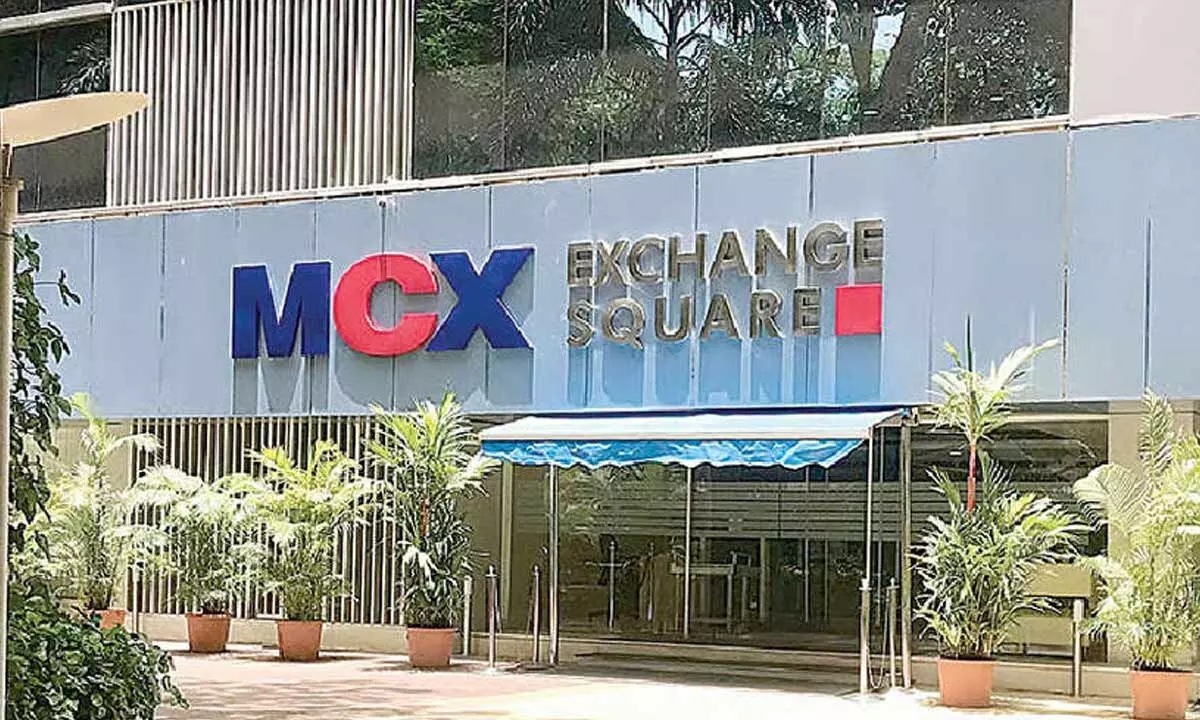
01 — At a Glance
The Monopoly Printing Money Like Never Before
MCX just delivered the kind of quarter that makes analysts look like fortune tellers. PAT up 151% YoY. Revenue up 121% YoY. ADTV (the actual volume that matters) at ₹7.5 lakh crore — roughly 220% growth compared to FY25. This is not “beat expectations.” This is “expectations were hilariously low.”
- 52-Week High / Low₹2,706 / ₹882
- Q3 FY26 Revenue₹666 Cr
- Q3 FY26 PAT₹401 Cr
- Q3 FY26 EPS₹15.73
- Annualised EPS (Q3×4)₹62.92
- Book Value₹81.8
- Price to Book31.0x
- Dividend Yield0.24%
- Debt / Equity0.00x
- Return (1 Year)172%
The Setup: MCX closed Q3 FY26 with ₹666 crore revenue (+121% YoY), ₹401 crore PAT (+151% YoY), and a 68.9x P/E ratio that would make any venture-backed SaaS founder jealous. A 31x Price-to-Book ratio screams either genius business model or pricing that assumes cryptocurrency returns. Market cap: ₹64,612 crore. 95.9% market share in commodity futures. CMP: ₹2,534. And everyone wants to talk about monopolies being “fair value.” Let’s break down the actual numbers.
02 — Introduction
Welcome To The Commodity Futures Casino—Where Margin Calls Are The Main Event
MCX (Multi Commodity Exchange) has been around since 2003. For 22 years, it has sat at the intersection of India’s commodity market and derivatives trading, operating as a SEBI-regulated monopoly that very quietly gobbles up every rupee that changes hands in bullion, energy, and base metals trading. In FY25, they had ~2 lakh traded users. In Q3 FY26 alone? That metaphorical casino got so crowded they had to hire bouncers.
The stock, meanwhile, has been the ultimate late-bloomer narrative: +52.9% CAGR over 5 years, +105% over 3 years, +172% in just the last 12 months. Ride that momentum and you’ve made serious money. Jump in now at a 69x P/E and you’re taking a bet that options derivatives are about to become the new national hobby. And honestly? Given the data, it might not be crazy.
Q3 FY26 results: highest quarter ever. Options trading is now the larger revenue contributor than futures. Bullion is 69% of daily volume. The retail derivative trader is arriving en masse — with better app UX, lower friction, and apparently zero fear of leverage. Management says there’s headroom for “3x to 4x volume” without infrastructure stress. They’re also quietly prepping for 10x. The glow-up is real. The valuation? That’s where the philosophy begins.
Concall Highlight (Feb 2026): “We are well placed for at least 3x to 4x kind of volume… but market is telling us to be ready for a 10x volume.” Translation: they’ve built the pipes. Demand is madness. Supply has some breathing room. This changes nothing about whether 69x P/E is sane.
03 — Business Model: Making Money From People’s Gambling Addictions (Legally)
Futures + Options = ₹7.5 Lakh Crore ADTV. You Get 82% of Revenue.
EduInvesting runs entirely on reader support — ₹360 a year keeps the lights on.