01 — At a Glance
The Recovery Story Nobody Talks About
- 52-Week High / Low₹178 / ₹92.7
- TTM Revenue₹74,519 Cr
- Q3 FY26 Net Profit₹2,814 Cr
- Full-Year EPS (TTM)₹21.6
- Annualised EPS (Q3×4)₹24.72
- Book Value per Share₹190
- Price to Book0.84x
- Dividend Yield2.54%
- Debt / Equity11.5x
- Fitch RatingBBB-/Stable
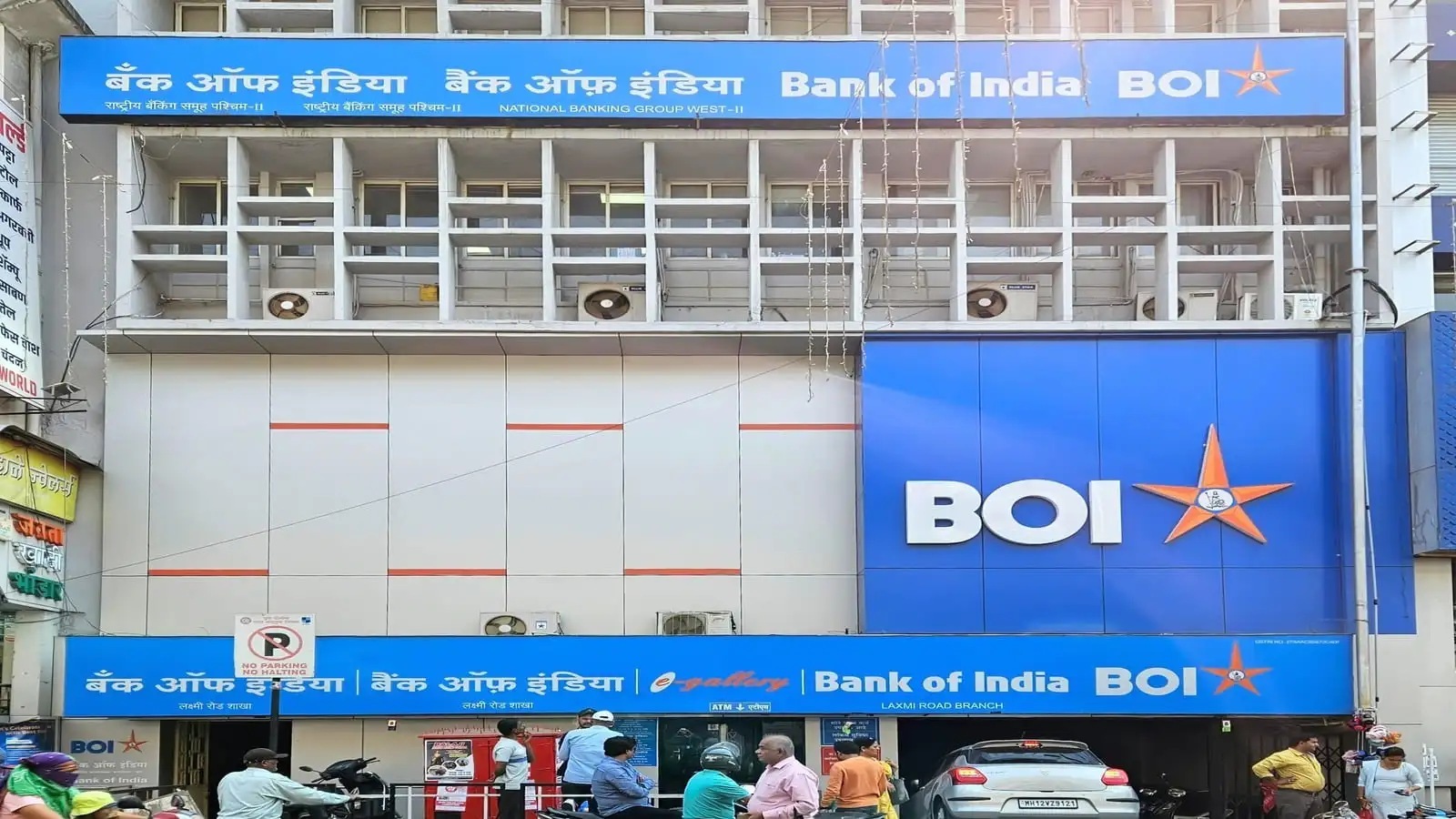
The Turnaround Arc: Bank of India was India’s definition of “too big to fail and too broken to fix” until roughly FY21. Then something magical happened: they stopped bleeding and started printing cash. Q3 FY26 delivered ₹2,814 crore net profit, YoY growth of 6.66%, alongside a Gross NPA tumble to 2.26% (from 9.98% in FY22). The stock is up 63.8% in one year. Still, at 7.13x P/E vs sector median 8.09x, it trades at a 12% discount. Your government bank is cheaper than your junk-rated NBFC. Market efficiency, everyone.
02 — Introduction
Welcome to the Bollywood Ending Nobody Expected
Bank of India is India’s oldest narrative of institutional redemption. For a decade, it was the cautionary tale: massive NPA write-offs, recapitalisation after recapitalisation, ROE barely positive, and concalls where management danced around the word “crisis” like it was Biggie Smalls’ diss track.
Then came FY21. Something shifted. The losses stopped. The asset quality stabilized. By FY25, the bank had posted ₹9,552 crore net profit — a number it hadn’t touched since FY19. Q3 FY26 extended that victory lap with ₹2,814 crore quarterly profit, a 6.66% YoY surge, and NPA ratios that actually look respectable: Gross 2.26%, Net 0.60%.
The sixth-largest public sector bank is now on a credible growth trajectory. Advances are up 13.63% YoY (₹7.40 lakh crore). Deposits up 11.64% (₹8.87 lakh crore). NIM improved 16 bps QoQ to 2.57%, thanks to portfolio churn (shedding low-yield AAA PSUs and repo-linked assets, replacing with higher-spread loans). The bank is even launching products for gig workers and solar farmers — because apparently, disruption is now a PSU sport.
But there’s a catch. This recovery happened at a time when the banking system faced a structural shift: CASA deposits are tanking (lowest level in years), credit-deposit ratios are creeping into red zones, and deposit repricing is killing margins. For a bank like BoI, which struggles with CASA discipline anyway (CASA ratio at 37.97%, below peers), the headwind is material.
Q3 Concall Summary (Jan 2026): Management described a “transformational shift, structural shift” in deposits. Retail is shifting balances away from savings into real estate, equities, mutual funds, insurance. CEO explicitly: “there will be pressure on CASA definitely for the entire banking system.” Translation: This is systemic, not a BoI problem. But BoI feels it more than others.
03 — Business Model: WTF Do They Even Do?
It’s Banking. Boring, Essential, PSU Banking.
EduInvesting runs entirely on reader support — ₹360 a year keeps the lights on.