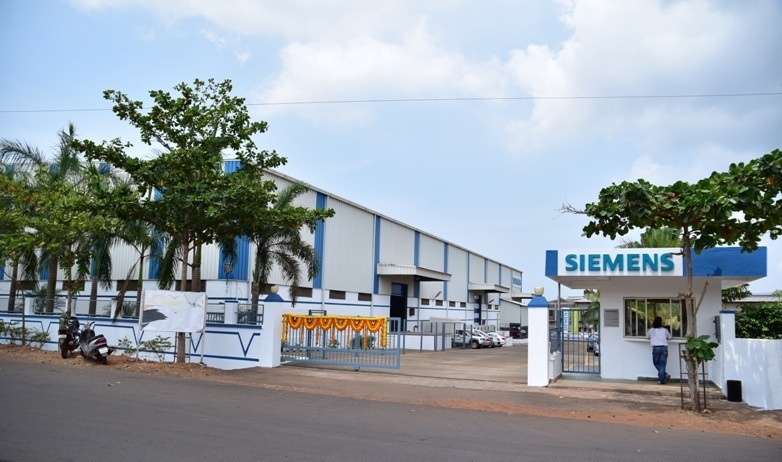
01 — At a Glance
The Power Transmission Player That Nobody Saw Coming
- 52-Week High / Low₹3,625 / ₹2,105
- Q1 FY26 Revenue₹1,911 Cr
- Q1 FY26 PAT₹313 Cr
- Q1 FY26 EPS₹8.79
- Annualised EPS (Q1×4)₹35.16
- Book Value₹123
- Price to Book23.7x
- Dividend Yield0.14%
- Debt / Equity0.03x
- Order Backlog (TTM)₹162,050 Cr
Auditor’s Opening Note: Siemens Energy India, freshly demerged and listed on June 19, 2025, is a century-plus global energy player that just went indie. Q1 FY26 revenue ₹1,911 crore (+26% YoY), PAT ₹313 crore (+51.7% YoY), ROCE 39%, order backlog of ₹1.62 lakh crore — this is a company so confident in its future it had a ₹4-per-share dividend AGM approval in the same quarter it listed. Market Cap ₹1.04 lakh crore at CMP ₹2,921. P/E 85.3x is stratospheric. But when you’re sitting on ₹162,050 crore of future revenue, the math is less scary than it looks.
02 — Introduction
From Siemens’ Basement to India’s Energy Crown Jewel
Let’s talk about Siemens Energy India. No, not the industrial conglomerate called Siemens Limited. This is the energy division — power generation, power transmission, grid stabilization, industrial turbines, HVDC systems, and the occasional strategic flex on renewable integration. Spun off from its parent Siemens Limited on June 19, 2025, after regulatory nods, this company is essentially a global pure-play energy company that’s been operating in India since 1910 and is now finally trading under its own ticker.
Think of it this way: imagine your dad’s engineering firm is so good that the holding company decides it deserves its own IPO. That’s Siemens Energy India. A century of expertise. A backlog of ₹1.62 lakh crore. A market cap of ₹1.04 lakh crore within 8 months of listing. And management that walks into investor calls with slides so detailed they could pass as a NASSCOM presentation.
In Q1 FY26, the company delivered 26% revenue growth, 51.7% profit growth, and confirmed order backlog of ₹162,050 crore — which translates to roughly 2.1 years of revenue visibility at current run rates. The order-to-revenue ratio is frankly obscene in the best way possible. When you’re fighting for HVDC projects, power transmission upgrades, and industrial turbine retrofits across India’s electricity revolution, having a two-year revenue cushion is basically “go collect your dividend cheques” material.
But here’s the twist: the P/E ratio is 85.3x. Yes, you read that right. Eighty. Five. Times. For context, the industry median P/E is 29x. This company trades at 2.9x the median peer valuation. So either everyone’s miscalculating, or this backlog is genuinely that valuable. Let’s dig in.
Concall Note (Dec 2025): “We are expanding Kalwa transformer factory capacity to 30,000 MVA by FY30–32. Switchgear facility in Aurangabad breaking ground now. Service centre in Raipur inaugurated. These aren’t dreams — they’re already happening.” — Management, Dec 10, 2025 Analyst Meet.
03 — Business Model: The Energy Transition Ticket
They Build The Power Pipes That Carry India’s Electricity Revolution
Siemens Energy India operates across three core verticals: Power Generation (centralized, distributed, and industrial), Power Transmission (switchgear, transformers, HVDC, grid stabilization), and Services (maintenance, retrofitting, lifecycle support). They’re present across the entire energy value chain — something competitors can’t claim. Your typical competitor plays a niche. Siemens Energy plays chess.
On the generation side, they design large gas turbines, steam turbines (1,500+ delivered from Vadodara factory alone), waste heat recovery solutions, and electrolyzers for green hydrogen. They’re the market leader in large steam turbines for India’s thermal power fleet. On transmission, they manufacture power transformers (up to 765 kV / 500 MVA), gas-insulated switchgear (GIS), air-insulated switchgear (AIS), and HVDC converters. HVDC is the sexy part — 30% of India’s HVDC capacity has their fingerprints on it. On grid stabilization, they supply STATCOMs and synchronous condensers (SYNCONs) that essentially make renewable integration possible. Lastly, services — they maintain the installed fleet, do retrofits, handle emergency breakdowns, and supply spare parts. Services = 25.6% of FY25 revenue = recurring, high-margin cash.
Geographically: South Asia exclusivity (India, Sri Lanka, Nepal, Bhutan, Maldives) for the portfolio, plus export operations supplying global Siemens Energy projects. Manufacturing presence: 8 factories (Kalwa, Aurangabad, Vadodara, Silvassa, etc.), 4 service centres, 4 engineering/R&D hubs. 4,500+ employees, of which 1,500 are in R&D/engineering. This is a company so invested in innovation it dedicates 37 average learning hours per employee per year.
Market ShareHVDC Capacity: 30%India-wide
Factory Count8Spread across India
Steam Turbines1,500+Delivered (Vadodara)
Backlog Multiple2.1xAnnual Revenue
Order Backlog Goldmine: ₹162,050 crore as of Q1 FY26. At a current quarterly revenue run rate of ₹1,911 crore, this represents approximately 84–85 quarters (21 years) of revenue. For a capital-goods company, order visibility spanning two-plus years is the definition of de-risked. This is why the institutional investor community is willing to accept a P/E of 85x — they’re paying for certainty, not growth speculation.
💬 Question: When a company has 2+ years of revenue locked in via orders, does a 85x P/E start to feel rational? What’s your take in the comments?
04 — Financials Overview
Q1 FY26: The Numbers That Made Everyone Sit Up
Result type: Quarterly Results | Q1 FY26 EPS: ₹8.79 | Annualised EPS (Q1×4): ₹35.16
| Metric (₹ Cr) |
Q1 FY26 Jun 2025 |
Q1 FY25 Jun 2024 |
Q4 FY25 Mar 2025 |
YoY % |
QoQ % |
| Revenue | 1,911 | 1,517 | 1,880 | +25.97% | +1.65% |
| Operating Profit | 461 | 335 | 358 | +37.6% | +28.8% |
| OPM % | 24.1% | 22.0% | 19.0% | +210 bps | +510 bps |
| PAT | 351 | 232 | 246 | +51.7% | +42.7% |
| EPS (₹) | 9.88 | 6.52 | 6.92 | +51.5% | +42.8% |
EPS Annualisation & P/E Recalculation: Q1 FY26 EPS = ₹8.79. Since this is quarterly data (Q1 of FY26), annualised EPS = Q1 EPS × 4 = ₹8.79 × 4 = ₹35.16. Current P/E = ₹2,921 ÷ ₹35.16 = 83.1x (screener shows 85.3x — rounding variance). This is extraordinarily high. However, note: (1) Q1 was a stellar quarter with OPM jumping 510 bps QoQ, (2) the company is post-IPO with elevated investor enthusiasm, (3) order backlog is ₹1.62 lakh crore, translating to 2+ years of revenue visibility. For a capital-goods player with that much order certainty, P/E compression is likely as earnings normalize and the market realizes the growth is locked in, not speculative.
05 — Valuation: Fair Value Range
What’s This Energy Powerhouse Actually Worth?
Join 10,000+ investors who read this every week.