Search for stocks /

Godrej Consumer:₹498 Cr PAT. 19% ROCE. The Margin Reset Nobody Saw Coming

Godrej Consumer Q3 FY26 | EduInvesting
Q3 FY26 Results · Financial Year Reporting (Apr–Mar)

Godrej Consumer:
₹498 Cr PAT. 19% ROCE.
The Margin Reset Nobody Saw Coming

Consolidated EBITDA jumped 16%, UVG hit 7%, and management finally admitted the margin squeeze is over. They bought Muuchstac for ₹425 crore. Indonesia is stabilising. Africa is running. So why does the stock keep disappointing?

Market Cap₹1,14,255 Cr
CMP₹1,117
P/E Ratio58.8x
Div Yield1.79%
ROCE19.2%

The FMCG Company That Bought a Men’s Grooming Startup for ₹425 Crore

  • 52-Week High / Low₹1,309 / ₹1,020
  • TTM Revenue (FY25)₹15,184 Cr
  • TTM PAT (FY25)₹1,943 Cr
  • Full-Year EPS (FY25)₹18.11
  • Annualised EPS (Q3×4)₹19.48
  • Book Value₹119
  • Price to Book9.39x
  • Dividend Yield1.79%
  • Debt / Equity0.34x
  • 1-Year Return+6.82%
Auditor’s Opening Note: Godrej Consumer closed Q3 FY26 with ₹4,099 crore quarterly revenue (+8.78% YoY), ₹498 crore PAT (standalone shows ₹563 Cr), 21% EBITDA margin, and underlying volume growth of 7% across consolidated business. The company is trading at 58.8x P/E — higher than peers like Dabur (45.7x) — despite ROCE of 19.2% which is actually below industry leaders. Margin normalisation is “probably behind us,” management stated. The stock delivered +6.82% in the past year. The question isn’t whether margins improved — it’s whether the multiple justified the rally when margins improved by ₹100+ bps last quarter.

FMCG’s Most Unloved Multibagger (Lately)

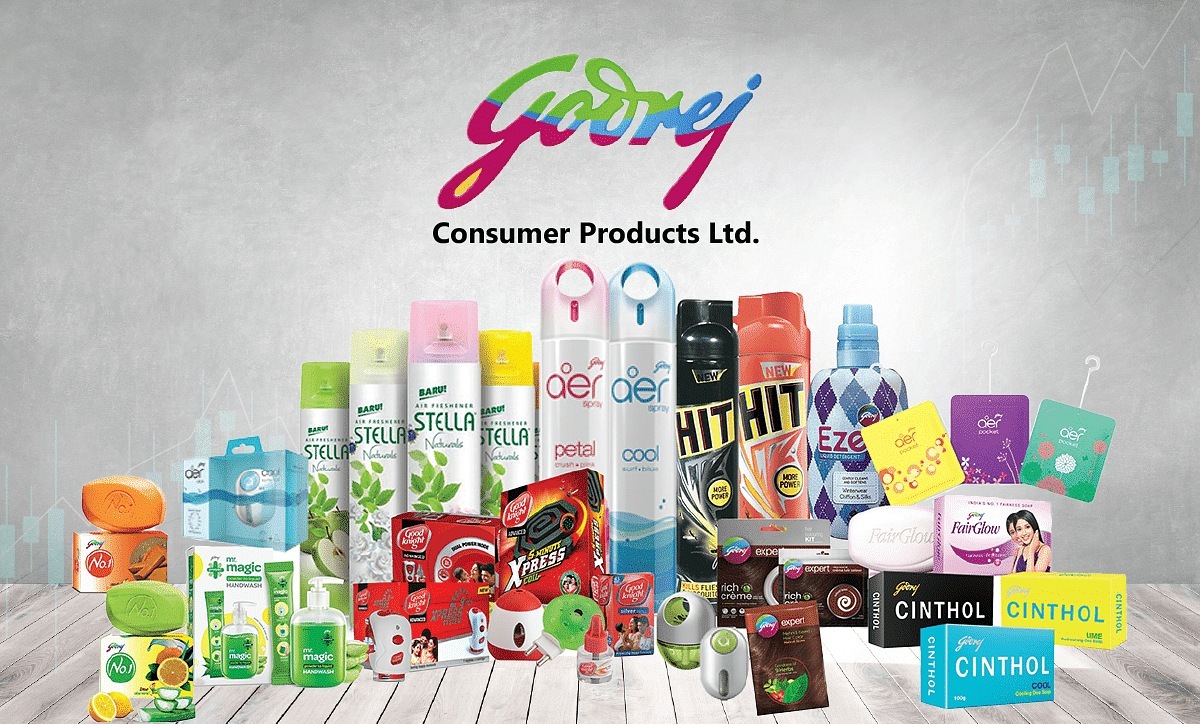
Godrej Consumer Products is the company you’ve heard of but never really analysed because it sits in that weird space between “household name” and “confusing business model.” They make mosquito repellent (GoodKnight, HIT), soaps (No. 1, Cinthol), hair colour (Expert), air fresheners (Aer), baby wipes (Mitu), and now — somehow — premium male grooming products (Muuchstac, acquired November 2025).

The company operates across India (59% of revenue pre-acquisition), Indonesia (formerly 13%), and Africa + USA + Middle East (25%+). It’s diversified. It’s global. It generates ₹1,943 crore in PAT annually. And yet, it trades at an eye-watering 58.8x P/E — a multiple typically reserved for high-growth SaaS companies, not a company managing commodity-driven margin cycles with quarterly volatility.

Q3 FY26 was a turning point. Margins expanded, volumes held, and management — for the first time in two years — sounded genuinely optimistic about the near term. They bought Muuchstac at ₹425 crore (integration underway). Indonesia stabilised (+5% UVG). Africa clocked 19% GAUM growth. And the stock delivered 7% returns in a year when the Nifty 50 was busy being brave and AI was everyone’s second favourite word.

Let’s break this down with actual data, actual numbers, and the kind of honesty the quarterly concall provided — because management was refreshingly blunt about what changed and what didn’t.

Concall Note (Jan 2026): “The few quarters that we had of margin challenges is probably behind us,” CEO stated. Also: “We will not protect margins by cutting media sharply if commodities spike.” Translation: they’ve internally accepted margin pressure as the cost of doing FMCG business, and they’re not going to do a Nestlé 2009 and tank growth to flex on Wall Street.

Mosquitoes Don’t Get Holidays. Neither Does Godrej’s Revenue.

Godrej Consumer owns 10+ brands that collectively dominate specific FMCG categories in India and emerging markets. GoodKnight and HIT command the household insecticide space (over 50% share). Expert owns hair colour. No. 1 and Cinthol are in soaps. Aer is in air fresheners. In Indonesia, they’re the second player in hair shampoo and baby care. In Africa, they own the ethnic hair extensions market via Darling — acquired over 2013–2014.

The company’s strategy is brutally simple: find a category, acquire or grow the brand, achieve scale, then try to expand geographically or into adjacent products. Soaps got a GST reduction (7% to 5%) in Dec 2024, boosting affordability. Household insecticides weathered a cool winter (volume headwind) but also gained share through superior formulations with RNF molecule (exclusive). Industrial lubricants grew 12–13% YoY. The company is trying to be “multi-category, multi-geography” — which means high operational complexity but also genuine diversification.

Muuchstac acquisition (Nov 2025 for ₹425 Cr, ₹80 Cr revenue, ₹30 Cr EBITDA) shows management is thinking differently. Men’s face wash market is ₹1,000 crore, growing 20% YoY. Muuchstac is 8% of that market, concentrated in one SKU, but high margin. The intent: use GCPL’s 67,000 physical retail touchpoints to disrupt a category where Beardo and others are growing without scale. It’s a hedge against slowing core categories.

Household Insecticide~51%Market Share
Hair Colour~40%Market Share
Soaps (Domestic)#2 / #3Player
Air Fresheners#2Player (Domestic)
Portfolio Note: Top 10 brands contribute ~70% of revenue. That’s concentrated. GoodKnight + HIT alone are massive. A poor monsoon or sudden regulatory action on one product (say, new pesticide restrictions) could swing the quarter. Management has been adding Pet Care and Spic toilet cleaner to diversify this dependency, but they’re early-stage.
💬 Muuchstac for ₹425 crore — smart inorganic move into men’s grooming, or is management overpaying for a single-SKU brand? Share your take.

Q3 FY26: The Quarterly Turnaround Table

Result type: Quarterly Results  |  Q3 FY26 EPS: ₹4.87  |  Annualised EPS (Q3×4): ₹19.48  |  Full-year FY25 EPS: ₹18.11

Metric (₹ Cr) Q3 FY26
Dec 2025
Q3 FY25
Dec 2024
Q2 FY26
Sep 2025
YoY % QoQ %
Revenue4,0993,7683,825+8.78%+7.16%
EBITDA880756733+16.4%+20.1%
EBITDA Margin %21.5%20.1%19.2%+140 bps+230 bps
PAT (Standalone)498466459+6.9%+8.5%
EPS (₹)4.874.564.49+6.8%+8.5%
Margin Expansion: Where It Came From
Management explicitly attributed Q3 margin improvement to: (1) Media buying efficiency — “very significant savings” by switching to a new media house and better internal planning; (2) Supply chain initiatives from new factories; (3) Commodity hedging and formulation flexibility (choosing veg oil vs fossil fuel inputs based on price dynamics). Other expenses down ~50% saving, ~50% timing. Management says this is structural, not one-time. But they’re also firm: they won’t sustain above 24–26% EBITDA margin range annually due to negative mix (laundry, incense sticks are lower margin). P/E at 58.8x assumes continued margin beat — risky if media costs normalize.

Is 58.8x P/E Justified? Let’s Do The Math

Join 10,000+ investors who read this every week.
Become a member
error: Content is protected !!