Britannia Industries:
₹1,44,000 Cr Market Cap. 60x P/E.
The Biscuit Empire That Actually Works.
52.9% ROE. ₹2,415 Cr annual profit. Highest-ever quarterly revenue. New CEO with grand plans. But at 60 times earnings, the stock is asking: should biscuits really cost this much?
The Wadia Group’s Golden Goose Just Got a New Caretaker
- 52-Week High / Low₹6,337 / ₹4,525
- Q3 FY26 Revenue₹4,970 Cr
- Q3 FY26 PAT₹680 Cr
- Quarterly EPS (Q3)₹28.23
- Annualised EPS (Q3×4)₹112.92
- Book Value₹155
- Price to Book38.6x
- Dividend Yield1.25%
- Debt / Equity0.59x
- YTD 9M PAT Growth+14.6% YoY
The Company That Makes India’s Snack Addiction Respectable
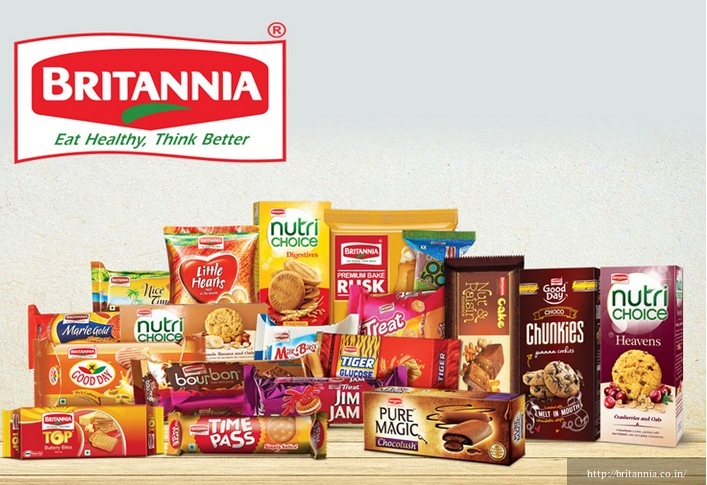
Britannia Industries is what happens when a company figures out three things early and never stops: 1) Indians love biscuits, 2) if your brand name sounds British, add credibility, and 3) once you dominate, diversify into dairy and pretend you invented cheese. Founded in 1892 — yes, when India was still a question mark on the British map — Britannia evolved from a colonial-era novelty into a ₹18,000+ crore annual revenue empire. And they did it by selling you Marie, Tiger, Good Day, and NutriChoice. One. Biscuit. At. A. Time.
The Wadia Group (your classic Parsi business dynasty) owns 50.6% through various holding entities. The company operates 28.7 lakh distribution outlets across India, manufactures in three countries (India, UAE, Oman), and has somehow convinced the market that paying 60 times earnings for a biscuit manufacturer is fair value. To be generous: 52.9% ROE, 53% ROCE, and a dividend payout that would make private equity firms weep with envy. November 2025 brought CEO upheaval — Varun Berry stepped down, Rakshit Hargave took charge in December. With him came strategic reshuffles, new CMO hire (Puneet Das, Feb 2026), and promises of digital-first brands and adjacency growth.
So let’s talk business: what changed in the last three months? What didn’t? And more importantly, at ₹5,983 per share, are you paying for past glory or future juice?
80% Biscuits. 20% Everything Else. Works Perfectly.
Britannia’s playbook is ancient and elegant. Flour + sugar + cocoa / salt + brand trust + 28.7 lakh distribution points = profit. The company manufactures across seven biscuit categories: glucose (Marie — the OG), cookies, crackers, cream, milk, health, and indulgence. Good Day dominates premium. Milk Bikis dominates accessible. Tiger dominates regional. And NutriChoice dominates the “I pretend to care about health” segment. Add ~80 brands, re-launch every quarter, and you’re golden.
Biscuits represent 80% of revenues. The remaining 20% is the growth frontier: Britannia Bread (1.1 lakh tonnes annually across 100+ cities), Dairy (cheese, milk, yoghurt, ghee under brands like Laughing Cow and Sattvam — acknowledged slow starter but accelerating), and adjacencies (croissant, rusk, cakes, wafers — explicitly flagged as “double-digit growth”). The company also exports to 80 countries, operates plants in UAE and Oman (number 2 biscuit position in GCC), and recently greenfielded Nepal. Five percent of revenue from exports. Not bad for someone who started in Victoria’s age.
Direct reach: 28.7 lakh outlets (up from 7.3 lakh in FY14). Rural presence: ~40,000 outlets. Modern trade and e-commerce/quick commerce: the new frontier where adjacencies (cake, rusk) are ~3x more successful than biscuits. Why? Because q-commerce is occasion-led impulse, not mission-driven staple shopping. Marie is planned. Chocolate Cake is “oops I’m hungry NOW.”
Q3 FY26: The Numbers That Matter
Result type: Quarterly Results | Q3 FY26 EPS: ₹28.23 | Annualised EPS (Q3×4): ₹112.92 | 9M FY26 PAT Growth: +14.6% YoY
| Metric (₹ Cr) | Q3 FY26 Dec 2025 | Q3 FY25 Dec 2024 | Q2 FY26 Sep 2025 | YoY % | QoQ % |
|---|---|---|---|---|---|
| Revenue | 4,970 | 4,593 | 4,841 | +8.2% | +2.7% |
| Operating Profit | 977 | 843 | 951 | +15.9% | +2.7% |
| OPM % | 19.7% | 18.3% | 19.6% | +140 bps | +10 bps |
| PAT | 680 | 582 | 655 | +16.8% | +3.8% |
| EPS (₹) | 28.23 | 24.15 | 27.17 | +16.8% | +3.9% |
Is 60x P/E Justified? Or Just Beloved?
Method 1: P/E Based
CY25 (TTM) EPS = ₹100. Q3 annualised EPS = ₹112.92. Sector median P/E (FMCG) = 50.3x. Britannia’s justified premium for brand moat + ROCE (but capped by growth): 1.0x–1.15x sector. Fair P/E band: 50x–58x.
Range: ₹5,030 – ₹5,800
Method 2: EV/EBITDA Based
TTM EBITDA = ~₹3,481 Cr (operating profit + D&A). Current EV = ₹1,46,014 Cr. EV/EBITDA = 42x. Premium FMCG comps trade at 35x–50x. Britannia’s 9% revenue growth doesn’t justify 42x territory.
EV range (38x–45x): ₹1,32,278 Cr – ₹1,56,645 Cr → Per share:
Range: ₹5,500 – ₹6,500
Method 3: DCF Based
Base FCF: ~₹2,400 Cr annually (operating CF). Growth: 7–8% for 5 years (market + mix). Terminal growth: 4%. WACC: 9.5%.
→ Terminal Value (4% growth / 5.5% cap rate): ~₹145,000 Cr
→ Total EV: ~₹157,800 Cr (less net debt ~₹500 Cr)
Range: ₹5,600 – ₹6,800
New CEO. New CMO. New Digital Push. Old Biscuit Logic.
🔴 Management Churn (Transition Risk)
Varun Berry (CEO since 2017) exited November 2025. Rakshit Hargave took over December 15, 2025 (5-year contract at ₹2.87 cr p.a.). Puneet Das joined as CMO effective Feb 16, 2026. T.V. Thulsidass (Company Secretary) resigned Feb 5, 2026. Annu Gupta (Chief Business Officer, International) exited Jan 31, 2026. This is not gardening-level pruning. This is major surgery. Rakshit comes from FMCG background; his mandate is clear — grow digitally, expand adjacencies, stabilize dairy. The question is: can he do it without disrupting the biscuit cash flow engine that funds everything?
✅ Strategic Priorities Announced
- • Digital-first brands (margin accretive, online-only launches)
- • Adjacency acceleration (cake, rusk, croissant — double-digit growth)
- • E-commerce/q-commerce scale: “high single” to “early teens” by FY27
- • Cheese reset with new dairy head; “second largest” post-Bel JV
- • Functional foods platform (NutriChoice as anchor brand)
⚠️ Execution Risks & Headwinds
- • GST transition confusion — packsize/pricing inconsistency (Nielsen tracking issues)
- • Regional competitors leveraging unlisted cost benefits + trade schemes
- • Competitor stalling on price-point transitions (arbitrage in retail channel)
- • Q-commerce penetration still only ~20% (execution-dependent runway)
- • GST demands totaling ₹10.8 cr (appealable; no material impact acknowledged)
₹1,247 Cr Debt. ₹2,400 Cr Cash. Dividend That Never Stops.
| Item (₹ Cr) | FY23 | FY24 | FY25 | Sep 2025 |
|---|---|---|---|---|
| Total Assets | 9,351 | 9,072 | 8,837 | 9,450 |
| Equity + Reserves | 3,510 | 3,917 | 4,332 | 3,709 |
| Borrowings | 2,997 | 2,065 | 1,247 | 2,196 |
| Other Liabilities | 2,819 | 3,065 | 3,235 | 3,520 |
| Total Liabilities | 9,351 | 9,072 | 8,837 | 9,450 |
Equity dropped from ₹4,332 Cr (Mar FY25) to ₹3,709 Cr (Sep FY25). Not a balance sheet erosion — it’s intentional. Dividend payout of ₹1,807 Cr in FY25 (83% payout ratio), plus the June 2024 NCD redemption. Management returns cash faster than it earns it. ROCE 53%, but net worth is still shrinking. Priorities clear: shareholder returns > balance sheet beauty.
Borrowings fell from ₹2,997 Cr (FY23) to ₹1,247 Cr (FY25), then ticked up to ₹2,196 Cr (Sep 2025) — working capital needs or seasonal? Interest coverage: 23.9x in FY25. Gearing improved to 0.3x in FY25 vs 0.5x in FY24. The company is unlevered. Not because they’re afraid of debt, but because operating CF is so strong they don’t need it.
Cash and equivalents + investments: ₹2,400 Cr as of Jun 2025. Working capital utilization: 30-35% of ₹3,745 Cr facility. No stress signals. The company can fund ₹150-200 Cr annual capex, pay ₹1,800+ Cr in dividends, and still sleep soundly.
₹2,481 Cr Operating CF. Dividends That’d Make Venture Capital Jealous.
| Cash Flow (₹ Cr) | FY23 | FY24 | FY25 |
|---|---|---|---|
| Operating CF | +2,526 | +2,573 | +2,481 |
| Investing CF | -1,507 | +485 | +87 |
| Financing CF | -1,028 | -2,839 | -2,762 |
| Net Cash Flow | -9 | +219 | -194 |
52.9% ROE. 53% ROCE. 60x P/E. Math Doesn’t Always Add Up Pretty.
Slow Burn. Steady Climb. No Exciting Surprises.
| Metric (₹ Cr) | FY22 | FY23 | FY24 | FY25 |
|---|---|---|---|---|
| Revenue | 14,136 | 16,301 | 16,769 | 17,943 |
| Operating Profit | 2,201 | 2,831 | 3,167 | 3,176 |
| OPM % | 16% | 17% | 19% | 18% |
| PAT | 1,516 | 2,316 | 2,134 | 2,178 |
| EPS (₹) | 63.31 | 96.39 | 88.84 | 90.45 |
FY22 was disrupted by post-COVID costs. FY23 rebounded beautifully (+15% revenue, +53% PAT). FY24 showed margin pressure (input costs) — revenue grew but PAT fell 8%. FY25 stabilized: revenue +7%, PAT flat (Labour Code wage provisions offset commodity gains). The pattern is mature-company steady: single-digit growth, high margins, no drama. Your portfolio needs this boring anchor. But not at 60x.
Britannia vs The Rest. Spoiler: It’s Not Close.
| Company | Q3 Revenue (₹ Cr) | Q3 PAT (₹ Cr) | P/E | ROCE % |
|---|---|---|---|---|
| Britannia | 4,970 | 680 | 59.7x | 53.0% |
| Nestlé India | 5,667 | 1,018 | 76.0x | 95.7% |
| Bikaji Foods | 790 | 62 | 61.7x | 18.2% |
| Bombay Burmah | 5,066 | 315 | 10.4x | 35.5% |
| Mrs Bector | 497 | 33 | 51.0x | 16.4% |
Britannia’s 53% ROCE is unmatched in the peer set (except Nestlé at 95.7%, which is frankly absurd). Its P/E of 59.7x is justified only if you believe the 9% growth can accelerate. Bombay Burmah (parent company, 50.55% holding in Britannia) trades at 10.4x — your classic “holding company discount” arbitrage.
50.55% Wadia. 19.55% DIIs. 14.88% FIIs. Everyone Else Watching.
Promoter: Wadia Group Entities
Associated Biscuits International Limited (44.76%), Dowbiggin Enterprises (1.16%), Nacupa Enterprises (1.16%), Spargo, Valletort, Bannatyne Enterprises (all ~1.16% each). These are historical Wadia family holding entities. Net effect: Wadia control is 50.55% — steady, zero pledge, no surprises. The family owns a biscuit company that prints money. They’re not selling.
Institutional Participation
DIIs: 19.55% (LIC alone ~3.2% as of last updates). FIIs: 14.88%. Public: 14.97%. Government: 0.03%. The stock is well-distributed among professional investors. No activist holding. No surprises from shareholding churn.
CRISIL AAA. Clean Audits. GST Chaos (But Appealable).
✅ Financial Strength (CRISIL Reaffirmed)
- ✓ CRISIL AAA/Stable on bank facilities (₹3,000 Cr rated)
- ✓ CRISIL A1+ on commercial paper (₹500 Cr)
- ✓ Interest coverage: 23.9x (FY25) – virtually immune to rate stress
- ✓ Gearing: 0.3x – fortress-like balance sheet
- ✓ Dividend sustainability: ₹900-1,000 Cr annual FCF covers payouts + capex
- ✓ No related-party exposure to group companies (BBTCL, Bombay Dyeing)
⚠️ Regulatory Headwinds (Recent)
- ⚠ GST demand (2 Mar 2026): ₹6.37 Cr (tax + penalty); appealable
- ⚠ GST total exposure across multiple orders: ~₹10.8 Cr; company appealing all
- ⚠ 1 Jan 2026: GST demand ₹108.5 Cr + equal penalty for FY18-19 to FY23-24; appealable
- ⚠ Management indicates no material financial impact expected (appeals in progress)
Biscuits in an Age of Wellness. Regional Chaos. The Digital Bet.
🥖 Tailwind 1: Urban + Rural Penetration
India’s biscuit consumption per capita remains low vs mature markets. Direct reach of 28.7 lakh outlets (up from 7.3L in FY14) suggests runway. Rural distribution (40,000+ outlets) is still underpenetrated. A bumper harvest, good monsoons, and rural income growth can lift volumes. Britannia’s organized-market dominance means it benefits disproportionately.
🍰 Tailwind 2: Adjacency Success (Cake, Rusk, Croissant)
Double-digit growth in non-biscuit segments reflects premiumization and occasion-led consumption. Q-commerce is fueling this (3x higher traction vs biscuits). Management’s new digital-first brand push is exactly aligned with channel dynamics. If executed, adjacencies could become 30%+ of revenue within 5 years. Cheese remains underdeveloped but new dairy head (Dec 2025) is tackling it.
⚡ Headwind 1: Input Cost Volatility
Flour, palm oil, cocoa, milk — all commodity-linked. Q3 saw relief (RPO down 54% YoY, cocoa down 83% YoY), but global macro can flip this overnight. Britannia’s 19.7% OPM means margins have room to compress if costs spike (they did in FY24, dropping margin to 17%). The company can price, but only so much before market share leaks to regional/unbranded players.
🚨 Headwind 2: Regional Player Disruption
Management flagged “regional competition exists in other clusters also” (beyond East). These players are unlisted, benefit from lower input costs, and run aggressive trade schemes. Britannia’s 51% market share in biscuits is the peak. Defending it against 100+ regional competitors with lower cost structures is the real battle. Distribution depth helps, but margin compression risk is real.
Competitive positioning: Britannia is unquestionably the national leader (51% biscuit market share). But the market is fragmenting. Regional players in Eastern India (Britannia’s traditional stronghold) are capturing volume. Bikaji Foods (Rajasthan-based snacks) is growing faster (though from a smaller base). Nestle India remains premium-focused. The market is bifurcating: organized (Britannia, Nestlé, Bikaji) vs unorganized (regional players, home-made brands).
Macro backdrop: FY26 is shaping up as “stabilization post-GST chaos.” Management expects normalization by Q4 FY26 as competitors settle into consistent price points. Commodity input costs are benign (wheat, RPO, cocoa all moderating). The wildcard is policy volatility (RPO duties, import interventions). But fundamentally, the biscuit category is non-cyclical. Indians buy biscuits in boom and bust.
The Biscuit Empire Audited
Britannia Industries is the definition of a “quality compounder.” 132-year history. 52.9% ROE. 53% ROCE. 28.7 lakh distribution outlets. ₹2,481 Cr annual operating cash flow. And it returns nearly all of it as dividends because reinvestment opportunities in biscuits are finite. The stock reflects this maturity: 60x P/E is expensive in absolute terms, but justified for a monopoly-like position in a non-cyclical category with global-class brands.
Execution in Q3 FY26: Revenue ₹4,970 Cr (+8.2% YoY), but management admits ~50% was GST-driven pack realization, not actual consumption growth. Operating margin expanded 140 bps to 19.7% due to commodity tailwinds (not operational leverage). PAT ₹680 Cr (+16.8% YoY); 9M growth at +14.6% YoY. The numbers are solid, not spectacular.
Management Transition Risk: Varun Berry (8-year CEO) exited Nov 2025. Rakshit Hargave takes over (Dec 2025 – Dec 2030) with explicit growth mandate: digital-first brands, adjacency acceleration, e-commerce scaling from “high single” to “early teens” by FY27. New CMO hire (Puneet Das, Feb 2026) suggests organizational reshuffling. Execution risk is real. But Rakshit’s track record in FMCG is solid. Give him benefit of doubt for 2-3 quarters.
Valuation Context: At ₹5,983 CMP, the stock sits mid-range of our fair value band (₹5,000–₹6,500). Not cheap, but not overpriced. The 60x P/E assumes Britannia can sustain 9%+ growth and protect margins at 17-19% long-term. Both are achievable, but not given. Dividends (1.25% yield) provide limited cushion. This is a “quality at fair price” entry point, not a bargain hunt.
5-Year Historical Context: Over 10 years, Britannia delivered 15% stock CAGR (price). Over 5 years: 12% CAGR. Over 3 years: 11% CAGR. Most of this came from valuation expansion and dividend reinvestment, not earnings explosion. The company is slow-growing (7-9% CAGR revenue past 5 years) but compounding reliably.
✓ Strengths
- 51% market share in automotive biscuits — near-monopoly in core category
- 52.9% ROE, 53% ROCE — elite capital efficiency in FMCG space
- 28.7 lakh distribution outlets + 40K rural points — unmatched reach
- ₹2,481 Cr annual operating cash flow — predictable, recurring
- Dividend policy of 80%+ payout — shareholder-friendly capital allocation
- Zero promoter pledge, AAA credit rating — fortress balance sheet
✗ Weaknesses
- 7-9% revenue growth CAGR — mature business, not hypergrowth
- Margin vulnerable to commodity inflation (flour, RPO, cocoa, milk)
- P/B 38.6x, P/E 59.7x — valuation assumes perfection, leaves little margin for error
- Dividend payout exhausts FCF — reinvestment capacity limited for M&A or capex
- Regional competitor encroachment — share defense requires active pricing/promotion
- Biscuit category non-growth (market growing only 3-4% p.a.)
→ Opportunities
- Adjacencies (cake, rusk, croissant, wafers) — double-digit growth potential
- E-commerce/q-commerce scaling — currently ~20% penetration, high teens target by FY27
- Dairy reset (cheese, milk drinks, ghee) — historically underdeveloped, new leadership energized
- Functional foods platform (NutriChoice) — wellness category tailwind
- Exports/international footprint — 5.5% of revenue, room to expand in GCC, Africa
- Digital-first brands — margin accretive, direct-to-consumer appeal
⚡ Threats
- Commodity price spikes — would compress margins, require pricing discipline
- Regional player competition — cost advantages, aggressive trade schemes
- Management execution risk — new CEO untested in Britannia context
- GST classification disputes — not material currently, but regulatory risk exists
- Biscuit category saturation — growth in units flattening, premiumization limits
- Macro slowdown — discretionary consumption pullback (though biscuits resilient)
Britannia Industries is a “sleep-well” holding, not a “get-rich-quick” opportunity.
It’s the company you buy when you want reliable compounding, fortress fundamentals, and a dividend cheque every year. It’s not cheap at 60x earnings or 38x book. But it’s not overpriced either — the 52.9% ROE and 53% ROCE demand a quality premium. New CEO Rakshit Hargave’s digital pivot is promising, but execution is unproven. Adjacency growth is real but incremental. The biscuit core remains the cash engine. Buy if you’re a buy-and-hold type with 5+ year horizon. Skip if you’re chasing 30% returns.