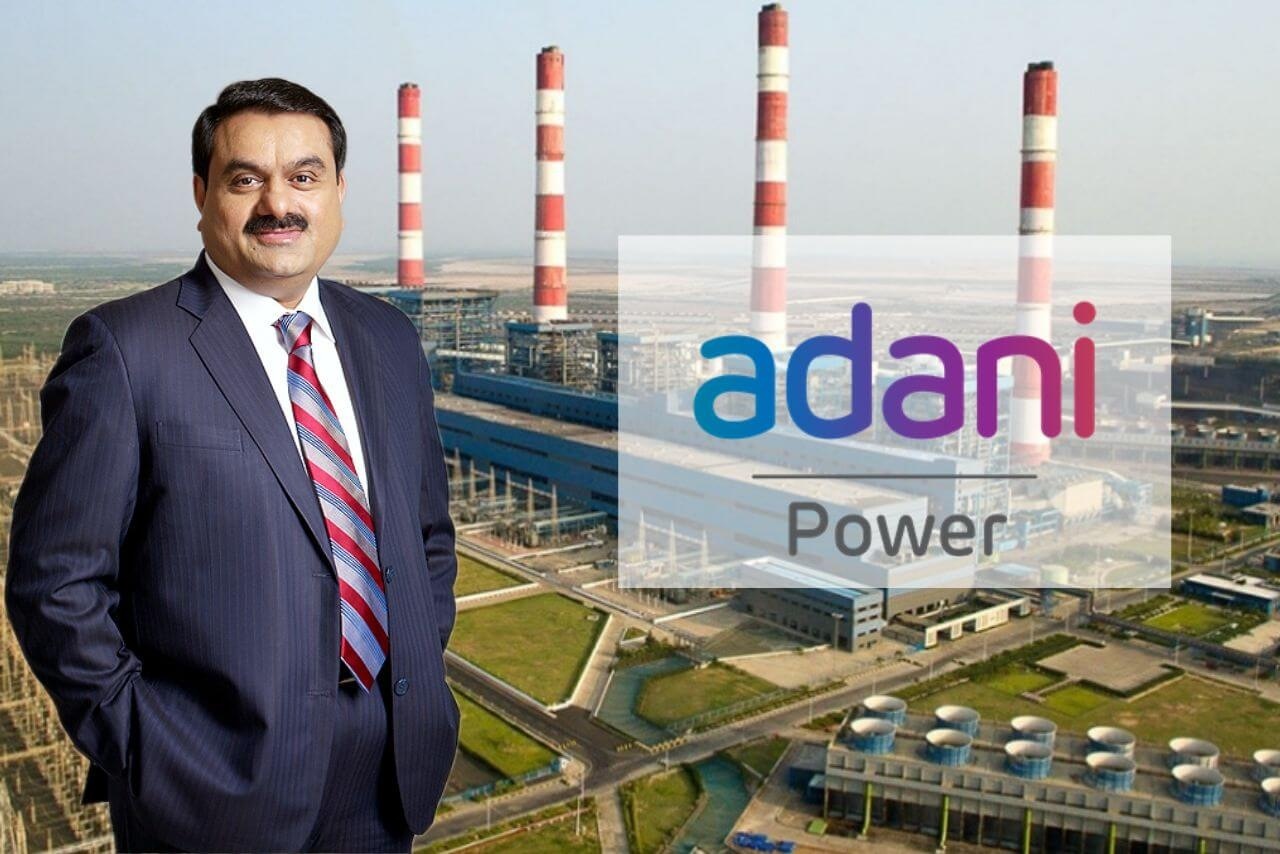
Adani Power:
₹2,488 Cr PAT. ₹2 Lakh Capex.
The Biggest Thermal Bet in India.
18.15 GW operational. 41 GW target by 2032. Merchant prices crashed 12%. Still, 90% of capacity locked into PPAs. The question isn’t whether they’ll deliver — it’s whether the capex will. And markets are watching.
The Quiet Giant Running On PPA Power
- 52-Week High / Low₹183 / ₹92.4
- FY25 Revenue (TTM)₹54,255 Cr
- FY25 PAT (TTM)₹11,454 Cr
- Full-Year EPS (FY25)₹5.94
- Q3 EPS (Dec 2025)₹1.29
- Book Value₹30.3
- Price to Book4.59x
- Dividend Yield0.00%
- Debt / Equity0.83x
- Net Debt / EBITDA1.7x
The Adani Power Story: From Merchant Survivor to PPA Juggernaut
Adani Power is India’s largest private thermal power producer. Not largest by installed capacity among private players — largest outright. 18.15 GW operational as of January 2026. That’s nearly 10% more than two years ago, all organic or acquired at bargain-basement prices.
The company runs a simple business: generate thermal power under long-term agreements (PPAs) with state electricity boards, private utilities, and Bangladesh. For anything not locked under PPA, sell into the merchant market at whatever price clears. Management has made a calculated strategic pivot: from 80% PPA / 20% merchant in FY24, to now 90% PPA / 10% merchant. This is deliberate de-risking.
Q3 FY26 results? Messy on the surface. Revenue down 8.9% YoY to ₹12,451 crore. Profit down 18.9% to ₹2,488 crore. But the underlying story is one of a company taking water out of its margins to lock in predictable cash flows, at a time when Indian power demand is real but uneven. Monsoons came early and heavy in Q3. Renewable energy ate into thermal demand. Merchant tariffs crashed from ₹6.16/unit (9M FY25) to ₹5.44/unit (9M FY26).
Yet the company remains unfazed. Because 90% of its revenue doesn’t care about day-ahead market prices. It comes from capacity charges in PPAs with fixed tariff bands. Management is betting that for the next 5–7 years, every rupee of capex they throw at building 24 GW of new capacity will land on a PPA. The odds? Improving daily. The risk? Execution.
The Unglamorous Reality of How India Gets Electricity
Adani Power operates thermal power plants across 8 Indian states: Gujarat, Maharashtra, Rajasthan, Chhattisgarh, Madhya Pradesh, Jharkhand, Karnataka, and Tamil Nadu. Plus one international asset: 1,600 MW Godda in Jharkhand supplying Bangladesh. Think of it as a network of furnaces, each burning coal and converting it into electrons sold under contract.
Revenue comes from two buckets. First, long-term PPAs with state electricity boards and industrial customers — covering 90% of capacity and running 15–25 years. These are two-part tariffs: a capacity charge paid monthly regardless of generation, and an energy charge for actual power delivered. The capacity charge is the crown jewel — it pays whether the plant runs or not. Second, merchant power sales into day-ahead and short-term markets for whatever capacity isn’t locked up — about 10% of the fleet.
Why two-part tariffs matter: When power demand drops (as it did in Q3 due to monsoons and renewables), the merchant price collapses. Adani’s merchant realization fell from ₹6.16/unit to ₹5.44/unit YoY. But that’s only ~10% of revenue. The 90% under PPA kept paying full capacity charges. That’s the entire business model in one sentence: get as much capacity as possible under fixed contract, and don’t get cute with merchant bets.
The company also owns four commercial captive coal mines it’s developing with an MDO to supply 14 MTPA domestically and reduce dependence on imports. Currently sourcing 30–35% of coal from imports; the plan is to gradually reduce that to zero by 2030–32.
Q3 FY26: The Confusing Numbers Explained
Result type: Quarterly Results (Q3 FY26) | Q3 EPS: ₹1.29 | Annualised EPS (Q3×4): ₹5.16 | Full-year FY25 EPS: ₹5.94
Source table
| Metric (₹ Cr) | Q3 FY26 Dec 2025 |
Q3 FY25 Dec 2024 |
Q2 FY26 Sep 2025 |
YoY % | QoQ % |
|---|---|---|---|---|---|
| Revenue | 12,451 | 13,671 | 13,457 | -8.9% | -7.5% |
| Operating Profit | 4,238 | 5,023 | 5,150 | -15.7% | -17.7% |
| OPM % | 34% | 37% | 38% | -300 bps | -400 bps |
| PAT | 2,488 | 2,940 | 2,906 | -15.4% | -14.4% |
| EPS (₹) | 1.29 | 1.53 | 1.53 | -15.7% | -15.7% |
What’s This ₹2 Lakh Crore Capex Actually Worth?
Method 1: P/E Based (Conservative)
FY25 full-year EPS = ₹5.94. Industry median P/E for power = ~23.5x (as per screener). Adani’s justified premium for size + execution track record: 1.0x. Fair P/E band: 20x–24x.
Range: ₹119 – ₹143
Method 2: EV/EBITDA Based (Growth Case)
FY25 EBITDA = ~₹22,000 crore (management guidance). 9M FY26 EBITDA = ₹15,713 crore annualised to ~₹21,000 crore. EV/EBITDA multiple for power infra in expansion mode = 12x–14x. Near-term net debt impact from capex = +₹60,000 cr over 5 years.
EV range (12x–14x EBITDA): ₹2,64,000 Cr – ₹3,08,000 Cr. Less net debt, per share:
Range: ₹126 – ₹159
Method 3: DCF Based (Capex-Intensive)
Base FFO: ₹20,000 crore (management FY26 target). Growth: 8–10% annually for 5 years post-capex. Capex intensity: ₹40,000 cr annually for next 2–3 years, then tapering to ₹15,000 cr. Terminal growth: 2.5%. WACC: 8.5–9.0%.
→ Terminal value (2.5% growth): ~₹1,00,000 Cr
→ Total EV: ~₹3,35,000 Cr (after net debt adjustment)
Range: ₹145 – ₹175
The Big Capex Bet and Everything Else
🔨 The Elephant in the Room: ₹2 Lakh Crore Capex Over 5 Years
Adani Power plans to add 24 GW of thermal capacity by 2032, taking total from 18 GW to 41 GW. Capex required: ~₹2,00,000 crore over 5–6 years. Funding: 60% internal accruals (EBITDA ~₹22,000 cr annually, FFO ~₹20,000 cr after taxes/interest), 40% from capital markets. Interim debt bridge of ~₹60,000 crore identified. Management secured ₹7,500 crore NCDs in Jan 2026 at 8.0–8.4% coupon. Expected completion: FY27 onwards, with 8–9 GW added by FY30. This is the largest thermal expansion any Indian company has attempted since Reliance Jio. Execution will determine next 3 years of stock performance.
⚠️ Q3 Pressures & Market Headwinds
- • Merchant realization down 12% YoY: ₹5.44 to ₹6.16/unit
- • Early & heavy monsoon compressed demand in Q3
- • Renewable energy mix increased to 24% (vs 21% last year)
- • Import coal index (HBA): $104/tonne vs $123/tonne LY
- • Plant load factor declined to 62.6% vs 63.9% YoY
✅ Structural Positives & Contract Wins
- • Assam 3,200 MW LOA at ₹6.30/kWh capacity charge (Nov 2025)
- • Uttarakhand 370–400 MW PPA at ₹5.85/kWh (50:50 capacity:energy)
- • Butibori (600 MW) revival post-acquisition now at full capacity
- • ICRA reaffirmed AA/Stable rating for ₹69,000 crore facilities (Feb 2026)
- • 15 GW thermal tender pipeline active; 13 GW won/tied up in last 18 months
Is the Fort Still Standing Against Rising Capex?
Source table
| Item (₹ Cr) | Mar 2024 | Mar 2025 | Sep 2025 | Dec 2025 (Latest) |
|---|---|---|---|---|
| Total Assets | 92,009 | 112,918 | 125,551 | ~130,000 |
| Net Worth (Eq + Reserves) | 42,899 | 56,347 | 58,451 | ~60,000 |
| Borrowings | 34,862 | 39,495 | 48,464 | ~49,500 |
| Other Liabilities | 14,248 | 17,076 | 18,636 | ~21,000 |
| Total Liabilities | 92,009 | 112,918 | 125,551 | ~130,000 |
Borrowings up from ₹34.9 Cr (Mar 24) to ₹48.5 Cr (Sep 25). That’s bridge financing for capex. Net debt/EBITDA is 1.7x (well-managed), and ICRA just reaffirmed AA/Stable. The market is pricing capex risk, not financial distress.
Despite debt spike, interest coverage remains 5.54x — comfortable. Interest cost managed down to 8.5% (long-term) and 6.5–6.8% (working capital). Company is front-loading debt while rates are available.
If capex misses and debt service ratios deteriorate below 2.5x DSCR (per ICRA), expect downgrade pressure. Management needs to prove execution.
The Operating Cash Machine Buying Future Capacity
Source table
| Cash Flow (₹ Cr) | FY24 | FY25 | 9M FY26 |
|---|---|---|---|
| Operating CF | +14,170 | +21,501 | ~16,000 |
| Capex (Investing CF) | -3,481 | +17,142 | -15,000 |
| Financing CF | -16,864 | -5,175 | +12,000 |
| Free Cash Flow | +10,689 | +4,359 | ~1,000 |
Numbers That Define a ₹2.68 Lakh Crore Company
Revenue Growing. Margins Stable. Profit Taking a Seasonal Hit.
Source table
| Metric (₹ Cr) | FY23 | FY24 | FY25 | TTM (Latest) |
|---|---|---|---|---|
| Revenue | 38,773 | 50,351 | 56,203 | 54,255 |
| Operating Profit | 10,096 | 18,228 | 21,418 | 19,886 |
| OPM % | 26% | 36% | 38% | 37% |
| PAT | 10,727 | 20,829 | 12,750 | 11,454 |
| EPS (₹) | 5.56 | 10.80 | 6.71 | 5.94 |
Revenue scaling hard. Operating profit growing. But PAT volatile due to one-time regulatory settlements (₹4,240 cr Lohara claim in FY24, ₹1,348 cr Udupi LPS in FY24). Strip those out: core profit growth is 12–15% CAGR. The business is executing. Accounting creates volatility.
Adani Power vs The Rest of India’s Power Majors
Source table
| Company | MCap ₹Cr | P/E | ROCE % | OPM % | ROE % |
|---|---|---|---|---|---|
| Adani Power | 2,68,038 | 23.4x | 22.5% | 36.6% | 26.1% |
| Tata Power Co. | 119,985 | 31.7x | 10.8% | 20.1% | 11.0% |
| Torrent Power | 74,643 | 23.6x | 16.0% | 19.0% | 19.0% |
| CESC | 20,357 | 13.8x | 11.2% | 19.2% | 11.3% |
| Reliance Infra. | 3,840 | 0.8x | 34.0% | 8.5% | 37.5% |
Adani Power: largest by cap, best OPM, middle-of-the-road P/E vs peers. Tata Power is at 31.7x P/E despite weaker metrics — likely due to renewable upside narrative. Reliance Infra is dead money but at 0.8x P/E. The sector trades on growth narrative + PPA visibility + capex execution.
The Adani Group Owns 75%. What Happens Next?
- Promoters (Adani Group)75.0%
- FIIs11.64%
- DIIs3.41%
- Public9.99%
- Pledged %1.81%
Promoter Structure
Gautambhai Shantilal Adani (Founder): 36.86%. Emerging Market Investment DMCC: 6.74%. Ardour Investment Holding: 3.68%. Flourishing Trade & Investment: 11.46%. Adani Tradeline: 10.34%. Others: ~6%.
No promoter pledge. Full voting control with Adani family. FIIs at 11.6% — slightly down from peak as concerns over capex execution mount.
The Boring But Critical Stuff (And The Not-So-Boring Stuff)
✅ The Clean Sheet
- ✓ ICRA reaffirmed AA/Stable (Feb 2026) for ₹69,000 cr facilities
- ✓ CareEdge assigned CARE AA Stable to ₹12,000 cr term loan
- ✓ Clear board-approved capex roadmap through FY32
- ✓ Quarterly concalls with management disclosure
- ✓ Recent SEBI dismissal of certain Hindenburg-related probes (Sep 2024)
- ✓ Postal ballot passed with 99.99% votes (Nov 2025)
⚠️ Watch List
- ⚠ CERC final tariff orders pending for Mundra, Tiroda, Korba
- ⚠ Supreme Court cases still active (amounts already booked)
- ⚠ US DOJ & SEC investigations against Adani Group chairman (sub-judice)
- ⚠ Receivables from Bangladesh (Godda) improving but volatile
- ⚠ Execution risk on 24 GW capacity additions over 5 years
- ⚠ State discom payment quality variable by state
Thermal Power: The Unglamorous, Essential Bedrock of India’s Energy
India’s total installed capacity: ~460 GW (as of March 2025). Thermal contribution: ~52% (240 GW). Hydro: 13%. Renewable: 35%. Solar + Wind have stolen the headlines for five years. Markets worship renewable players. Everyone forgets: solar generates when the sun shines. Thermal generates when India demands it. Baseload power is boring. It’s also indispensable.
Adani Power operates 18.15 GW of thermal. That’s 7.5% of India’s entire thermal capacity. NSE ranks it the largest private player by far. NTPC (public) is larger overall. But NTPC’s fleet is older, dirtier, and saddled with legacy union issues. Adani’s fleet is modern, 74% supercritical or better, and operates at >90% availability.
The macro headwind: renewable energy contribution is rising. In Q3 FY26, renewables/hydro reached 24% of the grid mix (up from 21% last year). This compresses merchant tariffs and reduces plant utilization. Management quantified this: PLF declined to 62.6% in Q3 FY26 from 63.9% last year. But here’s the thing — PLF compression only hurts the 10% open capacity. The 90% under PPA keeps getting paid via capacity charges. This is the architecture of safety Adani built.
Macro tailwinds: India’s peak demand is growing 6–7% annually. Power demand is expected to hit 380–400 GW by FY32. That’s nearly 100 GW of NEW capacity required. Coal thermal will still cover ~55% of that (renewables take 35%, rest hydro/nuclear). Adani is adding 24 GW. NTPC is adding 30 GW. Other private players scattered. The math works. The question is execution and tariff realization.
💡 The Critical Inflection
Adani’s bid wins in Assam, Karnataka, Uttarakhand in the last 9 months suggest tariff discovery is improving. Assam: ₹6.30/kWh all-in, ₹4.16/kWh capacity. That’s 40 bps higher than legacy PPAs and reflects tighter cost control + market demand. If this tariff band holds, Adani’s incremental EBITDA/MW will be 15–20% better than the existing fleet, justifying the valuation premium.
The Capex Gamble
Adani Power is not a “value trap” or a “growth stock.” It’s an execution bet. The company is legally and financially committed to adding 24 GW of capacity by 2032 at a capex of ₹2 lakh crore. The PPA pipeline is real. The credit rating is stable. The financing is in place.
Q3 FY26 Execution: Revenue down 8.9% due to merchant tariff compression. But core PPA revenue was solid, and new capacity additions are ramping. Management added 600 MW (Butibori), has another 6 GW under construction, and just locked Assam (3,200 MW) at improved tariffs. The operational cadence is clear: FY27 (2.9 GW), FY28 (2.4 GW), FY29 (2.4 GW), FY30 (8 GW). This is the cement that will set the stock’s floor.
The Valuation Puzzle: At ₹139, the stock prices in significant capex execution risk. P/E of 23.4x is in line with the power sector median, but the capex burden means FCF will be negative until FY29–30. The fair value range of ₹119–₹175 assumes 50–75% probability of flawless execution. If execution slips by 18–24 months, the stock trades toward ₹100–₹110. If capex completes on time and tariffs hold above ₹6/kWh, ₹170–₹180 is achievable by FY28–29.
Historical context: Adani Power’s stock has delivered 37% CAGR over 10 years, 55% over 5 years. That compounding came from (1) acquiring distressed assets at 50–60% of replacement cost, (2) operational excellence, and (3) strategic PPAs. The next 5 years will test whether it can execute brownfield + greenfield simultaneously while managing 0.83x leverage and a ₹2 lakh crore capital program.
✓ Strengths
- 18.15 GW operational; 7.5% of India’s thermal capacity
- 90% PPA coverage — 75% of revenue immune to merchant volatility
- Acquisitions at 50–60% of replacement cost; capital efficiency strong
- Plant availability >90%; OPM 36.6% (industry-leading)
- AA/Stable rating from ICRA; debt management credible
- Assam + Karnataka + Uttarakhand PPAs locked at ₹6+/kWh
✗ Weaknesses
- Massive capex (₹40,000 cr annually for 2–3 years) creates FCF strain
- Merchant tariffs compressed 12% YoY; 10% open capacity exposed
- ROCE 22.5% modest for size; will improve post-FY29 only
- 30–35% coal from imports; FX exposure, logistics dependency
- State discom receivables still problematic (14% >6 months overdue)
- No dividend; 100% capex reinvestment limits income investors
→ Opportunities
- India’s peak demand to touch 380–400 GW by FY32; 100 GW new capacity needed
- Thermal to remain 55% of grid; renewable + thermal + hydro mix stabilizing
- 14 MTPA captive coal mines under development; margins to improve
- Industrial consumers (open-access) growing; higher margins than discoms
- 13 GW won in tenders over 18 months; pipeline of 15 GW active
⚡ Threats
- Capex delays (land, approvals, supply chain) could push commissioning by 18–24 months
- Tariff discovery pressure if renewable capacity overshoots demand expectations
- State discom payment discipline regression due to political pressure
- Bangladesh geopolitical risk (Godda 1,600 MW dependent on stable relations)
- Pending CERC/SC orders could cap legacy PPA upside (already booked)
- Group-level regulatory investigations ongoing (US DOJ/SEC sub-judice)
Adani Power is the largest private thermal power bet India has ever made.
The stock at ₹139 is fairly valued if the capex executes, modestly cheap if tariffs hold above ₹6/kWh, and significantly expensive if execution slips 24 months. The company has the cash, the PPAs, and the track record. What it doesn’t have is a margin of error. Every quarter from now until FY29 will be watched by markets with a microscope. Plant availability, PPA wins, tariff realization, capex progress — all become binary in a 24-month window.
For investors: This is not a dividend yield play. It’s not a “boring value” play either. It’s a concentrated execution bet on whether Adani can build 24 GW while managing debt, securing PPAs at ₹6+/kWh, and maintaining >85% plant availability. Get that right, and ₹170+ is rational by FY29. Get it wrong, and ₹110–₹120 is fair on sunk costs.