ONGC: ₹11,946 Cr Consolidated Profit.
245% Dividend Yield. Gas Dreams vs Crude Reality.
Highest-ever interim dividend payout in a single financial year. New Well Gas revenue now at ₹5,000 crore. Mumbai High turning positive after decades of decline. And crude prices keep crashing. Welcome to the world’s easiest and hardest oil company.
The State Miner That Pays Like It Owns the World
- 52-Week High / Low₹293 / ₹205
- Q3 FY26 Revenue (Consolidated)₹1,67,423 Cr
- Q3 FY26 PAT (Consolidated)₹11,946 Cr
- Crude Oil Price (Q3)$61.63/barrel
- Gas Price (Q3 avg)$6.75/MMBTU
- Book Value₹292
- Price to Book0.95x
- Dividend Yield4.39%
- Debt / Equity0.48x
- FY26 Interim Dividend₹15,411 Cr (245%)
Government’s Oil Pump: Built to Divide & Conquer Oil
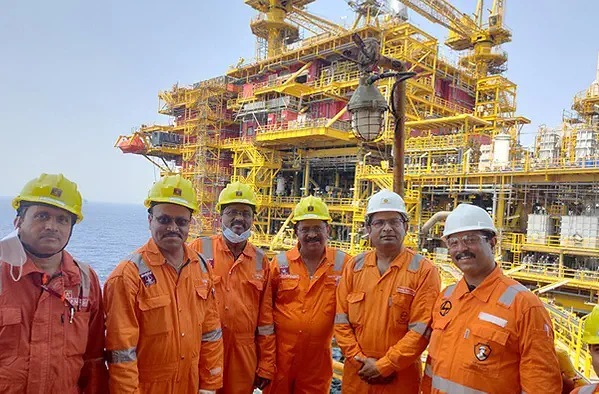
ONGC is India’s largest crude oil and natural gas explorer-producer. It contributes approximately 70% of India’s crude oil production and 84% of its natural gas production. Basically, if your car runs on Indian fuel, or if your home’s gas cylinder exists, ONGC made that happen. No fanfare. No press release. Just geology, rigs, and mathematics.
The company operates across three geographic zones: Western Offshore (Mumbai High, Neelam, Heera, B&S assets), Eastern Offshore (Krishna-Godavari basin, Bay of Bengal), and Onshore (Ankleshwar, Ahmedabad, Mehsana). It’s also got international plays in Vietnam, Norway, Egypt, Tunisia, Iran, and Australia through its arm ONGC Videsh. Nothing glamorous. All fundamental.
But Q3 FY26 is historically interesting for three reasons. First: crude prices collapsed 15% YoY to $61.63/barrel, and yet ONGC printed positive earnings through cost control and gas revenue growth. Second: the Mumbai High field, which has been bleeding production at 6-8% annual decline, suddenly turned positive thanks to a Technical Service Provider (TSP) arrangement with BP. Third: New Well Gas revenue crossed ₹5,000 crore in nine months, unlocking a previously undercounted revenue stream that’s becoming material to the profit story.
We’ll walk through the financials, the projects, the drama, and the dividend theatre. The company is sitting on an extraordinary project pipeline: KG-DWN-98/2 gas field, Daman Upside, and Mumbai High rejuvenation are all staggered to ramp production through FY27 and beyond. There’s also the petrochemical play through subsidiaries, renewable energy bets through Ayana Renewables, and greenfield plans for refining. For a company people call “boring,” ONGC is quietly building more optionality than most.
Find Oil. Extract Oil. Sell Oil. Repeat for 50 Years.
ONGC’s business is simple and ancient. It finds crude oil and natural gas in the earth. It drills wells. It extracts hydrocarbons. It sells them at government-set or market prices. The company’s production flows into India’s oil refining and petrochemical complex — downstream companies like IOCL, BPCL, HPCL, and MRPL depend on ONGC’s upstream supply to keep India’s energy system running.
Production volumes tell the story. In 9M FY26, standalone crude production was 13.9 MMT (13.9 million metric tonnes), while natural gas was 15.2 MMT. Add overseas production via ONGC Videsh, and the company chips in roughly 30% of India’s total oil and gas supply. The installed base is old — fields like Mumbai High are 40+ years old — which is why decline management has become more important than growth management. Hence the BP TSP deal and the focus on “cost council” efficiency initiatives.
Revenue is split between crude oil sales (which now faces commodity price headwinds), natural gas (which has APM and market-linked pricing tiers), and value-added products. New Well Gas, in particular, is emerging as a hidden treasure — wells drilled after 2009 qualify for market-linked pricing, which is currently 20% above the APM (Administered Price Mechanism) baseline. This explains why management obsesses over increasing the NWG percentage every single quarter.
The company also operates subsidiaries: HPCL (petroleum retail, refining, pipelines), MRPL (a 15 MMTPA refinery with petrochemical integration), and ONGC Videsh (international plays). These arms report separately but flow through consolidated results, which is why consolidated earnings often exceed standalone earnings by a material amount.
Q3 FY26: When Crude Crashes But Profits Rise
Result type: Quarterly Results (Consolidated) | Q3 FY26 Consolidated EPS: ₹9.48 | Annualised EPS (Q3×4): ₹37.92 | Current Standalone EPS (TTM): ₹30.2
Source table
| Metric (₹ Cr) | Q3 FY26 Dec 2025 |
Q3 FY25 Dec 2024 |
Q2 FY26 Sep 2025 |
YoY % | QoQ % |
|---|---|---|---|---|---|
| Revenue (Consolidated) | 167,423 | 167,213 | 157,911 | +0.1% | +6.0% |
| Operating Profit | 25,335 | 24,354 | 26,521 | +4.0% | -4.5% |
| OPM % | 15.1% | 14.6% | 16.8% | +50 bps | -170 bps |
| PAT (Consolidated) | 11,946 | 9,747 | 12,615 | +22.5% | -5.3% |
| PAT (Standalone) | 8,372 | 8,240 | 9,452 | +1.6% | -11.4% |
| EPS (Consolidated) ₹ | 9.48 | 7.74 | 10.02 | +22.5% | -5.4% |
Is This a ₹250 Stock or a ₹300 Stock?
Method 1: P/E Based
TTM Standalone EPS = ₹30.2. Current P/E = 9.24x. Industry average E&P player P/E = 12-15x. ONGC deserves a slight discount because: (a) declining production base requires constant CapEx, (b) government ownership limits agility, (c) commodity exposure. Fair P/E band: 9x-12x.
Range: ₹272 – ₹362
Method 2: EV/EBITDA Based
TTM EBITDA (approx) = ₹99,620 crore. Current EV = ₹479,915 crore. EV/EBITDA = 4.8x. Integrated E&P players globally trade 4x-7x. ONGC’s age and decline profile justify 4x-5x.
EV range (4x-5x EBITDA): ₹3,98,480 Cr – ₹4,98,100 Cr → Per share:
Range: ₹317 – ₹396
Method 3: DCF-ish (Dividend Yield)
Annualized dividend (9M FY26): ₹12.25/share. If dividend yield should be 4-5% (global E&P average), fair value should be ₹245-₹306 per share. This assumes no growth and full payout of future FCF.
Range: ₹245 – ₹306
KG-98/2. Daman. Mumbai High. BP. The Trifecta of Hope
🔴 KG-DWN-98/2: The Long-Delayed Giant Wakes
The most strategically important project for ONGC’s growth. All 26 wells have been drilled. Subsea production systems, risers, and flowlines are nearing completion. Central processing platform fully installed. Living quarters, helideck, and support structures pinned down in February 2026. Management expects gas flow to start in Q1 FY27 (April-June 2026) and ramp to 5-6 MMSCMD by end of FY27. Peak production guidance: 7-8 MMSCMD in FY28. Oil production starting at 25,000-30,000 bopd, with potential to reach 35,000-40,000 bopd. Pricing: HPHT (High Pressure High Temperature), market-linked above APM floor. This is the swing factor for ONGC’s growth narrative.
✅ Daman Upside Project
- • Western Offshore gas development
- • Wells drilled; jacket & platform installation underway
- • First gas expected March 2026 (i.e., this month)
- • Expected ramp to 4-5 MMSCMD by July FY26 (Q1 FY27)
- • NWG pricing (market-linked, premium to APM)
⚠️ Mumbai High Rejuvenation (BP TSP Deal)
- • BP engaged as Technical Service Provider since Q4 FY26
- • Field was declining 6-8% annually; now showing signs of stabilization
- • 7% higher production than expected in Q3 FY26 alone
- • 10-year contract targets ~10 MMT additional oil recovery
- • Q4 FY26 results will show first full-quarter impact
✅ New Well Gas: Silent Margin Expander
- • 9M FY26 revenue: ₹5,044 crore (up from ₹3,827 cr in H1)
- • Share of gas revenue: 21% in H1 → 18% in 9M (due to higher overall production)
- • But absolute volumes increasing: target 24% of gas revenue by FY27
- • Pricing: 20% premium to APM baseline (~$6.75 → $8.10 MMBTU)
✅ Management Moves
- • Four new Executive Directors appointed (Jan-Feb 2026)
- • Vikram Saxena given additional charge as Director Strategy (Mar 2026)
- • Executive Director Sanjay Kumar Mazumder superannuated (Mar 2026)
- • Management focused on project execution & cost control
Is the Fort Still Standing?
Source table
| Item (₹ Cr) | Mar 2023 | Mar 2024 | Mar 2025 | Sep 2025 (Latest) |
|---|---|---|---|---|
| Total Assets | 613,115 | 736,621 | 752,656 | 781,418 |
| Net Worth (Eq + Reserves) | 280,647 | 339,069 | 343,440 | 367,779 |
| Borrowings | 142,255 | 191,195 | 187,817 | 176,018 |
| Other Liabilities | 190,212 | 206,357 | 221,398 | 237,621 |
| Total Liabilities | 613,115 | 736,621 | 752,656 | 781,418 |
Total assets hit ₹7,81,418 crore (Sep 2025), up 3.8% from Mar 2025. CapEx is flowing into CWIP (capital work-in-progress) for the three mega projects. Balance sheet expanding, not shrinking.
Borrowings down to ₹1,76,018 crore from ₹1,87,817 crore (Mar 2025). Debt/Equity at 0.48x — rock solid. ONGC is de-leveraging while capital-intensifying. Rare combination.
Net worth ₹3,67,779 crore, growing steadily. Book value ₹292. Stock at ₹279 = 0.95x book. The fort is standing. The question is whether new projects transform it into a castle.
Printing Cash Like Governments Print Rupees
Source table
| Cash Flow (₹ Cr) | Mar 2023 | Mar 2024 | Mar 2025 |
|---|---|---|---|
| Operating CF | +84,211 | +98,847 | +90,868 |
| Investing CF | -72,799 | -57,423 | -42,901 |
| Financing CF | -12,916 | -45,009 | -47,908 |
| Free Cash Flow | +11,412 | +41,424 | +47,967 |
Cheapest, Most Profitable, Most Boring Extraction Play Ever
Annual Trends — FY23 to TTM
Source table
| Metric (₹ Cr) | Mar 2023 | Mar 2024 | Mar 2025 | TTM (Latest) |
|---|---|---|---|---|
| Revenue | 632,291 | 601,581 | 612,065 | 659,254 |
| Operating Profit | 75,527 | 102,383 | 88,861 | 99,620 |
| OPM % | 12% | 17% | 15% | 15% |
| PAT | 32,778 | 55,273 | 38,329 | 44,972 |
| EPS (₹) | 28.17 | 39.06 | 28.80 | 30.14 |
The story in one chart: Oil company revenues are flat (CAGR +2.1%), but earnings bounce like crude prices. FY24 saw ₹55k PAT (high oil prices), FY25 crashed to ₹38k (price normalization), and TTM is recovering to ₹44k. Commodity volatility is the defining feature. Investors who can’t stomach 30-40% year-to-year earnings swings should avoid this name.
ONGC vs The Ghosts of E&P Competition
Source table
| Company | Q3 Revenue (₹ Cr) | Q3 PAT (₹ Cr) | P/E | ROCE % | Div. Yield % |
|---|---|---|---|---|---|
| ONGC | 167,423 | 11,946 | 9.24x | 12.0% | 4.39% |
| Oil India | 8,330 | 1,436 | 13.53x | 12.89% | 2.37% |
| Antelopus Selan | 71 | 28.5 | 31.58x | 22.78% | 0.00% |
Oil India is the closest peer, but 1/20th the scale. ONGC dominates domestically. Internationally, ONGC Videsh competes with majors like Shell, BP, ExxonMobil — not local minnows. Comparison is more philosophical than practical.
Who Owns This Oil Machine?
Shareholding Structure (Dec 2025)
Government (President of India)
58.89% | Unchanged
DIIs (incl. LIC 10.17%)
19.69%
FIIs
7.43%
Public
3.69%
Government (Other)
10.30% (IOCL 7.84%, GAIL 2.45%)
Key Governance Notes
- ✓ Board meets regularly; management transparency on concalls is high
- ✓ Clean audit history; no regulatory controversies
- ⚠ Government ownership (59%) limits buyback options & strategic flexibility
- ⚠ Dividend policy is political (245% payout ratio in FY26) — may not be sustainable
- ✓ Pledge: 0.00% — Clean balance sheet ownership
- ✓ Shareholding stable; no activist interest
How Professional Is An Oil Company Run By the Government?
✅ The Strong Frame
- ✓ Quarterly concalls with full transparency; management accessible
- ✓ Annual reports filed on time; no regulatory surprises
- ✓ Board composition follows Nifty-50 standards
- ✓ Independent directors: 6 out of 10
- ✓ ONGC Videsh (OVL) has its own governance structure
- ✓ No history of dividend cuts — sacred cow status
⚠️ The Constraints
- ⚠ Government owns 59% — policy overrides commercial logic
- ⚠ CEO / MD appointed by government (not market-driven talent)”
- ⚠ Dividend payouts politically mandated (even when unwise)
- ⚠ M&A or strategic pivots constrained by sovereign rules
- ⚠ Onerous compliance on government spending policies
- ⚠ Venezuela & Sakhalin dividend stuck due to geopolitics
Brutal Truths About India’s E&P Sector
India’s oil and gas sector is a slow-motion transition economy. Oil demand peaks in 2035-2040, after which it’s all hydrogen/electricity/renewables. Yet India’s current parc of 230+ million vehicles runs on petrol/diesel, and new vehicle sales grow 7-10% YoY. So paradoxically, ONGC is both in structural decline and in short-term growth. This is the investor’s nightmare — a company with good cash flows today but uncertain cash flows tomorrow.
🔌 The EV Headwind: Real But Slow
Electric 2-wheelers are hitting 10% penetration in new sales. Electric 4-wheelers are at 5-6%. But the total installed base is 230M vehicles, 95% of which are ICE (Internal Combustion Engine). Even at 15% annual EV penetration growth, the ICE parc remains dominant for 15-20 years. ONGC’s decline is real but slow. A cliff collapse is not priced in.
⚡ The Gas Tailwind: Industrial Capex
India’s industrial capex is in a supercycle. Steel, cement, textiles, chemicals all need natural gas for heating, feedstock, and power. APM gas prices are capped, but New Well Gas commands market rates. ONGC’s gas business is more durable than crude. As KG-98/2 ramps gas from 80 MMSCMD to potentially 100+ MMSCMD, the revenue mix shifts favorably. Gas is ONGC’s optionality.
🔄 Renewables & Energy Transition: The Distant Play
ONGC invested in Ayana Renewables (10 GW target by 2030). It’s also exploring ethane-fed petrochemical complex in Prayagraj (with BPCL). These are hedge bets, not core. But they signal management’s awareness that pure E&P is a declining game. Execution on renewables will take 5-10 years to move the needle.
♻️ Geopolitics: Sakhalin, Venezuela, Egypt
ONGC Videsh has ~$550 million in dividend trapped in Venezuela due to US sanctions. Sakhalin operations are under Russian regulatory risk. Egypt and Norwegian assets are stable. International reserves are material but geopolitical hedges are poor. In a multipolar world, asset diversification matters less than execution discipline.
The Sector Summary: India’s E&P market is monopolized by ONGC. There’s no meaningful private exploration (Cairn is largely depleted). Government policy discourages private upstream. So ONGC is a government-granted monopoly in a declining industry facing headwinds from EVs but supported by industrial gas demand and infrastructure capex. The question is: will new project ramps (KG-98/2, Daman) offset the natural decline of existing fields? The next 3-5 years will answer this.
The Oil That Feeds a Nation
ONGC is not a growth stock. It’s not a recovery play. It’s not a tech disruptor. It’s the engine of India’s energy security, operating in a sector that’s simultaneously in decline and growth — depending on which 5-year window you examine. The company trades at 9.24x P/E and 0.95x book value because investors have priced in doom. But management is executing a focused playbook: ramp three mega-projects (KG-98/2, Daman, Mumbai High recovery), maintain dividend yield above 4%, and slowly pivot to renewables and petrochemicals.
Q3 FY26 Execution: Consolidated profit up 23% YoY to ₹11,946 crore, but that included subsidiary contributions. Standalone profit was essentially flat (+1.6%), showing that ONGC’s core E&P is grinding rather than firing. Crude prices fell 15%, yet earnings held firm due to New Well Gas revenue growth and cost discipline. New Well Gas revenue hit ₹5,044 crore in 9M, contributing to overall resilience. The dividend payout of ₹15,411 crore in FY26 (highest ever) signals management confidence in future cash flows. Execution on project commissioning remains on track.
The Three-Project Catalyst: KG-DWN-98/2 (7-8 MMSCMD peak, delayed but finally home), Daman Upside (4-5 MMSCMD, first gas March 2026), and Mumbai High recovery (7% outperformance already visible in Q3) could add 15+ MMSCMD of gas production by FY27-end. This would offset natural field declines and re-rate the stock from “dividend play” to “growth play.” But execution risk is material. Delays or underperformance could keep ONGC rangebound at current valuations.
Valuation & Risks: Fair value range ₹245-₹396, with CMP ₹279 sitting near the lower end. The stock is cheap on standalone metrics but expensive on a “return of capital” basis if future free cash flow normalizes. Key risks: crude price collapse below $50/barrel (margins compress), project delays (3-5 year lag), geopolitical events (Sakhalin, Venezuela), and accelerated EV adoption (though 15+ year tail is long enough). Upside: successful project ramps could unlock ₹320-₹360 per share in a 2-3 year window if gas revenue becomes material.
Investor Profile: ONGC suits dividend-focused portfolios (4.4% yield is genuine and sustainable), and value-oriented investors comfortable with commodity cyclicality. It does NOT suit growth seekers, ESG purists, or those uncomfortable with energy sector volatility. Government ownership means no surprises on dividend policy but limited upside from corporate action.
✓ Strengths
- 70% crude + 84% gas market share in India — monopoly scale
- ₹90,000+ crore annual operating cash flow — fortress-like
- Dividend yield 4.39% — sustainable and rising
- Projects in final execution phase (KG-98/2, Daman, Mumbai High recovery)
- New Well Gas revenue growing (₹5,000 cr in 9M, premium pricing)
- Zero leverage; Debt/Equity 0.48x
✗ Weaknesses
- Core E&P business growth stagnating (production declining 2-3% annually)
- ROCE at 12% — below cost of capital in some scenarios
- Government ownership (59%) limits strategic flexibility
- Commodity price exposure — 30-40% earnings swings
- Standalone profit flat YoY (+1.6%) — no organic momentum
- Dividend payout ratio unsustainably high at 245% (not repeatable)
→ Opportunities
- KG-98/2 ramp: 7-8 MMSCMD peak production (strategic prize)
- Daman Upside: 4-5 MMSCMD coming online FY27
- Mumbai High recovery: BP TSP deal yielding 7%+ outperformance
- New Well Gas: Potentially 24% of gas revenue by FY27 (premium margin)
- Ayana Renewables: 10 GW target by 2030 (hedging against energy transition)
- Prayagraj petrochemical complex: Early-stage but strategic if ethane sourcing succeeds
⚡ Threats
- EV penetration accelerating (5-6% in cars, 10% in 2-wheelers currently)
- Crude oil price collapse below $50 (production economics break)
- Project execution delays (3-5 year slippage risk)
- Geopolitical headwinds (Sakhalin Russian sanctions, Venezuela US embargo)
- Regulatory policy shifts (carbon tax, domestic price caps on gas)
- Dividend sustainability questioned if FCF normalizes lower
ONGC is the contradiction wrapped in crude: a declining-base business with a growth project pipeline, a government monopoly with strong cash flows, and a dividend machine priced like a distressed asset.
The investment thesis hinges on three outcomes: (1) successful execution of KG-98/2, Daman, and Mumbai High recovery to offset field declines; (2) sustained New Well Gas revenue growth at premium pricing; (3) crude prices staying above $60/barrel to keep dividends sustainable. If all three happen, the stock re-rates from ₹279 toward ₹320-360 in 2-3 years. If any fails, the stock becomes a slow-motion dividend grind at flat valuations. The risk-reward is roughly balanced — cheap valuation balanced by commodity and execution risk. Suitable for dividend portfolios and value investors. Unsuitable for growth chasers and ESG-first investors.