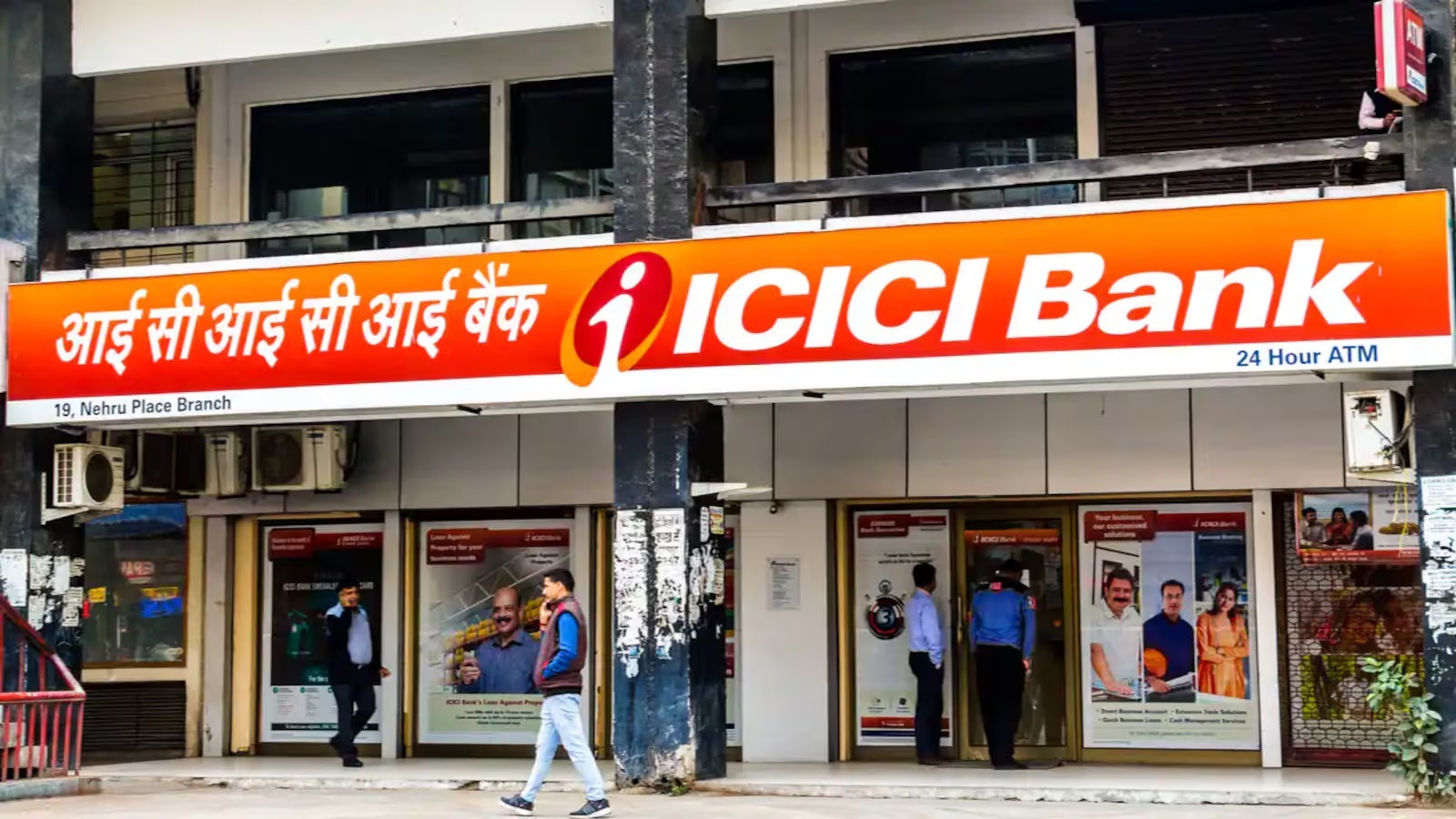
ICICI Bank:
₹17.5 Cr Profit.
One RBI Bombshell. Ten Thousand Questions.
India’s second-largest private bank just posted a ₹1,283 crore agricultural lending compliance provision that wasn’t planned. Nothing else changed—asset quality, credit growth, profitability. Except, you know, the ₹1,283 crore thing.
The Bank That Just Got Hit With a Regulatory Curveball
- 52-Week High / Low₹1,500 / ₹1,206
- Q3 FY26 Revenue₹48,364 Cr
- Q3 FY26 PAT₹11,318 Cr
- Q3 FY26 EPS₹15.77
- Annualised EPS (Q3×4)₹63.08
- Book Value₹484
- Price to Book2.71x
- Dividend Yield0.84%
- Debt / Equity5.51x
- 3-Month Return-5.68%
Meet ICICI Bank: Size, Scale, and Now, a Compliance Asteroid.
ICICI Bank is India’s second-largest private sector bank by asset base. ₹21.4 lakh crore in standalone assets. ₹14.3 lakh crore in gross advances. A branch network stretching to 7,246 branches. And a concall where management spent 45 minutes explaining why a ₹1,283 crore provision—for standard, secured, non-delinquent loans—just knocked 4% off quarterly profit.
This is not a bank in financial distress. Gross NPAs are 1.6% (improved from 2.0% YoY). Net NPAs are 0.37%. ROE sits at 17.9%. Capital adequacy at 16.6%. The loan book grew 11.5% YoY. So when management says “operating performance is +4.1%,” they’re not lying—they’re clarifying the signal-to-noise ratio.
The RBI supervisory review identified a ₹20,000–₹25,000 crore agricultural working capital portfolio where loan terms weren’t compliant with PSL classification rules. Loans are performing. Borrowers are paying. Nothing is broken. But the rules are rules, and the RBI is enforcing them. ICICI Bank now has to either restructure these loans into compliance (and eventually write back the provision) or watch it persist.
Meanwhile, the broader story continues: retail loan growth is slowing (7.2% YoY), business banking is on fire (22.8% YoY), corporate recovery is accelerating (+5.6% YoY), and margins are “range-bound” per management speak. The deposit base grew 8.7% YoY, CASA remains sticky at 40.9%, and the bank declared a ₹2-year CEO extension to Sandeep Bakhshi. Everything is fine. Except the provision. And possibly, the narrative.
Deposits. Loans. Fees. Treasury. Rinse. Repeat.
ICICI Bank takes deposits from you (current accounts, savings, term deposits), invests them in loans to corporates, retail, SMEs, and rural borrowers, pockets the net interest margin in between, charges fees for payments/cards/advisory, plays with fixed income markets via treasury, and returns some of the profit as dividends. It’s a 3,000-year-old business model dressed up in modern banking language.
The bank’s loan book is 52% retail (mortgages, personal loans, auto, credit cards), 20% business banking, 20% domestic corporates, 5% rural, and 3% overseas. Deposits are 65% from retail, with CASA (current account and savings account) representing 40.9% of the deposit base—meaning cheaply-funded, sticky capital.
On Q3, the bank earned ₹21,932 crore in net interest income (NII), +7.7% YoY. Fees were ₹6,572 crore, +6.3% YoY. Other income was ₹8,564 crore (including treasury). Operating profit came to ₹17,513 crore, +6.0% YoY. After expenses (₹11,944 crore), provisions (₹2,556 crore, incl. the PSL bombshell), and taxes, PAT landed at ₹11,318 crore. This is steady, predictable, and utterly unsexy.
Q3 FY26: The Reporting and The Reality
Result type: Quarterly Results | Q3 FY26 EPS: ₹15.77 | Annualised EPS (Q3×4): ₹63.08 | Full-year FY25 EPS: ₹71.65
Source table
| Metric (₹ Cr) | Q3 FY26 Dec 2025 |
Q3 FY25 Dec 2024 |
Q2 FY26 Sep 2025 |
YoY % | QoQ % |
|---|---|---|---|---|---|
| Revenue | 48,364 | 47,037 | 48,181 | +2.8% | +0.4% |
| Operating Profit | 17,513 | 16,531 | 16,504 | +6.0% | +0.1% |
| Operating Margin % | 36.2% | 35.1% | 34.2% | +110 bps | +100 bps |
| PAT (Reported) | 11,318 | 11,792 | 13,906 | -3.98% | -18.6% |
| EPS (₹) | 15.77 | 16.42 | 18.38 | -3.96% | -14.2% |
₹1,283 Crore, Standard Assets, Zero Delinquency. WTF Is Happening?
🔴 RBI Issues Supervisory Directive on Agricultural PSL Compliance
During annual supervisory review, RBI identified ~₹20,000–₹25,000 crore of agricultural working capital facilities where “terms of the facilities were found to be not fully compliant with regulatory requirements for classification as agricultural priority sector lending.” Result: ICICI Bank must provision ₹1,283 crore. Why now? Why this way? Management declined to specify the precise compliance gap, citing confidentiality of supervisory discussions. What we know: loans are standard (not downgraded), secured, performing, and collected on schedule. The issue is documentary/structural, not credit. Duration: provisions persist until loans are repaid or renewed in PSL-compliant terms.
⚠️ What This Means for ICICI
- • ₹1,283 Cr provision in Q3 (larger than usual)
- • Affected portfolio: ~₹20,000–₹25,000 Cr agricultural WC
- • Impact: -₹1,283 Cr to Q3 PAT (all-in 3.98% YoY decline)
- • Remediation: Bank will “work towards renewals/repayments in conformity”
- • Write-back: “Yes” if loans brought into compliance
✅ What This Does NOT Mean
- • No asset classification change (still standard)
- • No deterioration in loan repayment behaviour
- • No early sign of rural/agricultural credit stress
- • No systemic concern (applies to this bank specifically)
- • No change to PSL commitment strategy
The Updates Worth Watching
✅ Loan Growth Inflection (with caveats)
- • Domestic loans: +11.5% YoY, +4.0% QoQ
- • Business banking: +22.8% YoY (highest growth segment)
- • Corporate: +5.6% YoY but +6.5% QoQ (accelerating)
- • Rural: +4.9% YoY, +7.2% QoQ (seasonal recovery)
- • Retail: +7.2% YoY (slowest of major segments)
⚠️ Retail Credit Cards Declining
- • Personal loans: +2.4% YoY (tepid)
- • Credit cards: -3.5% YoY, -6.7% QoQ (concerning)
- • Management narrative: “festive seasonality, not trend”
- • Expectation: “book should grow from here on”
- • Positioning: cards as part of 360-degree banking, not receivable-driven
✅ CEO Extension and Leadership Continuity
- • Sandeep Bakhshi (MD&CEO) extended 2 years beyond Oct 2026
- • New term: Oct 2026 – Oct 2028
- • No succession plan disclosed; management says “no need to speculate”
- • Senior team strength cited as reason for calm
- • Market reading: continuity is being priced in
✅ Subsidiary Investments and Ecosystem Plays
- • ICICI Home Finance: ₹500 Cr equity infusion (Q3)
- • ICICI Prudential AMC: IPO completed Dec 19 (bank retains majority)
- • ICICI Pension Fund Mgmt: bank acquired 100% from ICICI Prudential Life
- • ICICI Prudential Life: bank approved purchase of up to 2% additional stake
Is the Foundation Solid?
Source table
| Item (₹ Cr) | Mar 2023 | Mar 2024 | Mar 2025 | Sep 2025 |
|---|---|---|---|---|
| Total Assets | 19,58,490 | 23,64,063 | 26,42,241 | 26,86,485 |
| Deposits | 12,10,832 | 14,43,580 | 16,41,637 | 16,45,865 |
| Gross Advances | 10,71,894 | 12,84,449 | 14,32,506 | 14,88,200 |
| Borrowings | 1,89,062 | 2,07,428 | 2,18,883 | 2,15,240 |
| Total Equity + Reserves | 2,51,653 | 3,60,144 | 3,73,906 | 3,61,236 |
Total assets +9.2% QoQ to ₹26.9 lakh Cr. Advances +3.9% QoQ to ₹14.9 lakh Cr. This is a bank in growth mode, not retreat.
Deposit growth +8.7% YoY. CASA at 40.9% (unchanged YoY but rising seasonally). The bank isn’t fighting for funding—it’s attracting it.
Debt-to-equity ratio 5.51x. For banks, this is normal (deposits + borrowings fund the asset base). But it’s worth noting the leverage is structural, not a red flag.
Operating CF Is King (And It’s Strong)
Source table
| Cash Flow (₹ Cr) | Mar 2023 | Mar 2024 | Mar 2025 |
|---|---|---|---|
| Operating CF | -3,771 | +157,284 | +122,805 |
| Investing CF | -67,689 | -144,737 | -77,140 |
| Financing CF | +24,791 | +13,765 | +5,589 |
| Net Cash Flow | -46,669 | +26,312 | +51,255 |
Is This a Fortress or a House of Cards?
How ₹194 Trillion in Revenue Becomes ₹47 Billion in Profit
Source table
| Metric (₹ Cr) | Mar 2023 | Mar 2024 | Mar 2025 | TTM (Latest 12M) |
|---|---|---|---|---|
| Revenue | 1,21,067 | 1,59,516 | 1,86,331 | 1,94,012 |
| Operating Profit | 53,421 | 59,956 | 68,253 | 70,211 |
| Op. Margin % | 44.1% | 37.6% | 36.6% | 36.2% |
| PAT | 35,461 | 46,081 | 54,569 | 56,609 |
| EPS (₹) | 48.74 | 63.02 | 71.65 | 74.19 |
ICICI is a compounding machine. Revenue up 60% in 3 years. PAT up 59%. EPS up 52% (with share dilution from equity issuances). The trajectory is aggressive—a bank is rarely this fast-growing over a 3-year span.
ICICI vs The Banking Elite
Source table
| Bank | P/E | ROE % | Q3 Revenue (Cr) | Net NPA % | CAR % |
|---|---|---|---|---|---|
| ICICI Bank | 17.7x | 17.9% | 48,364 | 0.37% | 16.6% |
| HDFC Bank | 17.7x | 14.45% | 87,067 | 0.41% | 20%+ |
| Axis Bank | 15.6x | 16.3% | 33,709 | 0.56% | 17%+ |
| Kotak Mah. Bank | 21.1x | 15.4% | 17,507 | 0.65% | 16%+ |
ICICI’s P/E is in line with HDFC (17.7x), slightly above Axis (15.6x), and well below Kotak (21.1x). ROE at 17.9% is the highest in the peer set. The PSL provision is a temporary overhang on reported profit; ex-provision, ICICI’s growth profile is the most aggressive among large-cap peers.
Who Owns This Bank? (And Does It Matter?)
- FIIs (Foreign Institutions)43.87%
- DIIs (Domestic Institutions)46.74%
- Public / Retail9.13%
- Government0.27%
Top DIIs: LIC (5.92%), SBI Mutual (6.05%), ICICI Prudential MF (5.35%), HDFC MF (4.26%), NPS Trust (3.52%). Pledge: 0.00%. Retail holder base: 21.4 million unique shareholders (growing from 18.3 million in Mar 2023).
No Promoter = No Promoter Risk
ICICI Bank has no single promoter or promoter group. It’s institutionally owned (90%+) with FIIs and DIIs as the dominant shareholders. This eliminates pump-and-dump risk, tunneling risk, and pledge-based volatility. Governance by committee beats governance by family, usually.
LIC Holds 5.92% (And Voting Rights Are Complex)
LIC is the largest single shareholder but not a “promoter.” It’s an investor. FIIs + DIIs together command 90%+ voting power, making the bank effectively a professional institution. Board independence is structured accordingly. Worth monitoring: if FIIs reduce exposure (geopolitical, Fed rate, rupee carry), flows could get volatile.
Are the Auditors Awake?
✅ The Competence Marks
- ✓ Credit rating AAA/AA+ from CRISIL (stable outlook)
- ✓ No audit qualifications for 10+ consecutive years
- ✓ Board majority independent (per RBI requirements)
- ✓ Risk committee meets regularly; quarterly concalls transparent
- ✓ Provisions exceed regulatory minimums (PCR 75.4%)
- ✓ CAR well above RBI minimums (16.6% vs 10.5% required)
- ✓ ESG disclosures extensive (renewable energy, SHG lending, diversity)
⚠️ The Watch List
- ⚠ RBI supervisory findings on PSL compliance (agricultural lending)
- ⚠ GST orders/notices: ₹50+ Cr in demands across states (under appeal)
- ⚠ Contingent liabilities: ₹80+ Cr in regulatory demands
- ⚠ CEO extension to Oct 2028 (no succession plan disclosed yet)
- ⚠ Retail deposit growth moderating (CASA sticky but savings easing)
- ⚠ Cost inflation: opex +13.2% YoY (incl. Labour Code provisions)
Indian Banking: A System Under Growth Stress (And PSL Scrutiny)
🏦 The PSL Mess Nobody Talks About Openly
Priority Sector Lending (PSL) mandates 40% of advances to agriculture, MSMEs, housing, and others. ICICI’s PSL provision is not unique—it’s the first major bank enforcement we’re seeing. Why now? RBI is getting stricter on loan classification rules. Why PSL? Because bank books grew, classifications shifted, and RBI’s supervisory reviews are catching gaps. This is not a signal of agricultural stress; it’s a signal of RBI tightening classification rigor. If other large banks face similar findings, provision costs could be systemic headwind for FY26 earnings.
💰 Deposit Franchise Remains Sticky (But Cost Rising)
CASA is 40.9%, up from 39.4% two years ago. This is enviable. But PSLC pricing (banks buying PSL credits from each other) has “steadily gone up over the last few quarters” per management. Rural lending is becoming expensive to cross-subsidise. As RBI tightens PSL rules and PSLC prices rise, the economics of retail deposit franchises will compress. Winners: banks with strong rural/agricultural teams (Axis, HDFC). Losers: banks playing PSL catch-up with expensive PSLC purchases.
🔴 Retail Credit Growth Inflection (Unsecured Tanking)
Credit card outstandings fell 3.5% YoY, -6.7% QoQ. Personal loans grew only 2.4% YoY. Mortgages and auto are steady. Management attributed cards to “festive seasonality” and expects recovery—but three consecutive quarters of YoY decline is worth watching. If unsecured retail is normalizing after years of 15%+ growth, repricing could hurt NIMs and competitive positioning. ICICI is a premium franchise in mortgages; unsecured lending is lower-margin and higher-risk. Slowdown here is not catastrophic but signals maturing retail cycle.
📈 Business Banking Acceleration (The Real Growth Engine)
Business banking (+22.8% YoY) is now “slightly larger than corporate” per management. This segment—turnover ₹5 Cr to ₹100 Cr—is less cyclical than corporate and more diverse than pure retail. ICICI’s 7,246-branch network is ideal for tapping this segment at scale. Secular tailwind: GST formalization, digitization, rising credit appetite among India’s 2+ million registered businesses. This is where ICICI’s growth will come from for the next 3–5 years.
Macroeconomic backdrop: RBI rate cuts (two 50-bps cuts in FY26 so far) are feeding through MCLR reductions, pressuring NIMs. Deposit repricing and CASA stickiness are offsets, but the trend is margin compression until repo hits terminal rate. Loan growth remains robust (11.5% system-wide), so volume should offset pricing. The real test: whether retail NPAs normalize after a decade of near-zero stress.
The Banking Enigma
ICICI Bank is a compounding machine. 26.6% PAT CAGR over 3 years. 17.9% ROE. ₹194 trillion revenue base. Nil promoter risk. Fortress-level capital adequacy. It’s also a bank that just got hit with a ₹1,283 crore regulatory provision that wasn’t on anyone’s earnings models. The operating performance is excellent. The signal-to-noise ratio is poor.
Q3 FY26 Execution: Revenue grew 2.8% YoY. Operating profit +6.0% YoY. Loan book +11.5% YoY. Deposits +8.7% YoY. The core banking business is firing. But PSL compliance took a ₹1,283 Cr bite. Management says the adjusted PAT is +4.1%, not -3.98%. Is the market reading this? The stock is down 5.68% in 3 months and 3.26% YTD. Probably not.
The PSL Overhang: The affected portfolio (~₹20,000–₹25,000 Cr) is performing, standard, and secured. The issue is documentary/regulatory, not credit. Provisions persist until loans are renewed in compliance. Write-backs are theoretically possible. But the timeline is indeterminate, and the P&L impact could persist for 2–3 years if loan maturity profiles are long. This is not a bank in distress; it’s a bank adjusting to tighter regulatory interpretation.
Valuation in Context: P/E of 17.7x is fair for 26.6% PAT CAGR and 17.9% ROE. Without the PSL provision, P/E would be ~16.5x on normalized earnings, which is attractive. With the provision, the market is pricing in continued headwinds. NIMs are “range-bound” per management, suggesting modest re-rating upside is capped unless revenue growth surprise or cost leverage emerges.
Historical perspective: Over 10 years, ICICI stock has returned 21% CAGR. Over 5 years, 17% CAGR. Over 1 year, 7.8% (tepid). The bank is in a mature growth phase—high quality, but slower re-rating catalysts. Dividend yield is 0.84%, so total return depends on growth. Retail credit slowdown, unsecured lending weakness, and NIM compression are near-term headwinds. Business banking acceleration and cost absorption are tailwinds.
✓ Strengths
- 26.6% PAT CAGR (3yr); 25% revenue CAGR
- 17.9% ROE, highest in large-cap peer set
- Gross NPA 1.6% (improving); Net NPA 0.37% (excellent)
- CASA 40.9% (sticky, low-cost funding base)
- Business banking +22.8% YoY (high-growth segment)
- Zero promoter risk; institutional ownership (90%+)
- AAA credit rating; fortress balance sheet
✗ Weaknesses
- PSL provision ₹1,283 Cr (near-term P&L drag)
- Retail credit growth slowing (7.2% YoY, below 11.5% system)
- Unsecured lending declining (-3.5% cards YoY)
- Cost inflation +13.2% YoY (Labour Code impact ongoing)
- ROCE 7.87% (weaker than non-bank peers; acceptable for banks)
- Dividend yield 0.84% (limited income appeal)
→ Opportunities
- Business banking acceleration (turnover ₹5–100 Cr segment booming)
- Mortgage origination (11.1% YoY growth, still underpenetrated)
- Rural/agricultural portfolio remediation could reverse provisions
- CASA repricing upside as RBI rate cuts moderate
- Subsidiary ecosystem (ICICI AMC IPO, ICICI Prudential Life stake increase)
- Digital payments scaling (19.7% market share in UPI P2M by value)
⚡ Threats
- RBI PSL enforcement could extend to other banks (systemic headwind)
- NIM compression as repo cuts flow through (marginal but persistent)
- Retail credit cycle moderating (after years of 15%+ unsecured growth)
- Regulatory / tax compliance costs (₹50+ Cr GST notices under appeal)
- CEO succession planning unclear (Bakhshi extended to Oct 2028)
- FII outflows (geopolitical, Fed rate, rupee weakness)
ICICI Bank is a tale of two narratives colliding in Q3 FY26.
On one side: a compounding machine. 26.6% PAT CAGR. 17.9% ROE. Loan book acceleration. Business banking on fire. Balance sheet fortress-like. On the other: a regulatory bombshell (₹1,283 Cr PSL provision) that wasn’t expected and won’t reverse quickly. Management says ex-provision, growth is +4.1%. The market is pricing in near-term earnings volatility. The fair value range of ₹1,050–₹1,450 reflects this ambiguity. At ₹1,313, the stock is pricing stability—not excitement, not panic. Just middle-of-the-road “this is a fine bank, so we’ll hold it at 17.7x P/E.” For wealth creation, you need either growth surprise (business banking at 22% YoY could sustain it) or PSL provision reversal (unlikely in 12–24 months). Until then, ICICI is a compounder for patient capital, not a catalyst-driven re-rating play.