Capital Trade Links Ltd Q3 FY26: 54% Profit Crash, 1.84 Debt/Equity & 31 P/E — Is This NBFC Lending or Just Pretending?
1. At a Glance – The Loan Shark With a Limp
Here’s your micro-cap NBFC drama.
Market Cap: ₹221 Cr Current Price: ₹17.1 3-Month Return: -46.1% (yes, almost half evaporated) Stock P/E: 31 Book Value: ₹5.79 Price to Book: 2.97x ROE: 3.63% ROCE: 7.42% Debt: ₹137 Cr Debt to Equity: 1.84
Latest quarter (Dec 2025) revenue came at ₹5.66 Cr. Profit? ₹1.02 Cr. Sounds okay until you see profit fell 54% YoY and sales dropped nearly 12%.
This is an NBFC trading at 31 times earnings, with ROE below 4%, interest coverage of 1.86, and promoter holding under 40%.
Is this a sleeping lender? Or a leverage experiment gone slightly wrong?
Let’s investigate like financial detectives.
2. Introduction – Welcome to the Micro NBFC Circus
Capital Trade Links Ltd is not Bajaj Finance. It’s not even the colony version of Bajaj Finance.
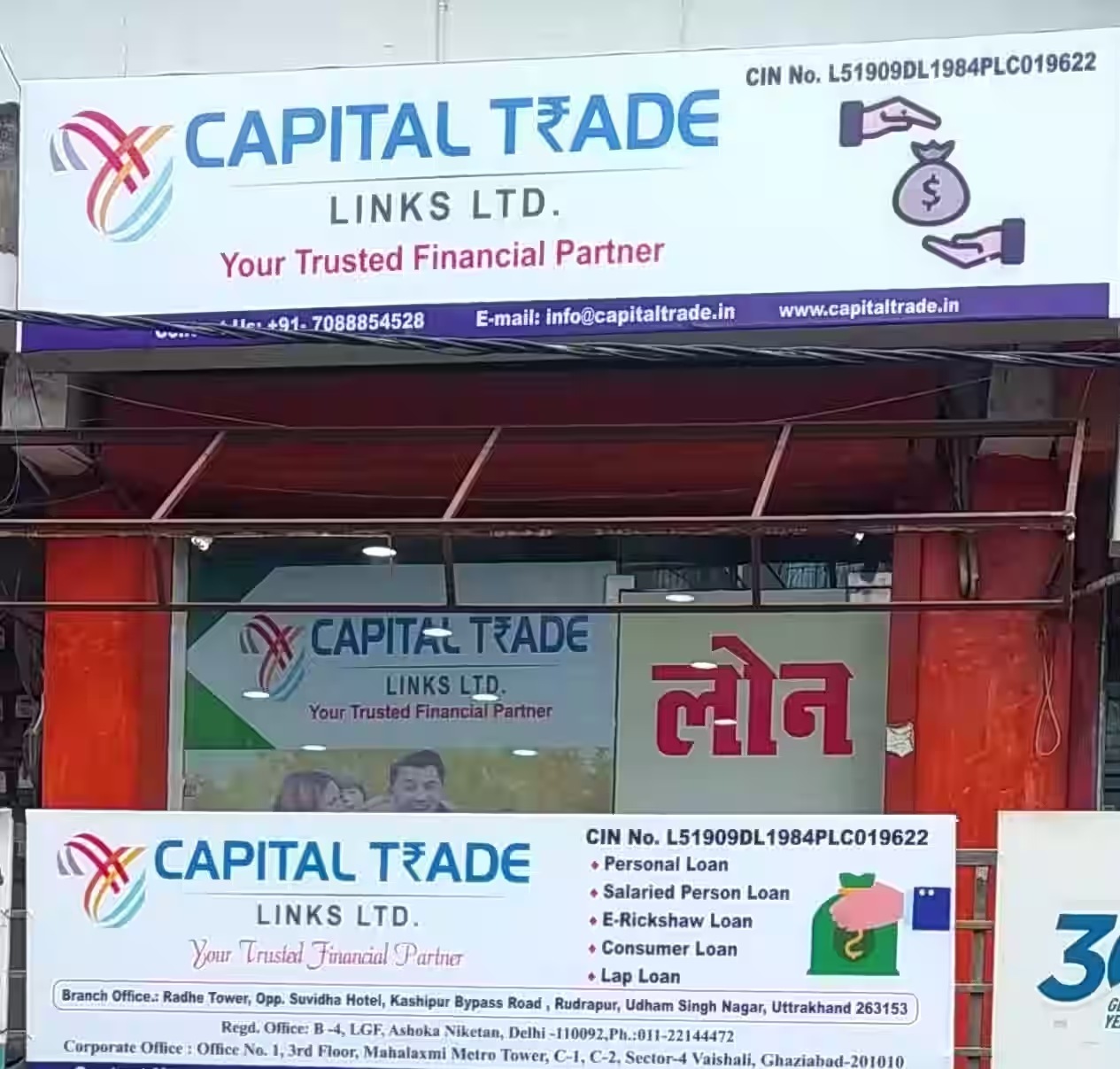
Incorporated in 1984, this RBI-registered NBFC primarily lends in the low-to-medium ticket segment — personal loans, business loans, e-rickshaw loans, loans against property.
Basically, if you need money and the big banks ignore you, CTL might answer your call.
It got listed in 2014. In 2017, it became a mutual fund distributor and entered vehicle loans (E-rickshaw) and personal lending.
So far so good.
But here’s the twist — this company went from giving loans worth ₹39 Cr in FY22 to ₹137 Cr in FY23.
That’s not growth. That’s caffeine overdose.
And then what happened?
Debt shot up. Cash flow went wild. Profit margins became moody.
Stock price? Fell 46% in three months.
So question for you: When a lender grows aggressively but profits fall — are they building scale or building stress?
Let’s peel the layers.
3. Business Model – WTF Do They Even Do?
Imagine this:
You run a small shop in North India. You need ₹3–10 lakh working capital. Bank says no.
You buy an e-rickshaw and need financing. Bank says come tomorrow.
You want a personal loan without 50 documents. Bank says, “Server down.”
Enter Capital Trade Links.
They offer:
Personal loans
Business loans
E-rickshaw financing
Loans against property
Working capital funding
In FY20, 98% of loans were personal loans. That’s a concentration risk. When your entire book is personal credit, you are basically betting on borrower discipline.
And India’s retail borrower discipline is… let’s say “emotionally flexible.”
They also issued:
1 crore equity warrants earlier
90 lakh warrants in FY23 at ₹50 each
Face value reduced from ₹10 to ₹1
Translation: frequent capital engineering.
This is a small NBFC trying to scale fast in a risky lending segment.
Now here’s the real question:
Are they underwriting loans smartly… Or just underwriting optimism?