1. At a Glance – Solar Pumps, Subsidies & Stunning Returns
GK Energy is currently priced at ₹120, sitting on a ₹2,429 Cr market cap with a P/E of 13.1 and a jaw-dropping ROE of 101% and ROCE of 74.3%. The stock is down 31.2% in the last 3 months, which basically means the market went from “Wah kya company!” to “Thoda ruk jao bhai.”
Latest Q3 FY26 results? Spicy.
- Quarterly Sales: ₹460 Cr (up 43.6% YoY)
- Quarterly PAT: ₹58.83 Cr (up 57.7% YoY)
- OPM: ~20%
- TTM Sales: ₹1,466 Cr
- TTM PAT: ₹186 Cr
This is not some sleepy EPC contractor. This is a solar pump machine printing profits faster than rural electrification slogans.
But wait…
75–85% revenue comes from PM-KUSUM scheme.
90% revenue comes from Maharashtra.
So the question is: Is this a renewable energy powerhouse — or a government tender specialist with concentration risk?
Let’s dig.
2. Introduction – From Water Heaters to ₹1,000+ Cr Turnover
GK Energy started in 2008. Like many solar companies, it began small — installing solar water heaters.
Fast forward to FY25 — it crossed ₹1,000 Cr revenue.
In FY26, it’s installing 43,000+ pumps in just 9 months.
That’s not growth. That’s agricultural domination.
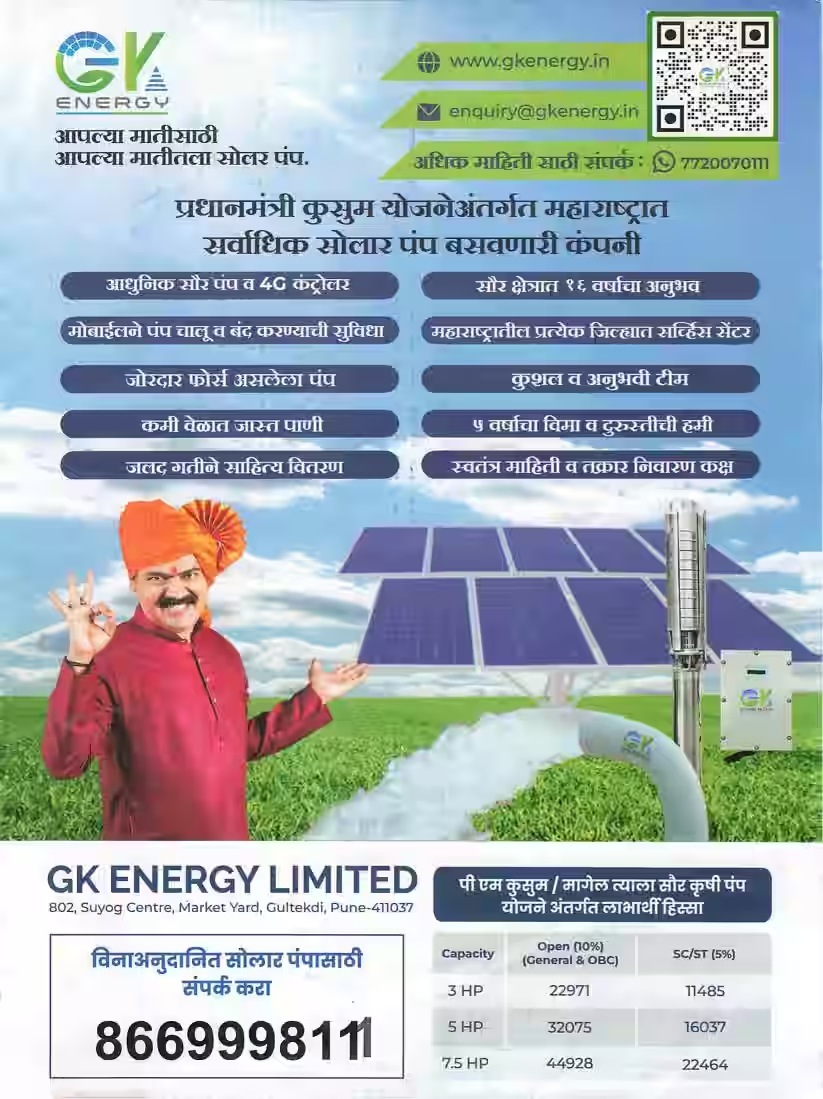
Under PM-KUSUM Component B, GK Energy installs solar agricultural water pumps. Farmers pay a fraction; the government pays the rest. DISCOMs reduce subsidy burden. Everyone claps.
In theory.
In reality, EPC companies live and die by:
- Order book visibility
- Working capital discipline
- Execution speed
- Government payment cycles
GK Energy currently has:
- ₹864 Cr order book (H1 FY26)
- Additional ₹642 Cr order (Dec 2025 Maharashtra SEDCL)
- 875 MW solar cell procurement agreement
Translation: The pipeline is loaded.
But can execution keep pace? And more importantly — can cash flow?
Let’s decode the business first.
3. Business Model – WTF Do They Even Do?