1. At a Glance – The Belt Boss Is Back
At ₹1,570 per share and a market cap of ₹2,144 crore, Pix Transmission Ltd is not just selling belts — it’s tightening them around profitability. Q3 FY26 (December 2025 quarter) delivered ₹151 crore in revenue, ₹44 crore operating profit, and ₹35 crore net profit. That’s a 58.5% YoY jump in quarterly profit. Not bad for a company that literally makes rubber belts.
Stock P/E stands at 19.6 versus industry median of 21.8. ROCE is a juicy 26.9%. ROE? 20.7%. Debt? Just ₹29.8 crore. Current ratio? 7.11. Interest coverage? 49 times. This company could sneeze and still pay interest.
Three-month return is 2.38%. One-year return is 2.37%. So price is behaving like a disciplined student — marks improving, but still not showing off.
Latest quarterly OPM stands at 29%. That’s elite territory in manufacturing. And exports now contribute 60% of revenue in FY24 versus 46% in FY20. This Nagpur-based belt maker has gone global.
But here’s the real question — is this just a good quarter, or a structurally stronger business?
Let’s unroll the belt.
2. Introduction – The Most Boring Product That Prints Cash
Let’s be honest.
Nobody wakes up thinking, “I want to invest in belts.”
But here we are.
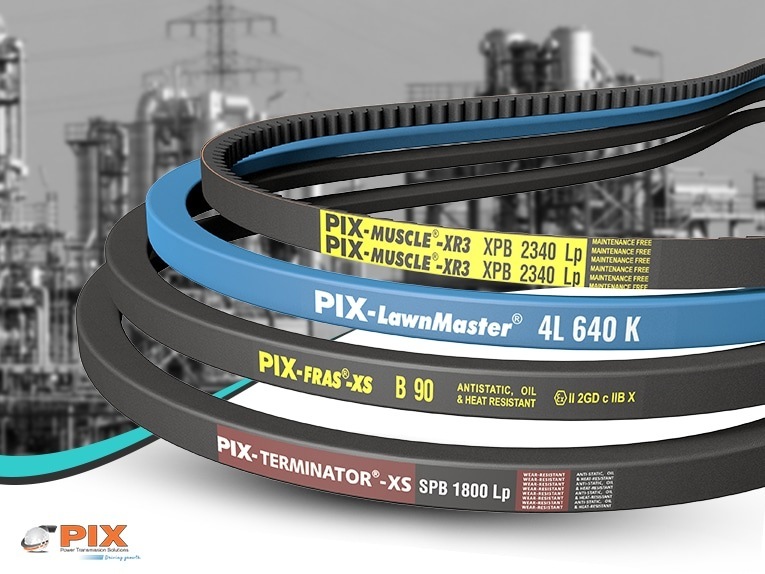
Pix Transmission is one of India’s leading manufacturers of mechanical power transmission belts. These are not Gucci belts. These are industrial belts — the kind that keep factories running, tractors moving, cement plants grinding, and automotive engines humming.
The company has:
- Two manufacturing units at Hingna, Nagpur
- An automated rubber mixing facility at Nagalwadi
- A centralized logistics hub
- Overseas subsidiaries in Europe and Middle East
- 250+ channel partners in over 100 countries
Exports now form 60% of revenue (FY24). That’s a massive shift from 46% in FY20. Management clearly decided: “If India is growing slow, let’s sell to the world.”
More than 80% of products are sold under their own brand. And largely in the after-sales market. That means repeat business. Recurring demand. Sticky customers.
Top 10 customers contribute 36% of sales. Slight concentration, but not alarming.
Now ask yourself — how many times does a factory stop replacing belts? Exactly.
This is boring, essential, and repeat-demand business.