1. At a Glance – Zombie Company, Hero Valuation
Imagine a financial corporation that stopped giving loans in 2010, has zero borrowings, is officially moving toward winding-up and delisting, and still trades at a ₹1,661 crore market cap with a P/E of 205.
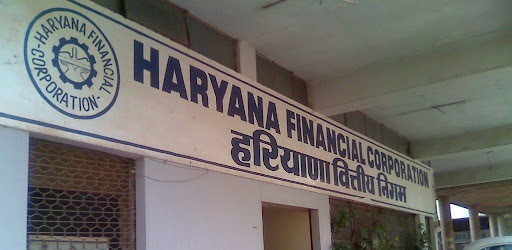
Welcome to Haryana Financial Corporation Ltd.
Current Price: ₹80
3-Month Return: -10.1%
1-Year Return: 189%
Book Value: ₹10.8
Price-to-Book: 7.41
ROCE: 0.03%
ROE: 0.00%
Debt: ₹0
Latest quarterly result (Dec 2025):
Revenue: ₹9.99 Cr
Net Profit: ₹8.56 Cr
Yes, you read that right. A company that has ceased loan sanctioning since May 2010 just reported a quarterly profit of ₹8.56 Cr. And the board has simultaneously recommended winding-up and BSE delisting.
So what exactly are we valuing here? A going concern? A liquidation lottery ticket? Or a government-controlled financial relic that accidentally printed profit?
Let’s investigate.
2. Introduction – The Financial Corporation That Forgot to Do Finance
Haryana Financial Corporation was incorporated in 1951. Back then, Nehru was PM, and state financial corporations were the cool kids helping MSMEs grow.
Fast forward to 2010.
The company ceased loan sanctioning. That means its core business — lending — stopped.
No new loans.
No expansion.
No new growth plan.
Just legacy assets, recoveries, rental income, and interest on old exposures.
By FY23, it had ₹52 lakh in dues to recover from creditors. It has no borrowings. It survives on limited internal resources.
And now, the board has:
- Approved Q3 FY26 results
- Recommended winding-up
- Confirmed BSE delisting underway
This is like a restaurant that stopped cooking in 2010, occasionally rents out its chairs, and somehow gets valued like a 5-star hotel.
So the real question is:
Are investors pricing in liquidation value? Or just momentum madness?
3. Business Model – WTF Do They Even Do?
Originally? They sanctioned loans.
Currently?
Let’s look at FY23 revenue breakup:
- Rental income ~53%
- Interest income ~36%
- Bad debts recovery ~9%
- Interest on loans & advances ~2%
Translation:
They don’t lend anymore. They collect rent. They earn interest on whatever old exposures remain. And occasionally recover old bad loans.
It’s like an old banker who retired 15 years ago but still collects rent from a building and interest from fixed deposits.
And that’s the “business.”
There is no expansion plan.
No new vertical.
No credit growth.
No strategic pivot into fintech.
Just asset harvesting.
Let me ask you something:
Would you pay 7.4 times book value for a company that is literally preparing to wind itself up?
Interesting.
4. Financials Overview – Quarterly Results (Q3 FY26)
Q3 EPS = ₹0.41
Annualised EPS = ₹1.64
Now let’s compare.
Figures in ₹ Crores
| Metric | Latest Qtr (Dec 2025) | YoY Qtr (Dec 2024) | Prev Qtr (Sep 2025) | YoY % | QoQ % |
|---|---|---|---|---|---|
| Revenue | 9.99 | 0.00 | 0.00 | NA | NA |
| EBITDA* | 8.75 | -1.18 | -0.84 | Massive swing | Massive swing |
| PAT | 8.56 | -0.59 | -0.33 | 1550%+ | Turnaround |
| EPS (₹) | 0.41 | -0.03 | -0.02 | Turnaround | Turnaround |
*Financing Profit used as operating proxy.
Let’s be honest.
Revenue was literally ₹0.00 Cr in previous quarters, and suddenly ₹9.99 Cr appears.
This explains the 1550% profit variation.
But does this represent sustainable earnings?
Or one-time recoveries and accounting adjustments?
Because remember — earnings include ₹2.28 Cr of other income in TTM.
When your core business stopped in 2010, volatility becomes the norm.
5. Valuation Discussion – Fair Value Range
Current Price: ₹80
Annualised EPS: ₹1.64
Recalculated P/E = 80 / 1.64 = ~48.8
But stock P/E (TTM) shows 205.
So earnings are highly inconsistent.
Method 1: P/E Based
Industry median P/E (from peers): ~19.7
If we apply:
Conservative 10x on annualised EPS:
1.64 × 10 = ₹16
Industry 20x:
1.64 × 20 = ₹32
Method 2: EV/EBITDA
Enterprise Value = ₹1,635 Cr
Quarter EBITDA ≈ ₹8.75 Cr
Annualised EBITDA ≈ ₹35 Cr
EV/EBITDA = 1635 / 35 ≈ 46x
Peers trade far lower (Power Finance, REC, HUDCO all under 10x P/E).
If valued at 10x EBITDA:
10 × 35 = ₹350 Cr enterprise value
Implied equity value drastically lower than current.
Method 3: Liquidation Logic
Book Value = ₹10.8
Even at 1.5x book → ₹16
Fair Value Range (Educational Estimate):
₹16 – ₹32
This fair value range is for educational purposes only and is not investment advice.
Now ask yourself:
Why is the market valuing a winding-up entity at ₹80?
6. What’s Cooking – News, Triggers, Drama
Latest board updates:
- Q3 FY26 approved
- Net profit ₹8.56 Cr
- Winding-up recommended
- BSE delisting underway
Earlier:
- Q1 FY26 loss
- Q2 recommended winding-up
- State Government pushing delisting
Also — MD musical chairs:
- Sushit Sarwan appointed
- Then relieved
- Yash Garg reappointed
- Then replaced again
- Now Dr. Aditya Dahiya appointed Dec 2025
This is less “stable management” and more “IAS transfer season.”
If a company is preparing for liquidation and delisting, then:
Are we investing in future growth?
Or betting on exit mechanics?
7. Balance Sheet – Latest Consolidated (Sep 2025)
Figures in ₹ Crores
| Item | Mar 2025 | Sep 2025 | Latest (Sep 2025) |
|---|---|---|---|
| Total Assets | 256.91 | 250.96 | 250.96 |
| Net Worth | 224.24 | 224.24 | 224.24 |
| Borrowings | 0.00 | 0.00 | 0.00 |
| Other Liabilities | 32.67 | 26.72 | 26.72 |
| Total Liabilities | 256.91 | 250.96 | 250.96 |
Observations:
- Debt = ZERO. Finally something peaceful.
- Assets slowly declining.
- Net worth stagnant.
- Liabilities reducing as liquidation progresses.
This balance sheet is not growing.
It’s slowly shrinking.
Like a melting ice cube.
8. Cash Flow – Sab Number Game Hai
Figures in ₹ Crores
| Year | CFO | CFI | CFF |
|---|---|---|---|
| Mar 2023 | -4.97 | 0.04 | 4.42 |
| Mar 2024 | -3.24 | 1.09 | 3.76 |
| Mar 2025 | -5.21 | 2.97 | 2.44 |
Operating cash flow is consistently negative.
So profit is accounting-based, not cash-based.
When CFO is negative but market cap is ₹1,661 Cr — you should at least raise one eyebrow.
9. Ratios – Sexy or Stressy?
| Ratio | Value |
|---|---|
| ROE | 0.00% |
| ROCE | 0.03% |
| P/E | 205 |
| PAT Margin | 59.5% |
| Debt/Equity | 0 |
ROE of zero.
ROCE of zero.
But P/E of 205.
This is valuation comedy.
10. P&L Breakdown – Show Me the Money
Figures in ₹ Crores
| Year | Revenue | EBITDA | PAT |
|---|---|---|---|
| Mar 2023 | 2.32 | -2.00 | 0.72 |
| Mar 2024 | 3.67 | -0.69 | 25.44 |
| Mar 2025 | 0.42 | -5.27 | -0.01 |
Revenue collapsed.
Profit swings wildly.
TTM PAT: ₹8.10 Cr.
This is not growth.
This is volatility.
11. Peer Comparison – David Among Giants
| Company | Revenue Qtr | PAT Qtr | P/E |
|---|---|---|---|
| Power Finance Corporation Ltd | 29094.81 | 8211.90 | 5.34 |
| REC Ltd | 15017.70 | 4052.44 | 5.30 |
| HUDCO Ltd | 3431.20 | 713.00 | 13.90 |
| Haryana Financial Corp | 9.99 | 8.56 | 205 |
Peers are lending, growing, expanding.
This company is winding up.
Yet it trades at the highest P/E in the table.
Who is crying here?
12. Shareholding – 99.36% Government Control
Promoter holding: 99.36%
State Government of Haryana: 97.28%
SIDBI: 2.08%
Public: 0.53%
This is basically a government file with a stock ticker.
Public float is tiny.
Which means price volatility can be wild.
13. Corporate Governance – Angels or Paper Pushers?
No pledges.
Government-controlled.
Auditors flagged winding-up recommendation.
Board repeatedly approving delisting.
This is less corporate governance drama and more bureaucratic closure.
14. Industry Roast – The State Financial Corporation Graveyard
State financial corporations were built decades ago to fund MSMEs.
Today?
Most are irrelevant.
NBFC giants like PFC, REC, HUDCO dominate.
Private NBFCs are aggressive.
Fintechs are eating small loans.
Old SFCs are legacy shells managing old assets.
Haryana Financial Corporation is not competing in lending anymore.
It’s exiting.
The industry moved on.
It didn’t.
15. EduInvesting Verdict – Liquidation Lottery or Value Trap?
Let’s summarise.
Strengths:
- Debt free
- Government backing
- Occasional profit spikes
Weaknesses:
- Core business stopped in 2010
- Winding-up recommended
- Delisting underway
- ROE near zero
- Wild earnings volatility
Opportunities:
- Possible liquidation payout logic
- Asset monetisation surprises
Threats:
- Delisting uncertainty
- Earnings collapse
- Valuation compression
This is not a growth story.
Not a turnaround story.
Not a compounding story.
This is a corporate sunset story.
If you are here, ask yourself:
Are you investing in operations?
Or speculating on exit mechanics?
Because fundamentals don’t justify ₹1,661 Cr valuation.
Sometimes markets price hope.
Sometimes they price hype.
And sometimes they price confusion.
This fair value range is for educational purposes only and is not investment advice.
Written by EduInvesting Team | Date