1. At a Glance – The PAN Emperor with Shrinking Margins
₹1,028 crore market cap.
Current price ₹334.
Trading at just 0.79x book value.
Dividend yield: 3%.
ROCE: 10.9%.
ROE: 8.17%.
Q3 FY26 revenue: ₹471 crore.
Q3 FY26 PAT: ₹-7.2 crore.
Quarterly EPS: ₹-2.35.
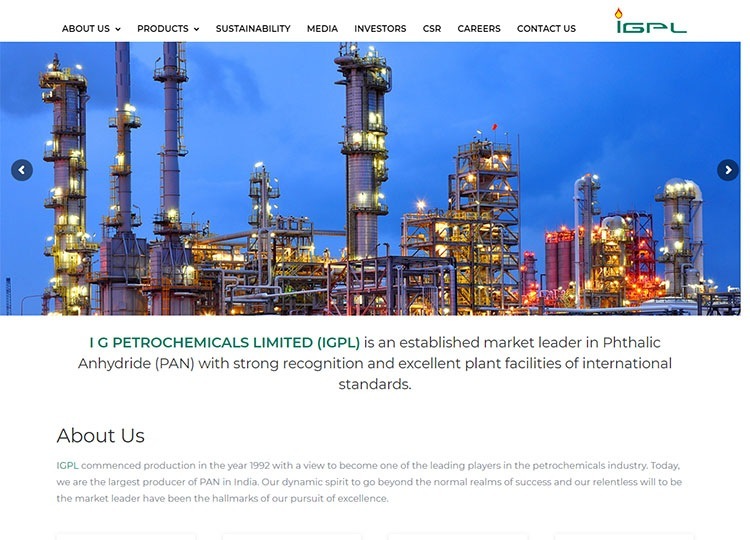
Meet I G Petrochemicals Ltd — India’s largest producer of Phthalic Anhydride (PAN) with 50%+ market share and second-largest globally. Sounds dominant, right?
Except Q3 FY26 just delivered a polite financial slap.
Revenue stayed flat sequentially. Margins compressed like Mumbai local trains at 9:15 AM. EBITDA margin collapsed to 3.3% from 9.6% last year. PAT went negative. EPS turned red.
And yet — this company controls half of India’s PAN market and claims to be one of the lowest-cost producers globally.
So what’s happening here?
Is this a cyclical dip? A raw material squeeze? Or is the chemical king slowly losing pricing power?
Let’s put on our forensic gloves.
2. Introduction – When Market Leadership Meets Margin Reality
I G Petrochemicals is not some random smallcap experiment. Incorporated in 1988, it manufactures Phthalic Anhydride, Maleic Anhydride, Benzoic Acid, and Di-Ethyl Phthalate.
Translation?
It sits in the backbone of plastics, paints, resins, and industrial chemicals.
If you see PVC pipes, synthetic leather, paints, cables, packaging films — somewhere in that chain, PAN is involved.
And IGPL dominates PAN in India.
But here’s the twist.
Despite market leadership, Q3 FY26 shows:
- Revenue similar to previous quarters
- Profitability crushed
- Finance cost high
- Margins thinner than a politician’s promises
The company itself admits: demand was stable but profitability was impacted due to compressed margins.
Stable demand. Falling margins.
That usually means pricing pressure or raw material cost volatility.
Question for you:
If you’re the largest player and still bleeding margins, what does that say about industry pricing power?
Let’s understand the business engine first.
3. Business Model – WTF Do They Even Do?
Alright, lazy investor.