Magna Electro Castings Ltd Q3 FY26: ₹47.98 Cr Revenue, ₹3.75 Cr PAT, 15.30% OPM — Can This ₹391 Cr Castings Specialist Re-Accelerate After a -22.8% Profit Dip?
1. At a Glance – Small Company, Heavy Castings, Mood Swings Included
₹924 per share. ₹391 crore market cap. Stock P/E of 19. ROCE at 25.1%. ROE at 19.4%. Debt-to-equity at a microscopic 0.09. Sounds solid, right?
Now hold that thought.
In Q3 FY26 (December 2025 quarter), Magna Electro Castings Ltd delivered revenue of ₹47.98 crore, up 11.2% YoY. Good. But profit after tax fell 22.8% YoY to ₹3.75 crore. OPM slid to 15.30% from 17.20% in the previous quarter.
So we have growth in sales… compression in margins… and profit wobble.
Over 5 years, profit CAGR is 28.1%. Over 3 years, stock price CAGR is 45.2%. But in the last 6 months? Down 25.5%.
This is what we call in Tamil Nadu foundry language: “Molten metal hot, share price cold.”
Exports form 48% of revenue. 98% business from Foundry division. Wind energy contributes only 2%. Yet green energy covers 80% of power needs.
Question for you: Is this a disciplined small-cap industrial compounder… or a cyclical cast iron drama that cools faster than molten metal?
Let’s dig.
2. Introduction – Welcome to the World of Ferrous Fortunes
Industrial castings companies are like background dancers in Bollywood movies.
You don’t notice them. You don’t appreciate them. But without them, the hero cannot even enter the scene.
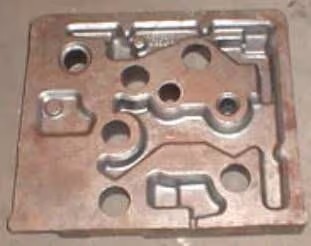
Magna Electro Castings Ltd (MECL), incorporated in 1990, manufactures ductile iron and gray iron castings ranging from 300 grams to 2000 kg. That’s not a typo. From paperweight to tractor-weight.
They supply to automotive, locomotive, windmill, transmission and valve industries. In automobiles, mainly tractor manufacturers. So yes — when your tractor ploughs the field, Magna might be ploughing your portfolio too.
Exports contribute 48% of revenue. That means almost half their business depends on global demand cycles.
And here’s the interesting bit: 80% of their energy is renewable — windmills and solar captive power.
So they melt iron… but run on green electrons.
Is this ESG or just smart cost control? You decide.
Also, this is not a flashy tech startup. No AI. No SaaS. No buzzwords. Just metal, machines, and margins.
But sometimes boring companies quietly mint wealth.
Or quietly stagnate.
Which one is Magna?
3. Business Model – WTF Do They Even Do?
Let me explain like you’re a smart but lazy investor.
Magna takes molten iron. Pours it into moulds. Shapes it into heavy-duty industrial components. Machines them using CNC facilities. Ships them to customers worldwide.
Simple? Yes. Easy? Absolutely not.
They specialize in:
Ductile Iron Castings
Gray Iron Castings
Fully machined components
Safety requirement components
Product examples include:
Bearing caps
Valve bodies
Exhaust manifolds
Turbo charger castings
Journal box adaptors
They operate mainly through two segments:
Foundry Division (98% revenue)
Wind Energy Division (2%)
Revenue breakup FY23:
95% from sale of products
3% other operating revenue
2% other income
Geographical mix FY23:
48% exports
52% domestic
So they are not dependent only on India. That reduces risk… but also exposes them to global slowdown.
They’ve also invested ₹1.44 crore earlier in solar equity for 4 MW captive power. Recently in Q3 FY26, they invested ₹39.60 lakh for 1.1 MW solar. So they are serious about controlling power costs.
Question: In a power-hungry industry like foundry, does captive renewable power give them a margin edge?
That’s something long-term investors should track.
4. Financials Overview – Let’s Melt the Numbers
EPS:
Jun 2025: ₹15.74
Sep 2025: ₹12.78
Dec 2025: ₹8.86
Average = (15.74 + 12.78 + 8.86) / 3 = ₹12.46
Annualised EPS = ₹12.46 × 4 = ₹49.84
CMP = ₹924
Recalculated P/E = 924 / 49.84 ≈ 18.54
Close to reported 19.0. Good consistency.
Quarterly Comparison Table
Metric
Latest Qtr (Dec 25)
YoY Qtr (Dec 24)
Prev Qtr (Sep 25)
YoY %
QoQ %
Revenue
47.98
43.14
52.33
11.2%
-8.3%
EBITDA
7.34
7.42
9.46
-1.1%
-22.4%
PAT
3.75
4.86
5.41
-22.8%
-30.7%
EPS (₹)
8.86
11.48
12.78
-22.8%
-30.7%
Margins compressed. Profits fell sharply QoQ.
Classic small-cap volatility.
So what happened? Costs up? Volume fluctuation? Export softness?
Or just one weak quarter?
Is this a temporary cooling… or structural pressure?
5. Valuation Discussion – Fair Value Range (Educational Only)
We’ll use three methods:
1. P/E Method
Industry PE = 25 Company P/E = ~18.5
If valued at:
20× → 49.84 × 20 = ₹996
25× → 49.84 × 25 = ₹1,246
P/E fair range: ₹996 – ₹1,246
2. EV/EBITDA Method
Enterprise Value = ₹389 Cr EV/EBITDA = 10.9
EBITDA (TTM) ≈ ₹34 Cr
If valued at:
12× EBITDA → 34 × 12 = ₹408 Cr EV
14× EBITDA → 34 × 14 = ₹476 Cr EV
Equity approx similar due to low debt.
Implied market cap range: ₹408 – ₹476 Cr
Per share roughly ₹960 – ₹1,120 zone.
3. DCF (Simplified Educational)
PAT TTM ≈ ₹21 Cr
Assume: Growth: 10–12% Discount rate: 12–14%
DCF range approx implies moderate upside from current market cap of ₹391 Cr if growth sustains.
Fair Value Educational Range:
₹960 – ₹1,250
This fair value range is for educational purposes only and is not investment advice.
6. What’s Cooking – Solar Panels and Boardroom Moves
Q3 FY26 announcements:
Revenue ₹4,797.58 lakh (₹47.98 crore)
PAT ₹375.23 lakh (₹3.75 crore)
Investment ₹39.60 lakh in solar (1.1 MW)
New South Campus development
Earlier:
Third moulding line project to be commissioned by June 2025