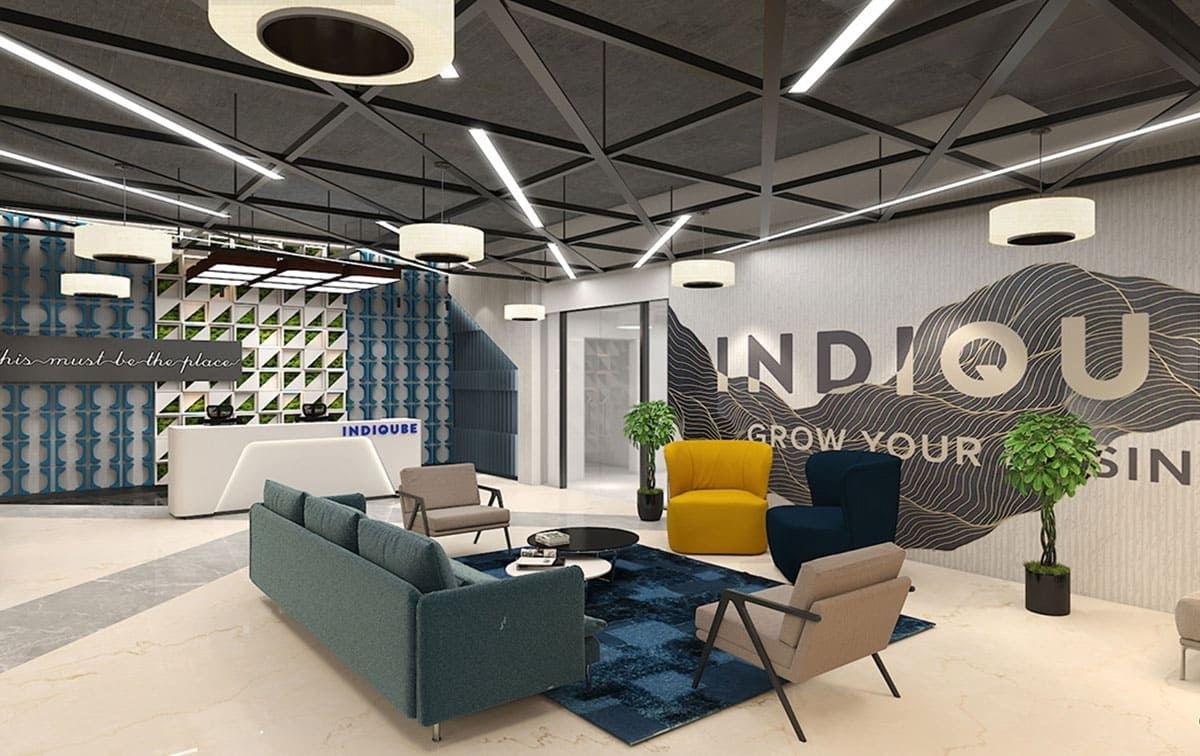
1. At a Glance – The Co-Working King with a Debt Hangover?
₹3,815 crore market cap.
₹180 share price.
Sales this quarter: ₹390 crore (up 45.6% YoY).
Quarterly PAT: ₹-17.07 crore (loss shrinking).
Debt: ₹4,770 crore.
Debt-to-equity: 8.67.
ROCE: 4.76%.
ROE: -234%.
Price-to-book: 6.93.
IndiQube Spaces is basically saying: “Revenue toh dekh bhai!” while the balance sheet whispers, “EMI kab bharoge?”
Q3 FY26 (Dec 2025 quarter) shows serious revenue momentum — ₹390 crore with 61% operating margin. But after interest (₹112 crore) and depreciation (₹169 crore), profits are still negative.
Imagine running a luxury coworking empire with solid operating performance but the interest cost walks in like a strict landlord asking for rent every quarter.
Stock is down 17.3% in 3 months. Market is confused. Growth story? Yes. Leverage story? Also yes.
So what is IndiQube — India’s smartest workspace transformer or a real estate-style leverage experiment wrapped in tech branding?
Let’s open the spreadsheet.
2. Introduction – The Great Indian Office Comeback Story
Work from home happened. Offices died. Co-working boomed.
Then layoffs happened. Offices shrank.
And in the middle of this chaos, IndiQube decided:
“Let’s build 115 centres across 15 cities.”
Bold move.
Founded in 2015, this company reimagines office space as a managed, tech-enabled, plug-and-play experience. Sounds sexy. And it is — at least on brochure.
They don’t just lease space. They renovate old buildings, install tech systems, provide catering, transport, plantation services, and even smart apps through something called MiQube.
This isn’t just office leasing. It’s “Workplace-as-a-Service.”
But here’s the thing:
It’s asset heavy.
Very asset heavy.
Look at fixed assets — ₹4,688 crore as of Sep 2025.
They raised ₹700 crore via IPO in July 2025. Out of net proceeds ₹604.459 crore, they planned:
- ₹462.649 crore for new centres
- ₹93.035 crore for debt repayment
- ₹48.775 crore for corporate use
Yet total borrowings stand at ₹4,770 crore.
So the real question is:
Is IndiQube building India’s next workspace giant…
or building interest expense for banks?
Let’s decode.
3. Business Model – WTF Do They Even Do?
Imagine you’re a fast-growing IT company.
You don’t want to buy property.
You don’t want to manage security, cafeteria, housekeeping, parking, plumbing, AC breakdown at 2 AM.
IndiQube says: “Boss, chill. We’ll handle everything.”
They operate under five verticals:
IndiQube Grow – Plug-and-play office with interiors, tech, facility management.
IndiQube Bespoke – Custom office build-outs inside client premises.
IndiQube One – Facility, catering, transport, asset maintenance.
MiQube – Smart tech platform for tenants and facility teams.
IndiQube Cornerstone – Upgrade old Grade B buildings into shiny