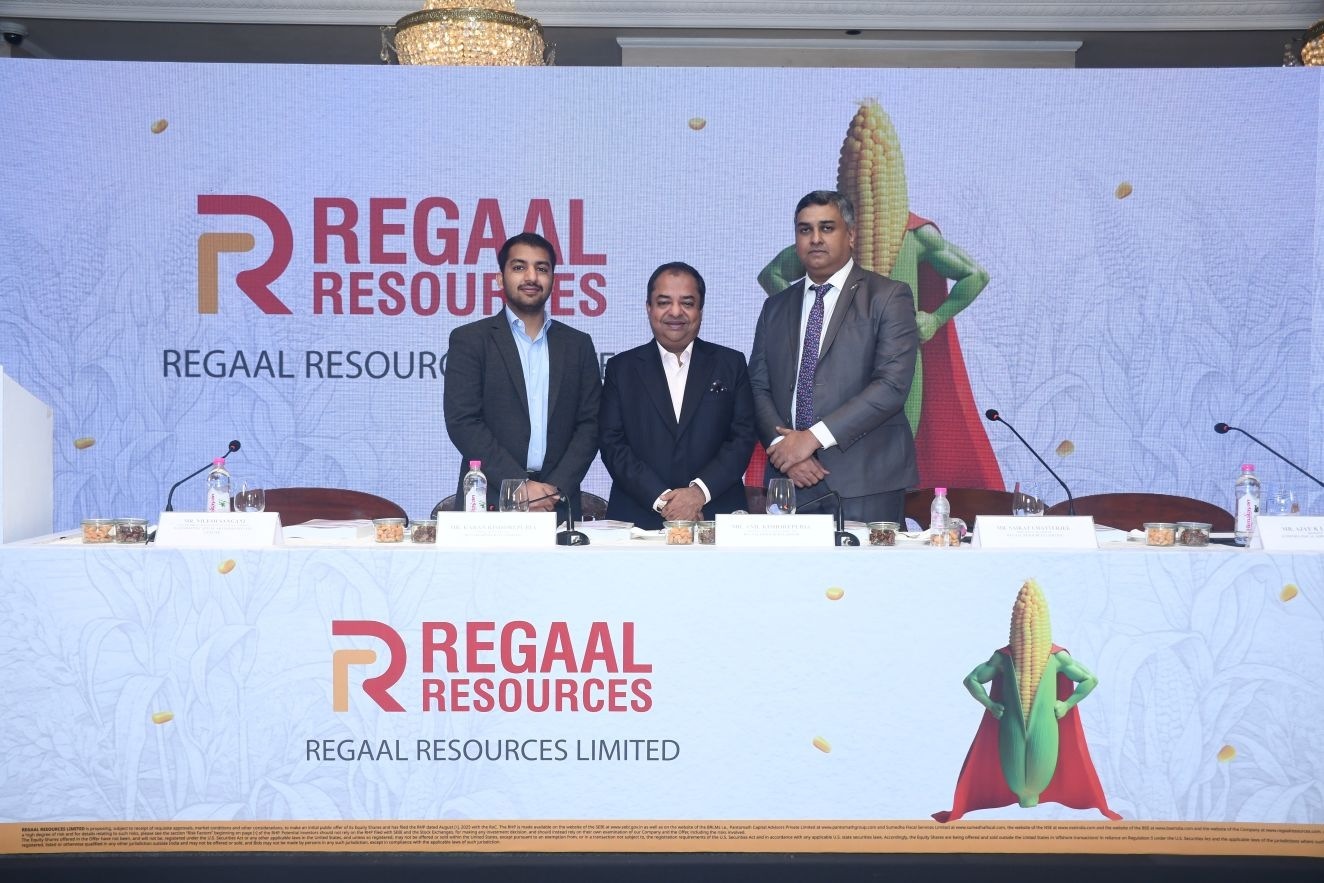
1. At a Glance – Maize Mill or Regulatory Thriller?
Regaal Resources Limited is trading at ₹60.8 with a market cap of ₹625 crore. In just three months, the stock has corrected -32.6%, which is basically the market saying, “Beta, we need to talk.”
Yet, fundamentals don’t look sleepy.
TTM Sales stand at ₹1,148 crore, PAT at ₹50 crore, and the stock trades at a modest P/E of 11.3 against an industry P/E of 24. ROE is a spicy 25.2%, ROCE 16.2%, and price-to-book just 1.36.
Latest quarter (Dec 2025):
- Sales: ₹323 crore
- PAT: ₹13 crore
- OPM: 11%
Debt to equity is 1.09. Enterprise value is ₹933 crore. EV/EBITDA stands at 7.56.
On paper? Looks like a fast-growing maize processor.
On announcements page? Looks like a courtroom calendar.
IPO in August 2025 raised ₹306 crore.
ROC notices in 2026 started raining like Bihar monsoon.
So what is Regaal — a rising agro star or compliance ka class monitor nightmare?
Let’s mill the maize and separate the starch from the chaff.
2. Introduction – Bihar’s Lone Maize Warrior
Regaal isn’t some legacy FMCG dinosaur.
It’s a relatively young agro-processing company based in Kishanganj, Bihar — and here’s the fun part — it is the only maize milling plant in Bihar.
That’s either a massive moat.
Or a very lonely factory.
With a crushing capacity of 750 TPD, Regaal ranks among India’s top 10 maize milling companies. Between FY23 and FY25, it delivered a 36.95% revenue CAGR.
Sounds impressive, right?
But growth stories in commodities are like Indian wedding buffets — lots of variety, but margins can get digested quickly.
Revenue mix FY25:
- 59.3% Native starch
- 21.8% Co-products
- 16.8% Traded maize
- 1.6% Value-added food products
- 0.5% Modified starch
Exports? Only 7.2%.
Domestic? 92.8%.
Basically, this is a desi maize machine.
The question is: can it convert maize into margins consistently? Or is it just volume gymnastics?
Let’s decode.
3. Business Model – WTF Do They Even Do?
Imagine corn entering a factory.
It doesn’t come out as popcorn.
It comes out as:
- Maize starch
- Modified starch
- Gluten
- Germ
- Fiber
- Flour
- Custard powder
- Baking powder
Yes. This company touches everything from paper mills to food factories.
Industry revenue split:
- Paper industry – 27.41%
- Feed industry – 13.19%
- Food manufacturing – 7.49%
- Manufacturing (others) – 16.45%
- Others – 35.46%
Clients include Emami Paper Mills, Century Pulp & Paper, Maruti Papers, and more.
Distribution channel mix:
- End-product manufacturers – 26%
- Intermediate manufacturers – 26%
- Distributors – 48%
Top 10 customers account for 45.5% revenue.
So yes — concentration risk exists.
But the real advantage?
They source maize directly from farmers in Bihar and West Bengal. Lower logistics cost. Local dominance.
And they have a 7.1 MW captive power plant plus 65,000 MT storage capacity.
That’s operational control.
Now ask yourself: Is this a processing powerhouse in the making? Or a commodity processor in disguise?
4. Financials Overview – Let’s Do the Math Ourselves
Annualised EPS