1. At a Glance
Barak Valley Cements Ltd is one of those companies where the balance sheet says “steady small-town cement maker” but the announcements scream “North-East cement empire loading…”. Market cap sits around ₹105 Cr, while the company just announced a ₹482 Cr cement expansion project. Yes, you read that right — a project nearly 4.5x its current market value.
The stock trades at ₹47.5, below its ₹57.1 book value, giving it a price-to-book of 0.83. Sounds cheap? Wait till you see the P/E of 5,245 — not because profits are flying, but because profits are barely breathing. FY25 EPS is a heroic ₹0.01, and the latest quarter (Q3 FY26) delivered a loss of ₹2.31 Cr.
Quarterly revenue came in at ₹47.65 Cr, down 12.9% YoY, while operating margins collapsed to 1.36%. Debt stands at ₹36.2 Cr, manageable, but interest coverage at 1.58x suggests the lender is watching more closely than the promoter.
So what is this — a dying cement mill or a coiled spring waiting for the Assam government to light the fuse?
2. Introduction
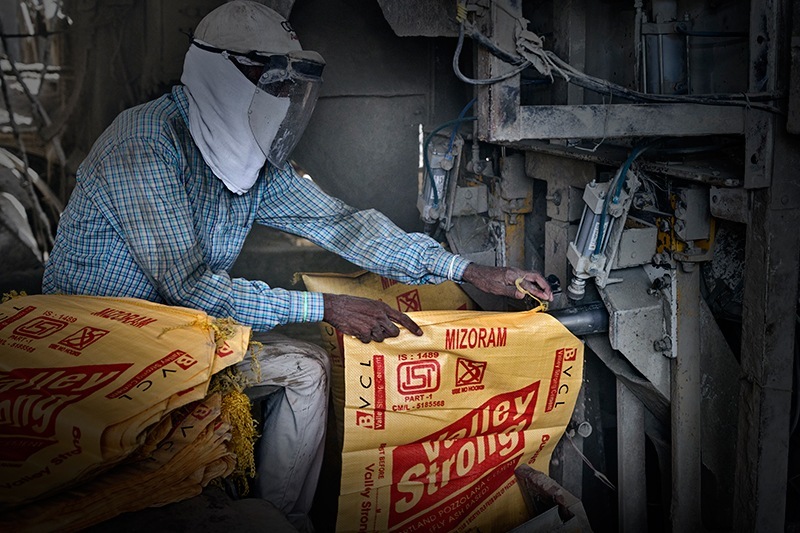
Barak Valley Cements is not UltraTech, not Ambuja, not even JK Cement’s distant cousin. It is a regional cement manufacturer, deeply rooted in the North-East, supplying OPC and PPC cement under the brand Valley Strong Cement.
The company has survived for over two decades in one of the toughest terrains — geographically, logistically, and economically. Cement in the North-East is not about scale; it is about survival, freight economics, and local relationships.
But survival alone doesn’t excite markets. What excites markets is optionality. And Barak Valley just dropped one — a 1,600 TPD clinker + 2,000 TPD cement project worth ₹482 Cr, backed by Assam government incentives.
The irony? The current plant runs at ~700 TPD clinker and 1,000 TPD cement. So this is not incremental growth — this is a complete transformation story.
Of course, execution risk is high. Funding risk is higher. And current profitability is… well… missing. But small companies don’t become interesting by staying safe.
3. Business Model – WTF Do They Even Do?
At its core, Barak Valley Cements does one thing:
It makes cement and sells it locally.
Products are simple:
- Ordinary Portland Cement (OPC)
- Portland Pozzolana Cement (PPC)
The plant is located in Assam, and the company sells almost entirely within the North-Eastern belt — Assam, Mizoram, Tripura, and Manipur — through a dealer network of 150–160 dealers.
This is not a branding business. This is not a premium cement play. This is regional utility cement, sold where freight costs protect local players from national giants.
The hidden