1. At a Glance
Shetron Ltd is one of those old-school manufacturing companies that has survived multiple commodity cycles, currency tantrums, and CFO Excel sheets screaming in red. Market cap sits around ₹101 crore, the stock price hovers near ₹112, and the last one-year return is a painful -36.6%, which politely tells you that the market is not impressed.
Q3 FY26 (Dec 2025) revenue came in at ₹55.69 crore, up 7.43% QoQ, while PAT jumped 85% QoQ to a majestic ₹0.37 crore — yes, crore, not typo. Operating margins slid to 6.93%, down from double digits a few years ago.
Debt stands at ₹42 crore, promoter holding is a solid 64.6%, and ROE is a sleepy 5.35%. This is not a momentum stock. This is not a story stock. This is a “let’s read the footnotes twice” stock.
So… is Shetron a boring but durable packaging play, or just a tin can stuck in a margin crusher? Let’s open the lid.
2. Introduction
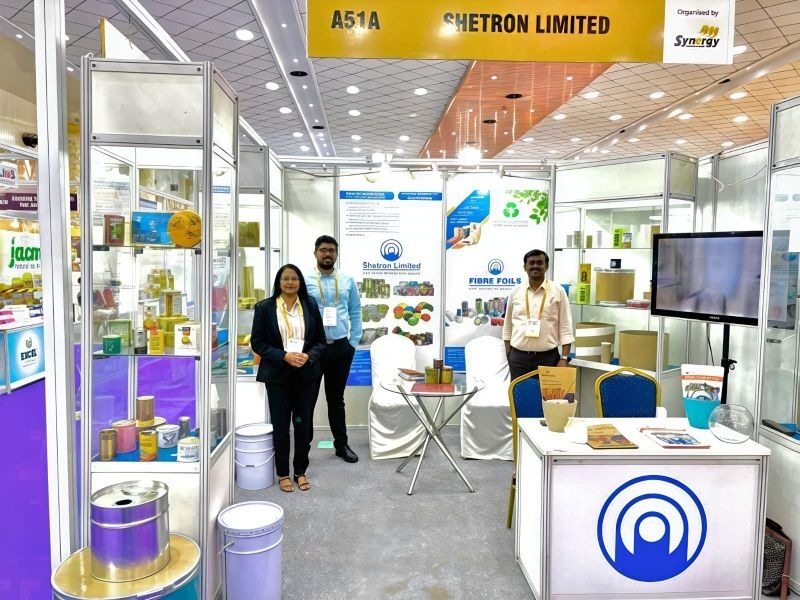
Shetron has been around since 1980, which means it has seen liberalisation, globalisation, demonetisation, and now inflation that refuses to behave. The company operates in metal packaging, a business that looks boring on the surface but quietly runs large parts of the FMCG, food processing, battery, and pharma ecosystems.
Unlike flashy consumer brands, Shetron sells what nobody Instagrams — food cans, battery jackets, tinplate sheets, and industrial packaging. If Nestlé, ITC, or Eveready mess up packaging, the blame still comes to the packaging vendor. That’s the kind of invisible pressure this business carries.
Over the last decade, revenue growth has been modest, margins have compressed, and returns have oscillated between “meh” and “are we even trying?”. Yet the company continues to survive, expand capacity, retain marquee clients, and reduce debt slowly.
The real question: is this survival mode or silent compounding in progress?
3. Business Model – WTF Do They Even Do?
Shetron is a metal packaging manufacturer, primarily serving:
- Food & beverage companies (metal cans, lug caps, decorative tins)
- Battery manufacturers (dry cell battery jackets — one of the largest integrated producers in SE Asia)
- Industrial & FMCG clients (printed tinplate sheets, conipails)
- Pharma and specialty packaging
Manufacturing facilities are located in Bangalore and Asangaon (Maharashtra) — strategically placed to service South and West India.
What works in their favour:
- Long-standing client relationships