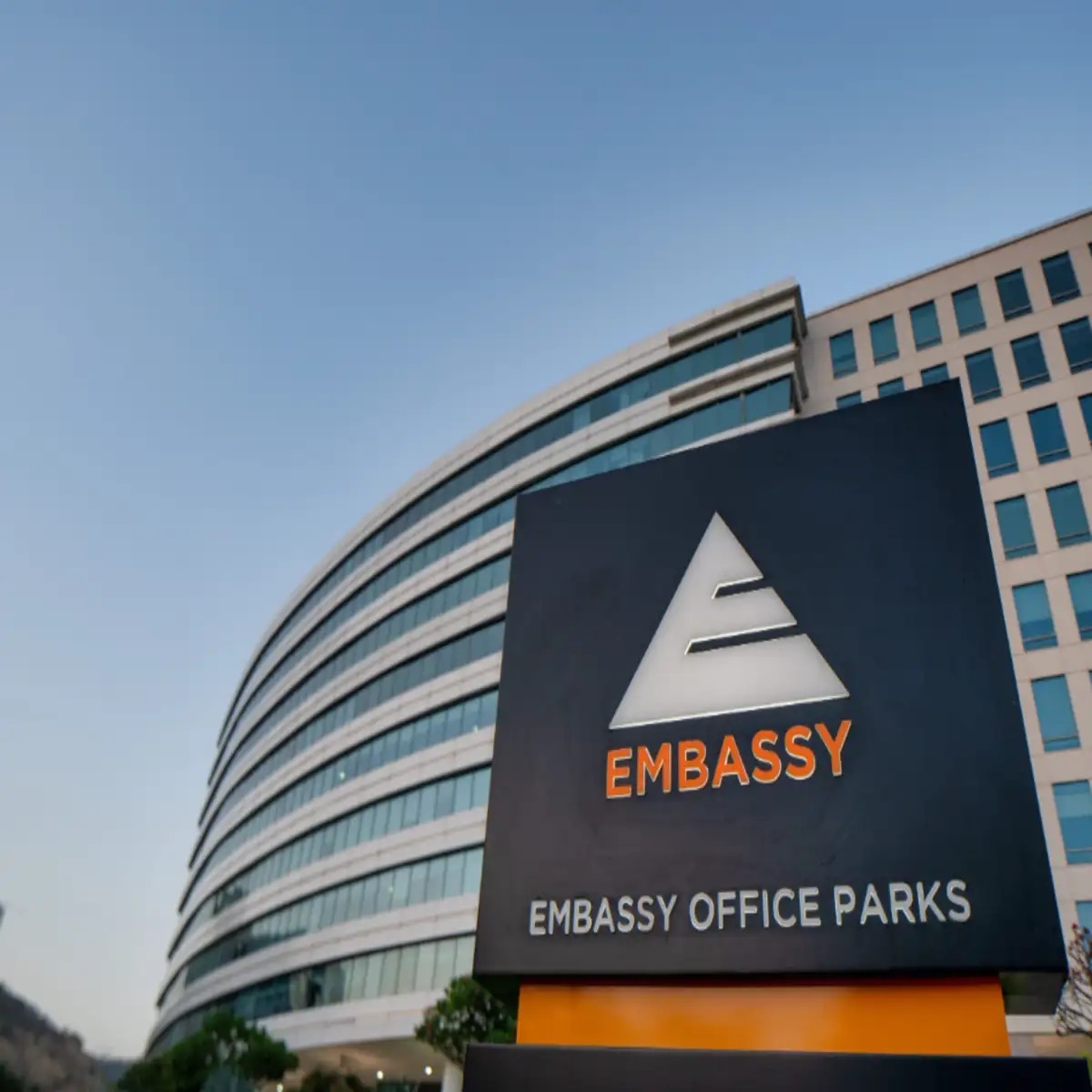
1. At a Glance – The REIT That Refused to Become a Meme
Embassy Office Parks REIT is currently sitting at a market cap of ₹41,888 crore, trading around ₹442 per unit, and quietly reminding everyone that “Work From Home” did not kill offices, it just gave them trauma. In the last 3 months, the unit price is up ~3.2%, 6 months ~14.9%, and 1 year ~20.6%—not bad for an asset class people declared dead on Twitter in 2020.
Q3 FY26 numbers came in hot: ₹1,193 crore revenue (+17% YoY) and ₹381 crore PAT, along with a ₹6.47/unit distribution, because REITs don’t hoard cash—they hand it out like wedding mithai. Occupancy has climbed to 93% by value, portfolio WALE stands at 8.5 years, and Bangalore continues to carry this REIT like Virat Kohli carries Indian batting line-ups.
Debt stands at ₹21,072 crore, ROCE is a sleepy 3.64%, ROE at 7.05%, and interest coverage is thin at 1.32x—which means this REIT makes money, but banks are always watching it closely like strict hostel wardens.
So the big question: is Embassy Office Parks REIT just a yield machine with boring stability, or is there actual growth hiding behind those glass office towers?
2. Introduction – Office Space Is Dead? Bangalore Didn’t Get the Memo
Every few years, someone announces the death of office real estate. First it was IT slowdown, then co-working panic, then COVID, then Work From Home, then hybrid work. And yet, here we are in FY26 with Embassy Office Parks REIT running 51 million sq ft, 90% occupied, and signing fresh leases like nothing happened.
India’s first listed REIT also happens to be Asia’s largest by area. That’s not marketing fluff—it’s pure square footage dominance. Embassy didn’t try to reinvent real estate. It simply doubled down on Grade-A office assets, parked them in Bangalore (75% of GAV), filled them with Global Capability Centres (65% of rents), and waited patiently for the world to realise engineers still need desks.
Unlike developers chasing flashy residential launches, REITs play a boring but powerful game: collect rent, escalate rent, distribute cash. Embassy’s contracts typically include ~15% rent escalation every 3 years, plus mark-to-market upside of ~10% till FY29. This is not growth that shows up overnight—it’s slow, contractual, and annoyingly predictable.
So while equity investors chase multibaggers, Embassy quietly compounds distributions. The question isn’t whether offices survive—it’s whether investors have the patience to let rent escalations do their magic.
3. Business Model – WTF Do They Even Do?
Let’s simplify it brutally. Embassy Office Parks REIT owns buildings. Big ones. Glassy ones. Expensive ones. Companies rent them. Embassy collects rent. Embassy pays interest. Embassy distributes cash. Repeat.
About 90% of revenue