1. At a Glance
Best Agrolife Ltd is having one of those years. You know the kind—where management presentations are full of “strategy”, “pivot”, and “long-term vision”, while the P&L quietly sobs in the corner.
Market cap sits at ₹706 Cr, the stock trades near ₹19.9, down 36% over one year and 22% in the last six months. The company reported Q3 FY26 revenue of ₹202.9 Cr, down 26% YoY, with a PAT loss of ₹12.7 Cr. EBITDA margin collapsed to 2%, which is basically the financial equivalent of running a marathon in flip-flops.
Yet, valuation looks deceptively “cheap” on some screens: P/B at 0.87x, EV/EBITDA ~7.9x. Promoters still hold 50.4%, no pledging. Sounds comforting? Hold that thought.
Because behind the low valuation lies ₹436 Cr of debt, interest coverage of 1.58x, and a working capital cycle that has gone completely feral.
Curious already? Good. Let’s peel this onion layer by layer—and yes, it will make you cry.
2. Introduction
Best Agrolife used to be a classic agrochemical growth story. Rapid scale-up, expanding technical capacities, aggressive product launches, and a shift from boring institutional sales to sexy branded formulations. On paper, it looked like the next midcap agro darling.
Then reality arrived. With debtor days exploding, inventory ballooning like a wedding buffet, and margins collapsing faster than farmer sentiment in an El Niño year, the story turned… complicated.
FY24 was supposed to be a transition year. Management said margins would dip due to branded push, but rebound sharply. FY25 was supposed to show recovery. FY26? Well, Q3 FY26 just showed us what not to do with working capital.
Is this a temporary monsoon miss or a structural problem in execution? Is branded business a long-term moat or just an expensive marketing experiment?
Let’s find out.
3. Business Model – WTF Do They Even Do?
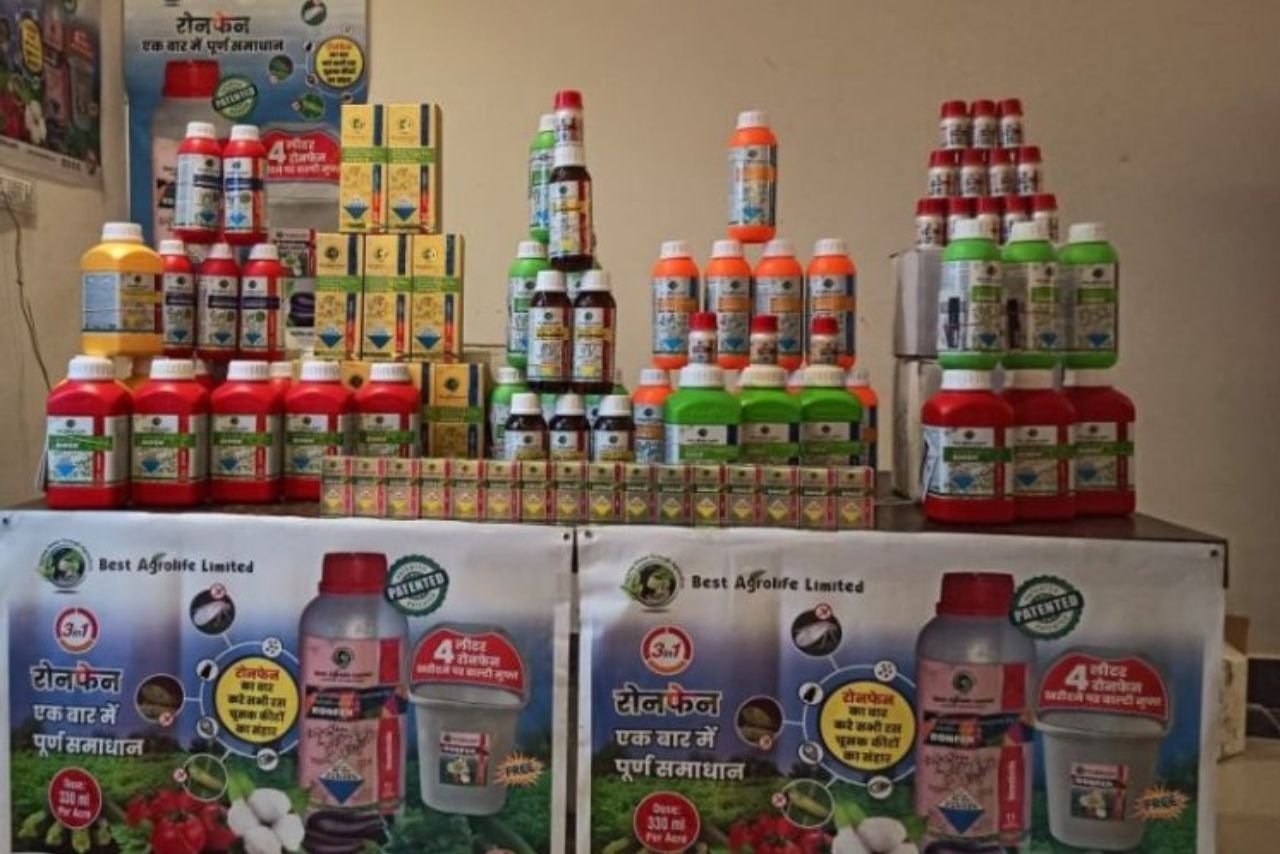
Best Agrolife operates across technicals, formulations, intermediates, and public health chemicals. In plain English: they make the active ingredients (technicals), convert them into farmer-ready products (formulations), and sell them under their own brands or to other agro companies.
Portfolio size is… insane.
- 490+ formulations
- 115+ technical manufacturing licenses
- Products across herbicides, insecticides, fungicides, PGRs
- Presence in 90+ export markets
This is not a small operation. It’s more like a chemical buffet where everything is available—whether customers want it or not.
The big strategic move? Shift from institutional/P2P sales to branded business.
Institutional sales