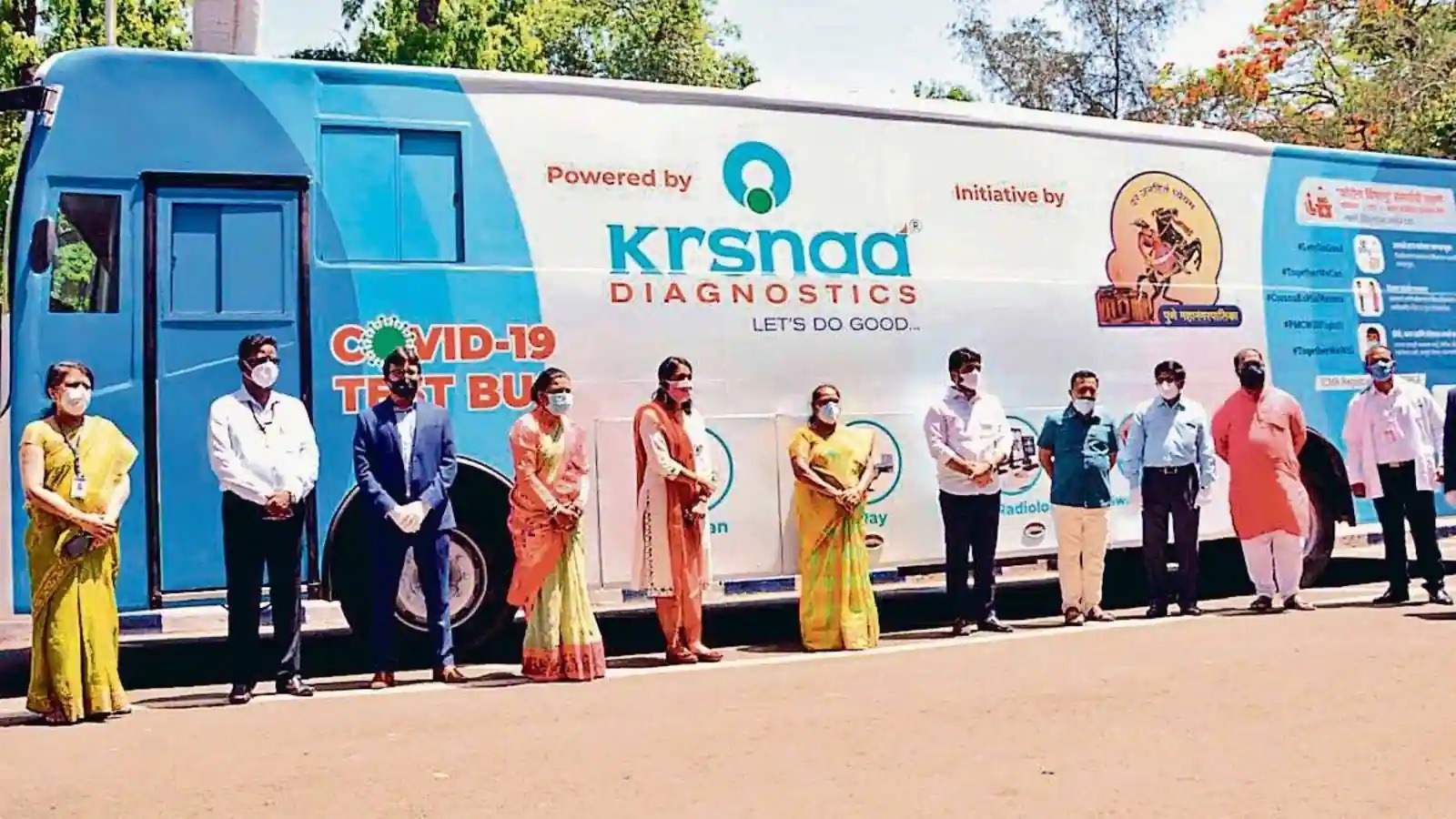
1. At a Glance – The CT Scan Before Surgery
Krsnaa Diagnostics is that kid in the diagnostics class who didn’t sit in metros, didn’t open fancy glass labs in Bandra, but still managed to build a ₹2,268 crore market cap business by camping inside government hospitals and charging 60–80% lower prices than private peers. Current price sits at ₹701, down ~20% YoY, which tells you the market is currently in a “show me the cash, not the contracts” mood.
FY25 TTM sales stand at ₹693 crore, with OPM of ~30%, which is elite for diagnostics. PAT for the year is ₹80.4 crore, but quarterly volatility is real — Q3 FY26 PAT fell 23.7% YoY even though margins stayed healthy. ROCE is 12.5%, ROE a sleepy 9.3%, and debt is ₹284 crore, largely tied to asset-heavy CT/MRI expansion.
The real masala? Debtor days at 152. That’s not a typo. That’s basically the government saying, “Beta report toh mil gaya, payment thoda FY27 mein dekhte hain.”
So the question is simple: is this a scalable public healthcare monopoly in the making, or a beautifully run working-capital trap?
Let’s X-ray this thing properly.
2. Introduction – India’s Diagnostics Robin Hood
Most diagnostic chains make money by opening labs where patients already exist. Krsnaa went the opposite way — it went where patients exist but money doesn’t. District hospitals. CHCs. Medical colleges. Semi-urban India.
Instead of fighting Dr Lal and Metropolis for affluent blood samples, Krsnaa partnered with governments under PPP (Public-Private Partnership) contracts. The government provides space and captive footfall; Krsnaa installs machines, staff, software, and runs the show.
This model allowed Krsnaa to scale ridiculously fast:
- 5,100+ centers
- Presence in 150+ districts
- Operations across 18 states & UTs
- 40 million+ patients served in 3 years
And here’s the kicker — they win 78% of tenders they bid for. That’s not luck. That’s process, pricing discipline, and political homework.
But PPP is a double-edged sword. Volumes are massive. Pricing is