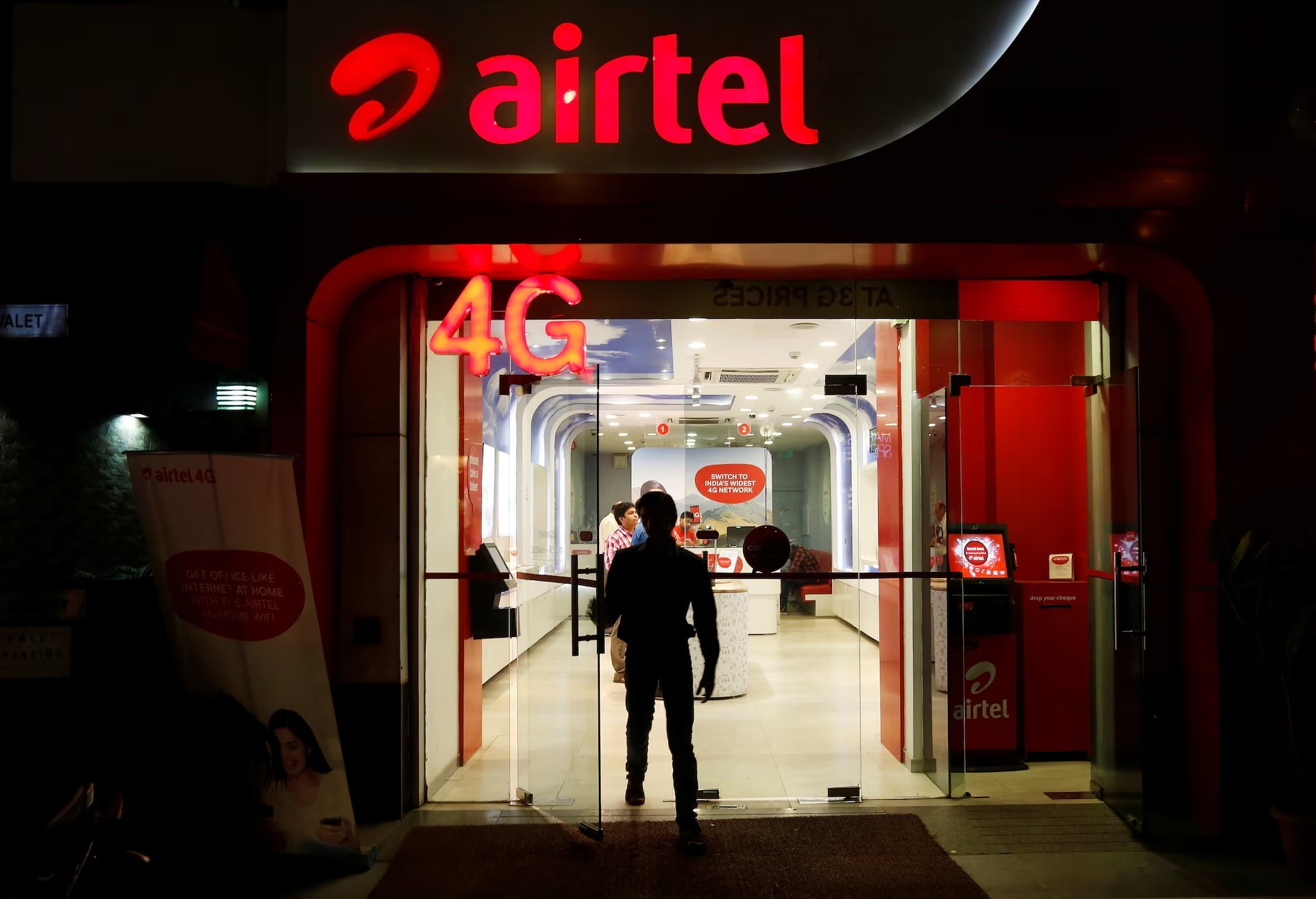
1. At a Glance – The Airtel Flex
Bharti Airtel is currently flexing like a telecom heavyweight who survived price wars, AGR trauma, spectrum EMIs, and still showed up to the earnings party in a tailored suit. With a market cap of ₹12.2 lakh crore, Airtel is not just a telecom company anymore — it’s a digital infrastructure behemoth wearing multiple avatars: telco, banker, cloud host, enterprise IT vendor, and Africa’s favourite mobile wallet.
The stock is trading at ₹2,033, delivering a 23% return in one year, while the broader market argues on Twitter. TTM revenue stands at ₹2,03,466 crore, with PAT of ₹37,051 crore. ARPU has climbed to ₹209, and management is openly flirting with ₹300 ARPU, which in Indian telecom is equivalent to saying “main ab stable ho gaya hoon.”
Yes, quarterly profit was down YoY (because depreciation and interest never take a day off), but operating metrics are rock solid. EBITDA margins north of 56%, improving ROE at 23.2%, and an EV/EBITDA of 12x for a dominant operator — not cheap, but not fantasy either.
So the big question: is this a boring utility stock now, or a premium digital compounding machine? Let’s dig in.
2. Introduction – From Free SIMs to Free Cash Flow (Almost)
There was a time when Indian telecom was a blood sport. Tariffs crashed, balance sheets cried, and everyone except Airtel and Jio slowly disappeared into corporate history museums. Bharti Airtel survived that era by doing three things consistently: scale, quality, and stubbornness.
Fast forward to FY26, Airtel is no longer chasing subscriber vanity metrics. It is chasing value per customer, network superiority, and enterprise relevance. The company operates across India, Africa, Bangladesh, and Sri Lanka, serving over 560 million customers globally.
What’s changed?
- Tariffs are finally moving up
- 5G capex peak is mostly done
- Africa is printing cash instead of excuses
- Digital services are quietly becoming