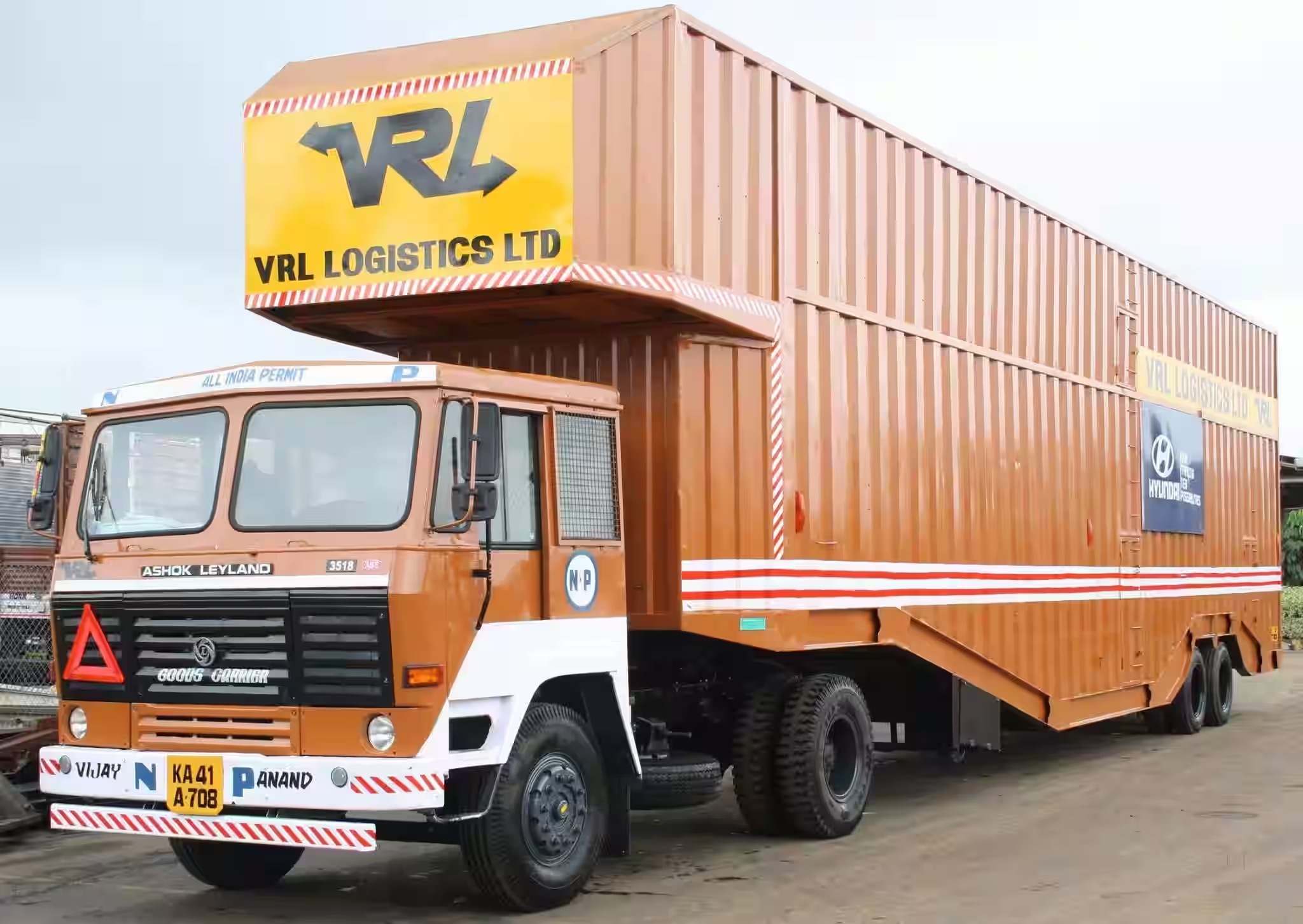
1. At a Glance – The Truck That Refused to Die
VRL Logistics Ltd is that old-school Indian logistics company which didn’t chase flashy tech buzzwords, didn’t burn VC money, and didn’t pretend it was a SaaS startup with trucks. It just… drove. Relentlessly. As of February 2026, VRL sits at a market cap of ₹4,942 Cr, trading at ₹282, with a P/E of ~20.7, ROE of 17.4%, and a dividend yield of 2.64%—yes, actual cash, not “adjusted EBITDA promises”.
Q3 FY26 numbers show ₹827 Cr revenue, ₹170 Cr operating profit, and ₹65 Cr PAT, translating into a chunky 21% operating margin—one of the best in the road logistics space. While peers are busy explaining why profits are “back-ended” or “one-off adjusted”, VRL is quietly sweating assets it already owns.
The stock hasn’t gone to the moon recently (3-month return ~2.3%), but the business has. The company is now a pure-play goods transportation firm, having exited buses, aviation, and wind power distractions. This is not a growth-at-any-cost story. This is a cash-flow-first, asset-heavy, Indian logistics grind story.
Question is: in an industry full of loss-making apps and PE-funded experiments, is boring finally beautiful again?
2. Introduction – From Bus Operator to Logistics Purist
Once upon a time, VRL Logistics tried to do everything—buses, flights, windmills, carbon credits, and of course trucks. It looked like a typical Indian promoter story: if it moves, monetize it.
Fast forward to FY24–FY26, and VRL has done something rare in corporate India: it simplified.
- Bus operations? Gone.
- Aviation passenger business? Sold for ₹17 Cr in July 2023.
- Wind power & CER units? De-emphasised.
What remains is the core: Less Than Truck Load (LTL) road logistics, contributing ~91% of FY24 revenue. And not asset-light, rented-truck logistics. VRL is the only large-scale, fully owned-asset LTL player in India.
In a country where logistics inefficiency is almost a national