1. At a Glance – Blink and You’ll Miss the Scale
Uno Minda is no longer “that switches company.” It’s now a ₹71,080 Cr automotive components behemoth trading at around ₹1,231, flexing a 61× P/E like it’s leg day every quarter. In the last three months, the stock has mostly gone sideways (0.09% return), which honestly feels suspicious given Q3 FY26 revenue of ₹5,018 Cr (+20% YoY) and PAT of ₹298 Cr (+28% YoY). ROCE sits at 18.8%, ROE at 17.5%, and debt has ballooned to ₹2,852 Cr—not because of bad habits, but because the company is on a ₹3,093 Cr capex binge across alloy wheels, EV parts, airbags, switches, and sunroofs. This is not a “steady compounder chilling on the couch.” This is a company lifting barbells while simultaneously assembling EV motor controllers. Curious already? Good. You should be.
2. Introduction – From Horns and Switches to an Auto-Tech Octopus
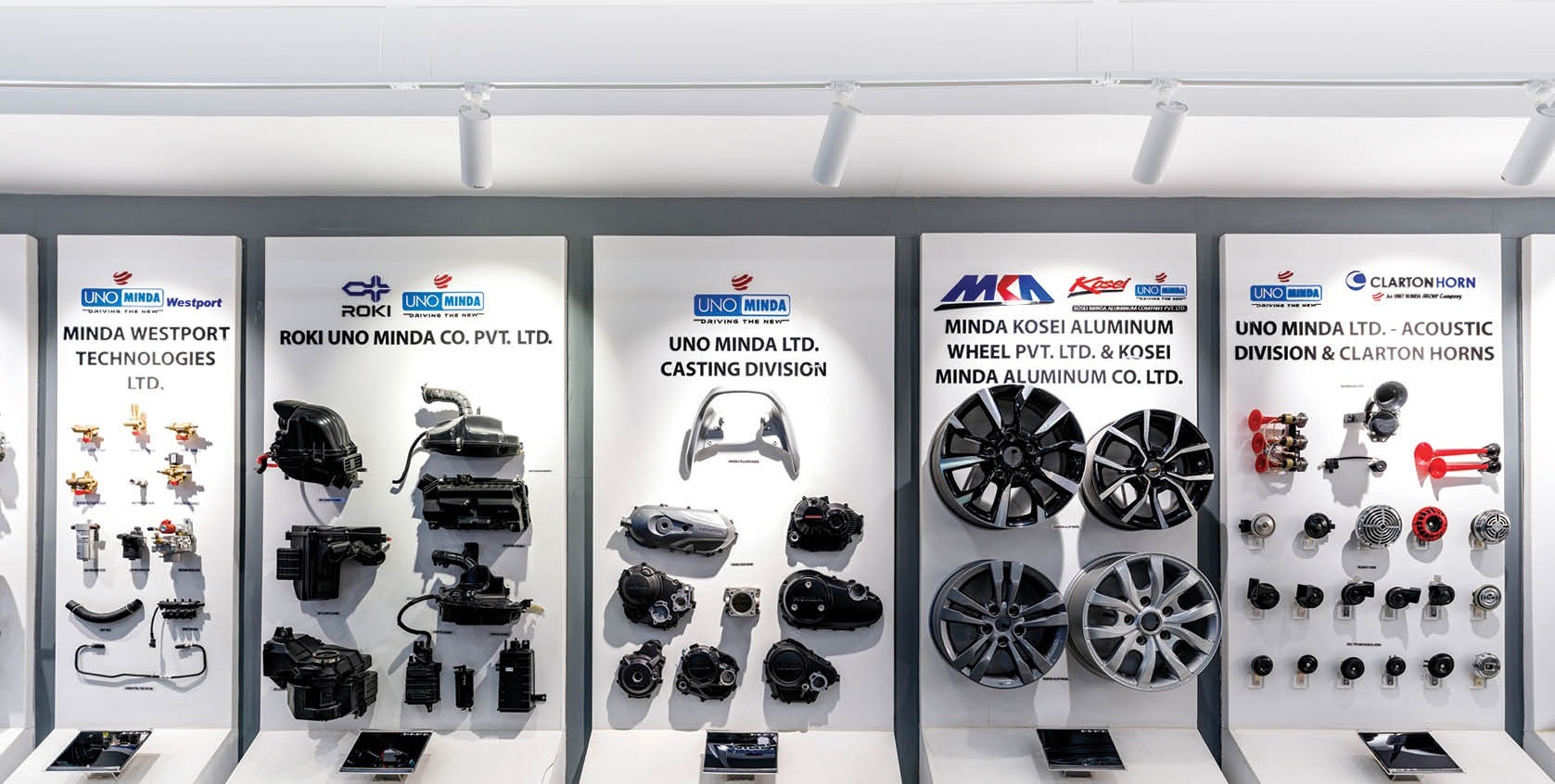
Uno Minda started in 1958, back when “automotive electronics” meant a horn that didn’t embarrass you at traffic lights. Fast forward to FY26, and the company manufactures 25+ automotive systems spanning switches, lighting, alloy wheels, acoustics, seating, EV power electronics, airbags, and even sunroofs.
What’s fascinating is not just the product list—it’s the breadth across vehicle segments. Two-wheelers, three-wheelers, passenger vehicles, commercial vehicles, ICE, hybrids, EVs—Uno Minda is playing automotive Tambola and ticking almost every box.
Revenue concentration? OEM-heavy at 93%, which tells you this is a serious Tier-1 supplier, not an aftermarket jugaad shop. Exports are a modest 11%, so India remains the growth engine. And yet, the company operates 74 manufacturing facilities across six countries, backed by 37 R&D centers globally. That’s a lot of engineers arguing over tolerances.
The big question: is this expansion disciplined, or is Uno Minda trying to do too many things at once? Let’s dig.
3. Business Model – WTF Do They Even Do?
Imagine explaining Uno Minda to a lazy but smart investor:
“They make parts that your vehicle absolutely needs, but you never brag about.”
Switches (25% revenue), lighting (23%), castings (20%), seating, acoustics, and a long tail of “others.” Over time, switches and acoustics have lost some share, while casting and ‘others’ have surged—a sign that the company is deliberately moving into heavier, more complex