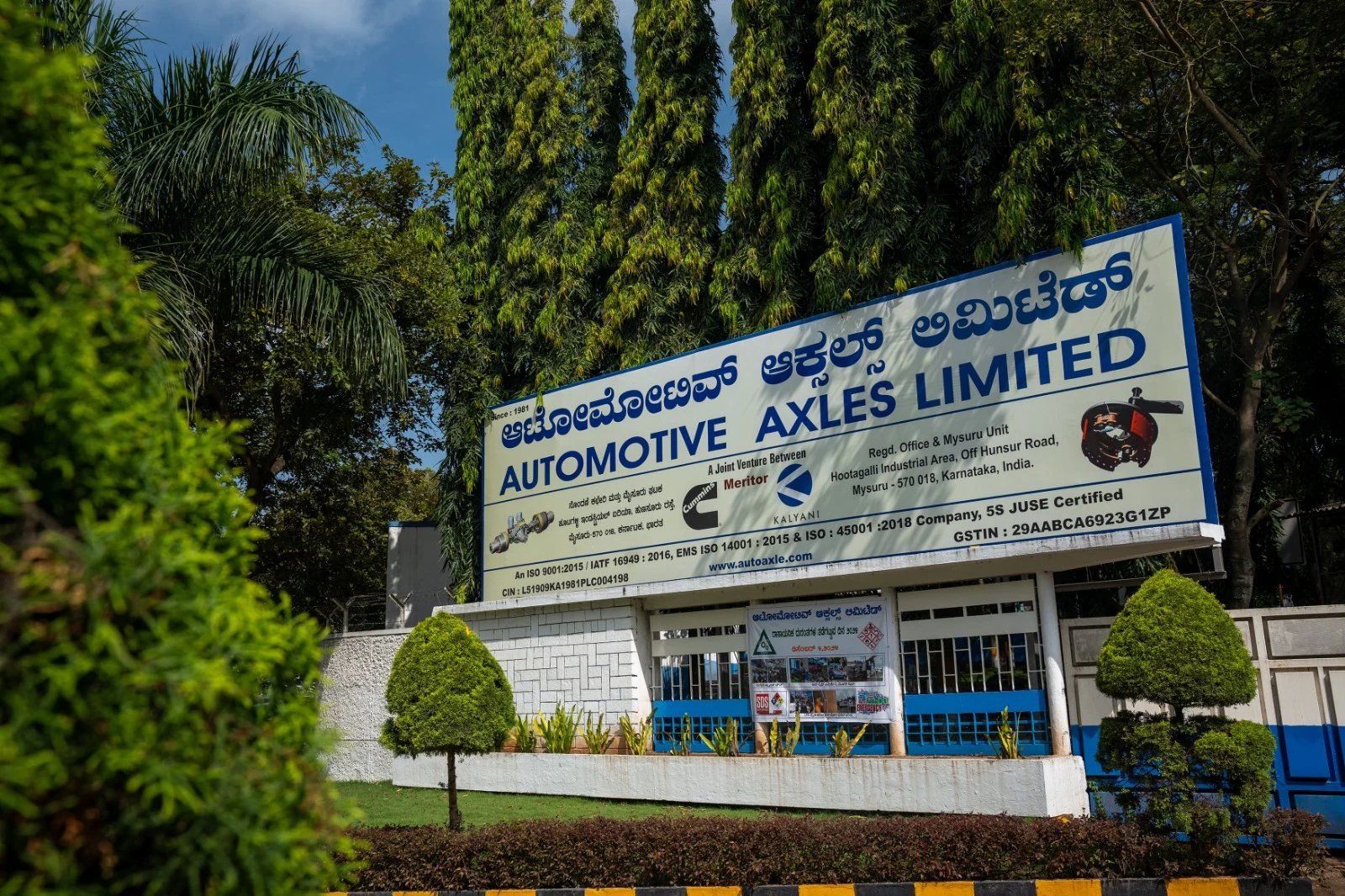
1. At a Glance – The Axle That Nobody Talks About (But Everyone Uses)
Automotive Axles Ltd is that classic Indian manufacturing stock which quietly prints money while the market chases shiny EV dreams and loss-making mobility apps. Market cap sitting at ~₹2,964 Cr, stock price hovering around ₹1,970, trading at a very un-sexy 18x P/E in an auto component universe where 50–70x has become normalised insanity. Latest quarterly numbers? ₹562 Cr revenue, ₹47.3 Cr PAT, and a ~20% YoY profit growth in Q3 FY26. ROCE is a solid 22.3%, debt is almost non-existent, dividend yield is a respectable 1.55%, and cash flows are clean enough to make auditors smile.
And yet… the stock is still down over 8% on a 3-year basis. Why? Customer concentration, cyclical CV demand, and the fact that this company is boring. But boring, when profitable and cash-rich, has a funny habit of becoming exciting later. Especially when you’re the largest independent axle manufacturer in India and the second-largest brake manufacturer, supplying literally every big truck brand on the road.
So the real question is: is Automotive Axles a hidden compounder… or just a well-run but permanently ignored supplier?
2. Introduction – A JV Baby That Grew Up Sensible
Automotive Axles Ltd was born in 1981 as a joint venture between Kalyani Group and Meritor Inc., USA, with both owning 35.5% each. That itself tells you a lot. One parent is India’s forged-steel powerhouse, the other is a global CV axle and brake technology leader. No startup drama, no promoter Instagram reels – just hardcore engineering.
The company lives in the unglamorous but essential world of trucks, buses, military vehicles, and off-highway equipment. If it moves goods, people, or tanks… chances are Automotive Axles has something bolted underneath.
Over the years, the business has evolved from being axle-heavy to more diversified – brakes, suspensions, and other precision components now form a meaningful chunk of revenue. Importantly, this is not a “me too” supplier. Axles and braking systems are safety-critical, high-precision parts with long qualification cycles. Once you’re in, you don’t get kicked out easily.
But here’s the catch: Ashok Leyland historically contributed 50–60% of revenues. That’s not a footnote. That’s a concentration risk with a capital C. The management knows this, investors know this, and the market punishes the stock for this… even though diversification has been happening quietly in the background.
Is the risk real? Yes. Is it improving? Also yes. And that tension is exactly where interesting analysis lives.
3. Business Model – WTF Do They Even Do?
Think of Automotive Axles as the company that builds the bones and joints of commercial vehicles.
They manufacture: