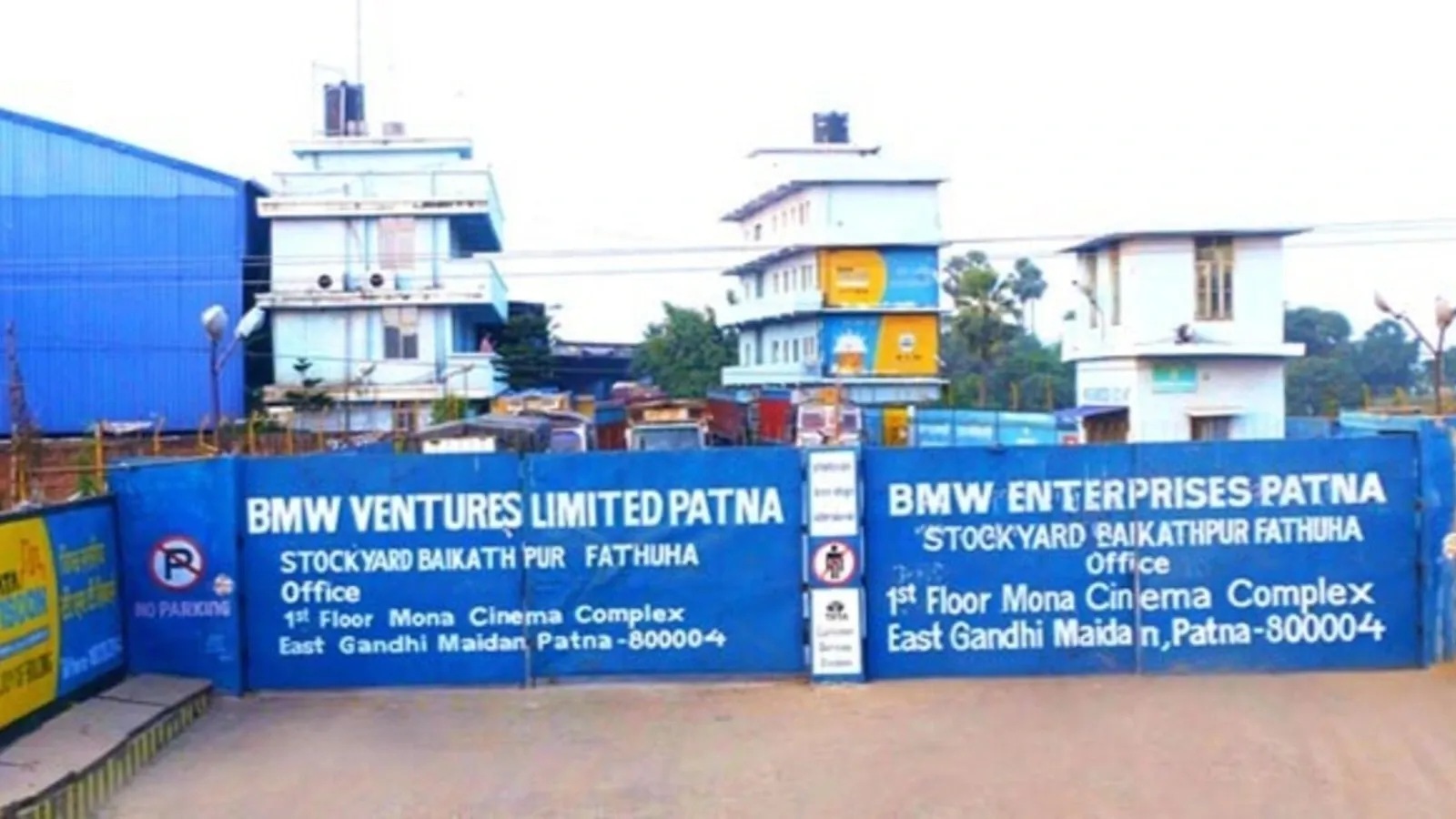
1. At a Glance
BMW Ventures Ltd is what happens when a regional steel distributor in Bihar decides to go public, flex its balance sheet, and experiment with “what else can we do with steel?”.
Market cap sits around ₹519 Cr, the stock is hovering near ₹59.5, and the company trades at a P/E of ~14.3, which is cheaper than most steel traders who love to brag about growth but forget margins exist.
Revenue for FY25 came in at ₹2,062 Cr, with PAT of ₹32.8 Cr and operating margins stuck around 4% — thin, but very typical for a steel distribution-heavy model. The kicker? BMW controls ~19% of Bihar’s TMT bar market, which in a state-driven infra cycle is no small thing.
Q3 FY26 (Dec 2025) numbers showed ₹563 Cr sales (+16% YoY) and ₹11.5 Cr PAT (+44.8% YoY). That profit growth looks spicy until you remember steel is a volume game and margins swing faster than moods in a commodity cycle.
Promoters hold a solid 73%, debt stands tall at ₹461 Cr, and return ratios (ROE ~16.5%, ROCE ~13.6%) scream “efficient trader, not a manufacturer yet”.
The real question:
Is BMW Ventures just a Bihar steel wholesaler… or a wholesaler trying very hard to become an integrated infra player?
2. Introduction
BMW Ventures is not trying to impress you with futuristic tech, AI buzzwords, or ESG poetry. This is a very desi, very grounded business: buy steel, store steel, sell steel, repeat. And it does that extremely well in Bihar.
The company’s roots are in steel trading and distribution — long products, flat products, pipes, sheets — basically everything that moves when a bridge, warehouse, or building is planned. Over time, BMW decided to bolt on fabrication (PEB, girders) and light manufacturing (PVC pipes, roll forming).
IPO money was raised in FY26, largely for working capital, which tells you exactly what kind of business this is. No moonshot capex. No revolutionary plant. Just more inventory, more turnover, more scale.
The numbers reflect that mindset. Sales have compounded at ~13% over 5 years, profits at ~17%, but margins remain stubbornly low. That’s not incompetence — it’s the nature of steel distribution.
So why does BMW Ventures matter?
Because regional monopolies with strong dealer networks often outperform flashy national players during infra booms. And Bihar, whether markets like it