1. At a Glance – When Boroplus Starts Printing Cash Like Winter Never Ends
₹22,043 crore market cap. Stock chilling at ₹505. Down ~5% in 3 months, ~15% in 6 months. Meanwhile, the business is quietly doing what it has always done best: sell pain balms, cooling oils, antiseptic creams, and dividends like clockwork.
Emami Ltd just delivered Q3 FY26 consolidated revenue of ₹1,152 crore (+9.75% YoY) and PAT of ₹319 crore (+17.8% YoY). Operating margin? A spicy 33%. ROE sitting pretty at 30%, ROCE at 32%, debt almost non-existent at ₹72 crore. Dividend yield ~2%, with the board casually dropping a ₹6 interim dividend (600%) like it’s pocket change.
Sales growth over 5 years may look like a morning walk (7.5% CAGR), but profit margins are doing yoga-level flexibility. Emami isn’t here to sprint; it’s here to compound, moisturised and unbothered.
Question before we go deeper: Would you rather own a fast-growing but margin-starved FMCG, or a slow-and-steady cash cannon like Emami?
2. Introduction – The FMCG Uncle Who Never Retired, Just Got Richer
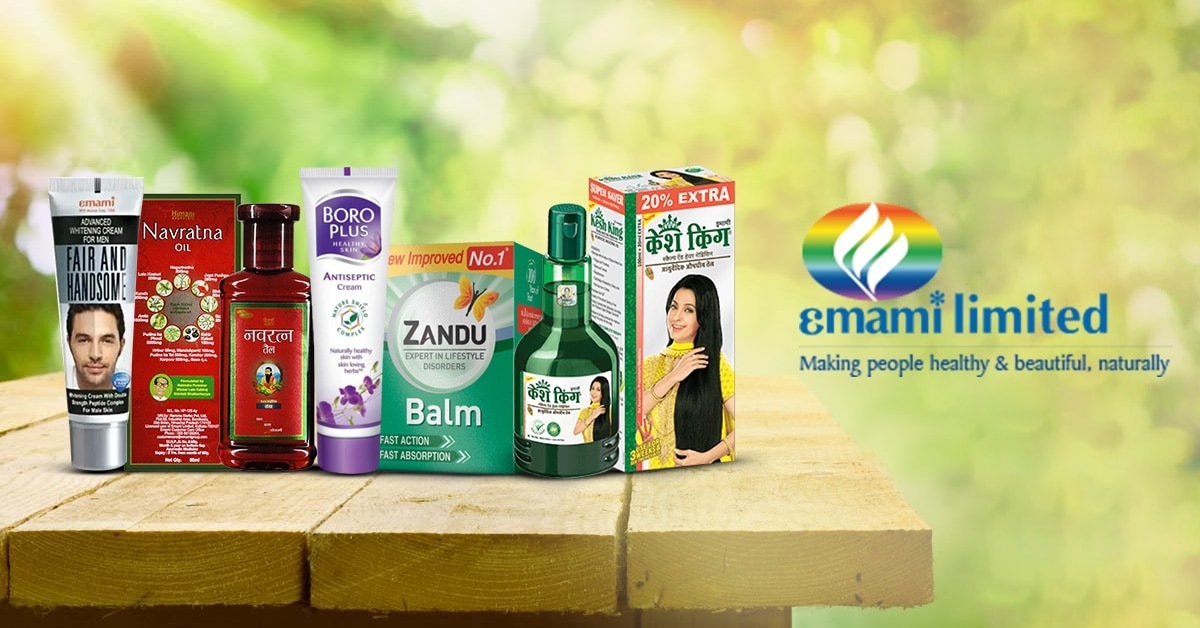
Emami is that classic Indian FMCG story where the brands are older than half the investors tracking them on apps. Boroplus, Navratna, Zandu Balm—these aren’t just products, they’re household habits. You don’t “choose” Boroplus; it just appears in winter. Navratna oil doesn’t ask permission before entering your scalp in May.
Founded in 1974, Emami has built a portfolio that thrives on recurring consumption, not Instagram virality. No fancy D2C-only experiments, no loss-making “let’s burn cash” adventures. Just ayurveda, cooling oils, pain relief, and increasingly, men’s grooming.
The recent years haven’t been about explosive topline growth. Instead, Emami has doubled down on premiumisation, brand extensions, international markets (especially MENA), and ruthless cost control. Advertising spends are high (17.7% of revenue in 9M FY25), but that’s the FMCG tax you pay to stay relevant.
Meanwhile, shareholders are rewarded with dividends so regular they feel like SIPs. The stock price may snooze, but the business doesn’t.
So the real question is not “why isn’t Emami a multibagger?”
It’s “how is Emami managing 30%+ ROE without leverage in a brutally competitive FMCG space?”
3. Business Model – WTF Do They Even Do? (Besides Selling Balm to the Nation)
Let’s simplify Emami’s business in one line: